






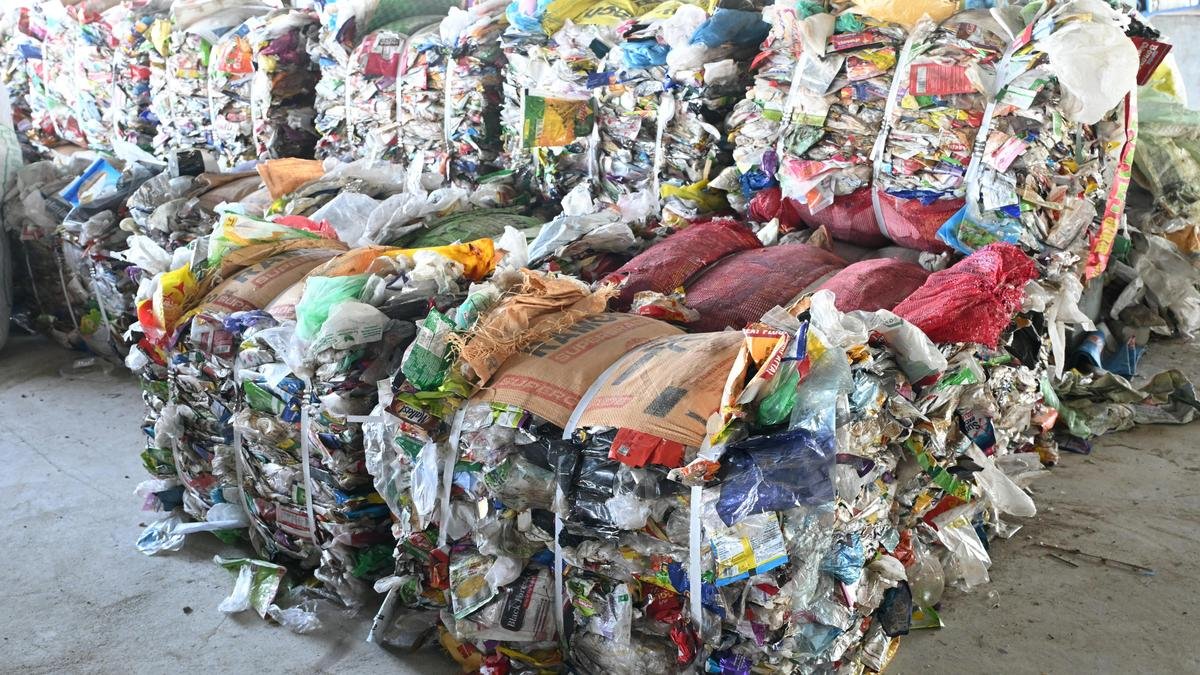
Bundles of plastic waste after being segregated at Jothi Nagar Centre in Thoothukudi, Tamil Nadu, on September 6.
| Photo Credit: RAJESH N./The Hindu
Since their synthesis by the chemist Leo Hendrik Baekeland and the explanation of their structure by Nobel laureate Hermann Staudinger, and their use since the 19th century, plastics have become convenient materials for daily use and are preferred over glass, which breaks easily. Plastics are manufactured by industry and used every day for their convenience by people, and much more in cities and suburbs than in rural villages.
A vast amount of this material is used by the consumer and most of it is thrown away as waste after a single use. India contributes more than 6.5% of the world’s plastic use. According to official estimates, the country’s plastic waste amounts to about 4.1 million metric tonnes per year. However, the Central Pollution Control Board (CPCB) has found that India generates 26,000 tonnes of plastic waste every day, which leads to 9.5 million tonnes a year. The major polluters are the cities and their suburbs, although several hundred tonnes of waste are generated in the rural areas as well, where it remains largely uncollected.
Published – September 18, 2026 09:00 am IST


