



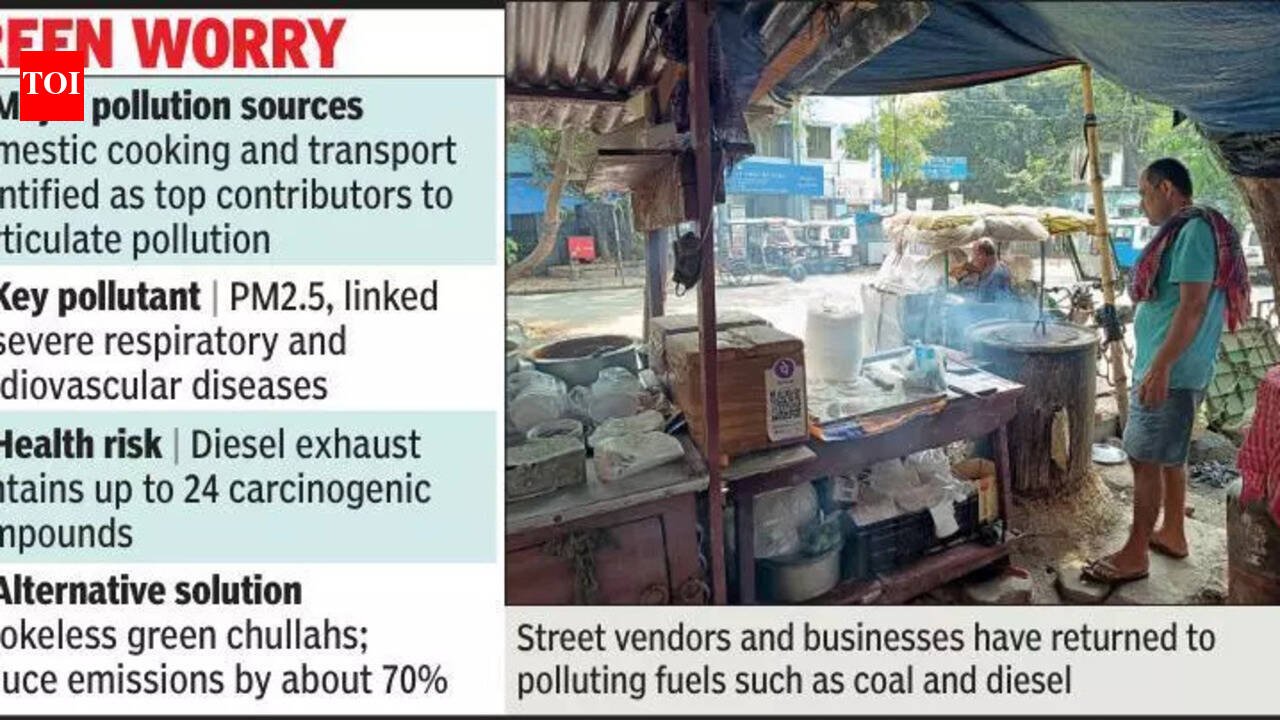
Kolkata: The gradual shift towards cleaner fuels — once seen as a major step towards improving the city’s air quality — was abruptly disrupted by the ongoing LPG crisis linked to the conflict in West Asia. The shortage and rising costs of LPG are pushing households, street vendors and businesses back to polluting fuels such as coal and diesel, raising concerns about a potential spike in the city’s air pollution levels.Studies on pollution source apportionment — first conducted by the National Environmental Engineering Research Institute (NEERI) and later by The Energy and Resources Institute (TERI) — identified domestic cooking and transport as the 2 largest contributors to particulate pollution in Kolkata. Fine particulate matter, especially PM2.5, poses serious health risks as it can penetrate deep into the lungs and bloodstream.To tackle the problem, West Bengal Pollution Control Board launched targeted interventions encouraging small businesses and households to switch to LPG. As part of a pilot programme, the board distributed 200 LPG stoves and gas connections to food vendors and provided LPG-powered irons to 150 traditional pressers, commonly known as ironers.The results were promising. Many street food vendors abandoned coal-fired ovens and switched to LPG-based cooking systems. According to WBPCB scientists, the initiative played an important role in reducing local emissions and improving air quality in several neighbourhoods.However, the current fuel crisis is reversing these gains. WBPCB officials said they were alarmed to learn that several food vendors and ironers who adopted LPG already returned to conventional fuels such as coal. The trend is not limited to small businesses. Some restaurants, food-processing units, and industrial establishments that earlier shifted to cleaner fuels are now reverting to coal or diesel.Experts warn that this shift could significantly increase pollution levels. Diesel combustion alone releases a range of hazardous pollutants. WBPCB chairman Kalyan Rudra highlighted an alternative solution: smokeless green chullahs. “These improved cooking stoves are designed to reduce emissions by nearly 70% compared to conventional coal-fired ovens. The board already distributed around 11,000 green chullahs to urban slums and rural households. In addition, 200 large community versions were installed in schools for cooking midday meals, replacing traditional coal-based cooking systems,” he said.


