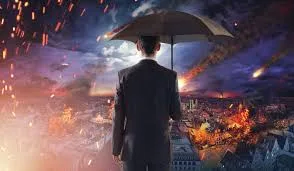
In the early hours of a quiet morning, somewhere far from television cameras and diplomatic conferences, a family gathers what they can carry and leaves their home behind. The reasons are painfully familiar: artillery fire in the distance, rumours of advancing troops, or the sudden disappearance of neighbours.
For many of us, war is something we encounter through headlines and history books. For millions of others, it is a daily reality that redraws the map of their lives. In a century that promised unprecedented prosperity and interconnection, the persistence of war raises a difficult question: why, despite our progress, does peace remain so fragile?
The tension between war and peace is as old as human civilisation. Yet in our globalised age, the consequences of conflict stretch far beyond the battlefield, and the meaning of peace is no longer just the absence of war. It has become a complex project involving justice, memory, reconciliation, and shared responsibility.
The Changing Face of War
For much of history, war was imagined as a clash between organised armies on defined battlefields, fought for territory, glory, or resources. The world wars of the 20th century shattered that illusion. They revealed how industrial technology, nationalism, and ideology could turn entire societies into instruments of destruction. Civilians were no longer bystanders; they became strategic targets.
Today’s wars are rarely declared in the old, formal sense. They unfold in fractured states, dense urban neighbourhoods, and on social media feeds. Conflicts in places like Syria, Yemen, Ukraine, Gaza, Sudan, Iran and beyond show similar patterns: blurred frontlines, non-state groups, foreign interventions, and a staggering human cost. According to the UN, tens of millions are displaced by violence and persecution, and children are often the ones who pay the highest price—losing not only their homes but also their education, safety, and future prospects.
Modern warfare is also waged in less visible ways. Cyberattacks disrupt critical infrastructure; disinformation campaigns fuel fear and hatred; economic sanctions and blockades can strangle entire populations. Drones allow killing at a distance, with operators thousands of miles away from the people they target. The distance between decision-makers and the human consequences of those decisions has never been greater.
Yet the underlying drivers of war remain recognisable: unresolved historical grievances, competition over resources, authoritarian power, perceived humiliation, fear of the “other,” and the manipulation of identity—ethnic, religious, or national—into a justification for violence.
Peace: More Than a Ceasefire
If war has evolved, so too must our understanding of peace. A signed ceasefire or a silenced gun does not automatically create a peaceful society. Without justice, accountability, and meaningful participation, silence can simply mask the simmering embers of future conflict.
Peace researchers often distinguish between “negative peace” and “positive peace.” Negative peace is simply the absence of direct violence. Positive peace describes the presence of conditions that make a return to war less likely: fair institutions, respect for human rights, economic opportunity, equality before the law, and the ability of citizens to participate in decisions that affect their lives.
Around the world, post-conflict societies offer hard-earned lessons. In Rwanda, truth-telling and community-based courts were used—however imperfectly—to confront the horrors of genocide and attempt to rebuild trust. In South Africa, the Truth and Reconciliation Commission allowed victims and perpetrators of apartheid-era crimes to testify publicly, acknowledging pain that could not simply be legislated away. In Northern Ireland, power-sharing agreements and cross-community dialogues helped reduce the violence, even as political tensions remain.
These examples show that sustainable peace requires more than diplomatic agreements; it requires collective courage to look honestly at the past and to imagine a future in which former enemies accept one another as neighbours and citizens—not threats.
The Invisible Scars of War
One of the most overlooked aspects of war lies in its psychological and social aftermath. Long after bombs stop falling, trauma persists. Survivors of conflict often struggle with grief, guilt, and a persistent sense of insecurity. Children who grow up under bombardment or in refugee camps can internalise violence as normal.
The environment bears scars as well. Burning oil fields, destroyed infrastructure, contaminated water sources, and unexploded ordnance all turn landscapes into long-term hazards. The destruction of farmland and livelihoods can destabilise regions for decades, creating the very desperation that fuels further conflict. In this way, war and environmental crisis form a vicious circle, each reinforcing the other.
War, Peace, and the Global Conscience
There is a temptation, particularly for those living in relative security, to see distant wars as unfortunate but inevitable—things that happen “over there” to people who are not like us. This distance is dangerous. In an interconnected world, no conflict is truly isolated.
Refugees crossing borders change the political debates in receiving countries. Global supply chains mean that violence in one region can affect food and energy prices worldwide. Climate shocks can exacerbate tensions over land and water, nudging fragile societies closer to unrest. And in an age of nuclear weapons, the risk—however remote—of miscalculation or escalation carries consequences on a planetary scale.
At the same time, ordinary citizens are no longer powerless observers. Technology that spreads propaganda can also be used to document war crimes, coordinate humanitarian support, and build transnational movements for peace and justice. When people refuse to dehumanise those on the other side of a border or an ideology, they undermine one of the key foundations of war: the belief that some lives are worth less than others.
International law and institutions, from the Geneva Conventions to the International Criminal Court, represent humanity’s attempt to place limits on the cruelty of war and to hold leaders accountable. These frameworks are often criticised as weak or inconsistent—and they are. Powerful states too often ignore rulings, and justice can be slow. Yet their existence matters. They offer language and tools for activists, journalists, survivors, and even some decision-makers who are trying to push history in a more humane direction.
Building Peace in Everyday Life
The theme of war and peace can feel vast and abstract, as though it belongs only to generals, presidents, or international diplomats. But peace is also built—or undermined—in much smaller, everyday actions.
Education that teaches critical thinking and empathy can reduce the appeal of extremist narratives. Journalism that humanises all sides of a conflict can disrupt the simplistic ‘good versus evil’ stories that make violence easier to justify. Community leaders, religious figures, and artists can create spaces where people from different backgrounds encounter one another as individuals, not stereotypes.
On a personal level, resisting hatred and refusing to spread dehumanising language online or offline may seem trivial compared to artillery and drones. Yet every war begins with a story about who deserves to live in dignity and who does not. Challenging those stories, insisting on the equal worth of all human beings, is a form of peacebuilding.
Choosing Humanity Over Indifference
War and peace are not just opposite states; they are reflections of how we choose to live together on this planet. War thrives on fear, humiliation, greed, and the belief that security can be built on the suffering of others. Peace rests on a different set of assumptions: that our security is intertwined, that justice matters, and that the dignity of each person is not negotiable.
An honest conversation about war and peace must confront uncomfortable truths: the economic interests that profit from conflict, the political leaders who gain popularity by inflaming nationalism, and how global powers selectively value some lives over others. A truly international vision of peace demands that we care about a life lost to a missile strike in one part of the world as much as we care about a life lost closer to home.
In the end, peace is not a distant utopia but a daily, imperfect effort—a series of decisions taken by governments, communities, and individuals. It is written in ceasefire agreements and in school curricula, in courtroom verdicts and in the stories we tell our children about those who are different from us.
To choose peace is to recognise that every stranger is someone’s child, someone’s parent, someone’s beloved. It is to understand that in the long run, there can be no secure islands of prosperity surrounded by seas of suffering. On this small, shared planet, war may be our oldest story—but it does not have to be our final one.
(Author is Op- Ed Editor, Rising Kashmir, and can be reached at: [email protected])