



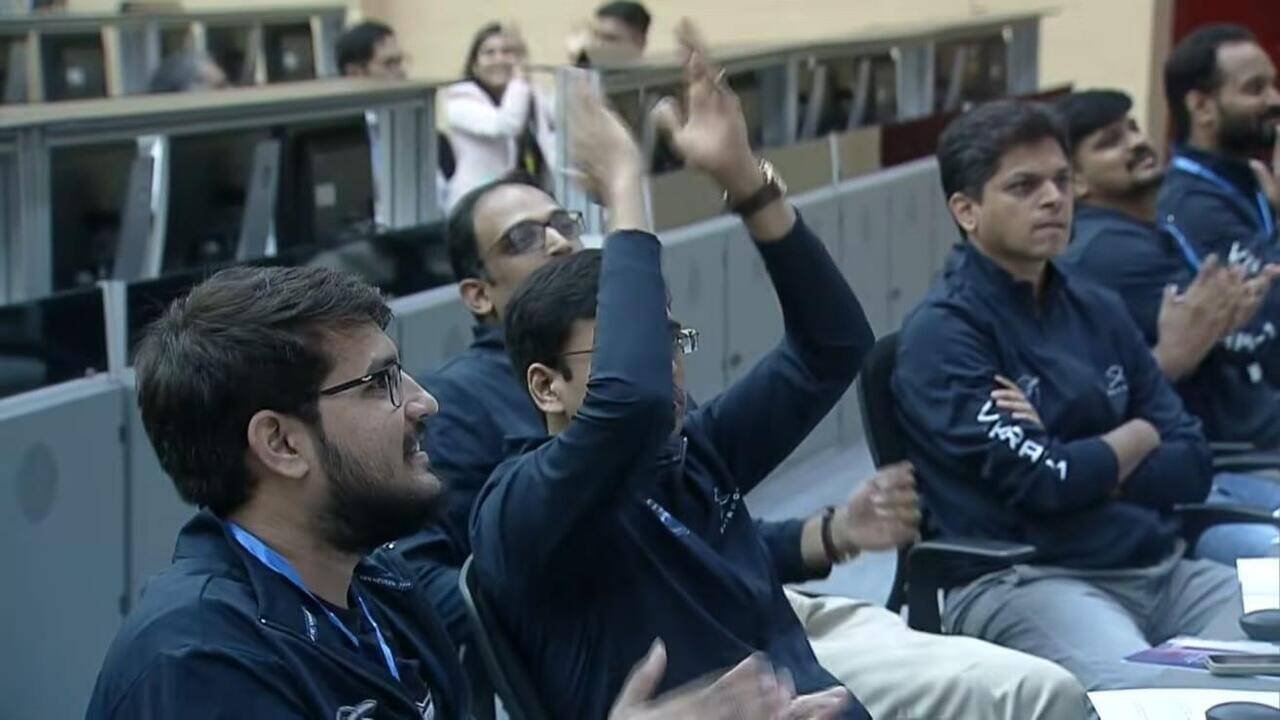
Vadodara: As Skyroot Aerospace marked a new milestone in India’s private space sector with the successful launch of Vikram-1, a 29-year-old engineer from Vadodara emerged as one of the key minds behind the mission. From AI-driven systems to real-time mission control, MSU alumnus Romil Pandya helped power critical technologies that supported the landmark launch.Romil Pandya, an alumnus of the Faculty of Technology and Engineering at Maharaja Sayajirao University (MSU), serves as AI and automation frontier lead at Skyroot Aerospace.He was part of the core team responsible for mission-control systems, artificial intelligence, automation, live mission management and data processing that supported the launch.Pandya said the month leading up to the launch was the most demanding phase of the mission. Stationed at Isro’s Satish Dhawan Space Centre (SHAR), the team worked almost round the clock, often surviving on just three or four hours of sleep while carrying out continuous software updates, testing and validation.“It was extremely stressful. We spent the last month at SHAR ensuring every software update and system worked flawlessly. There were days when we slept barely three or four hours. But seeing Vikram-1 lift off successfully made every sacrifice worthwhile,” Pandya told TOI.Apart from developing AI algorithms and mission software used in the rocket’s development and testing, Pandya was also responsible for the real-time dashboards and data visualisation inside the mission control centre and during Skyroot’s live webcast. His systems enabled the smooth processing and visualisation of mission data throughout the flight.Pandya was seated in the mission control centre alongside Skyroot co-founder Pawan Kumar Chandana during the launch.A 2018 civil engineering graduate from MSU, Pandya pursued a master’s degree in computer-aided structural engineering at IIIT Hyderabad from 2019 to 2021 before joining Skyroot Aerospace in 2022.Although he began his academic journey in civil engineering, he said his interests shifted towards artificial intelligence, automation and space technology.“Working with Isro had always been one of my biggest aspirations. I entered civil engineering due to certain circumstances, but my calling was in advanced engineering, AI and space technology. Since joining Skyroot, I have had the opportunity to build systems that are now being used in successful space missions,” he said.After the launch, Pandya shared an emotional message on social media, describing the mission as the culmination of “sleepless nights, missed family dinners, moments of doubt and relentless belief”. He wrote that watching the systems he had developed perform flawlessly on the world stage was a moment he would cherish for the rest of his life.


