



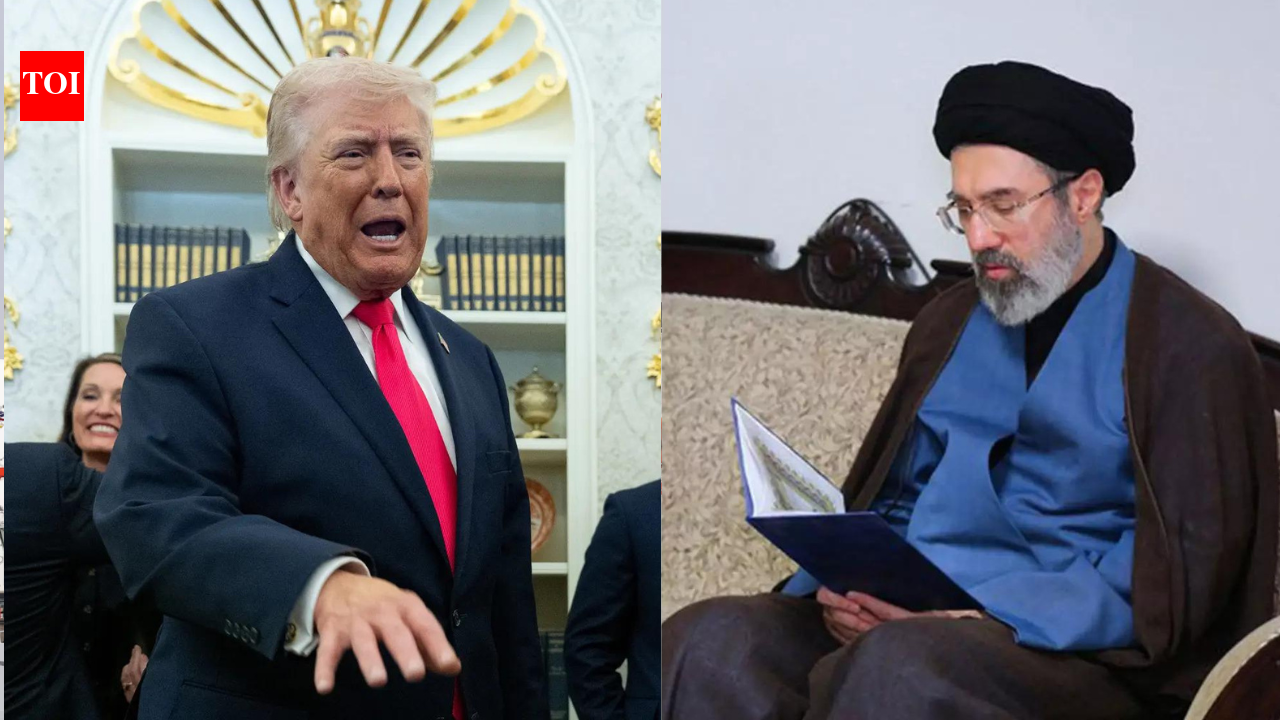
A little over five weeks after it began, the United States-Israel war with Iran has entered a pause, with a two-week ceasefire announced by US President Donald Trump. The conflict, which escalated rapidly into a wider regional war, left thousands dead, displaced hundreds of thousands and disrupted global energy markets.What began on February 28 as a coordinated US-Israeli strike on Iranian military and political infrastructure and leadership soon expanded across the Gulf, pulling in regional actors and targeting critical shipping routes.
The killing of Iran’s supreme leader Ayatollah Khamenei marked an unprecedented escalation, triggering retaliatory strikes and widening the theatre of conflict.Throughout the war, Trump’s stated objectives and timelines evolved significantly – from calls for regime change in Tehran to claims that US forces had “already won,” even as military operations continued. Officials in his administration offered differing explanations, underscoring what analysts described to the BBC as an unusually fluid and inconsistent war narrative.Here is a look at how the war unfolded, from its opening strikes to the latest ceasefire over the course of 39 days.
Shock and awe: Decapitation strike and immediate retaliation (Feb 28 – March 3)
The conflict began with what analysts described as a “decapitation strike.” On February 28, US and Israeli forces launched coordinated attacks across Iran, killing Supreme Leader Ali Khamenei and senior military officials. The strikes targeted command centres, missile systems and security headquarters, with B-2 bombers, fighter jets and cruise missiles deployed in one of the most complex joint operations in recent years.Civilian casualties mounted quickly, including a deadly strike on a school — later acknowledged by US officials as a targeting error.Iran’s response was immediate and expansive:
- Hundreds of missiles and drones were launched at Israel and US bases across the Gulf
- Targets included Bahrain, Qatar, Kuwait, Saudi Arabia and the UAE
- The Strait of Hormuz, a critical global oil artery, was effectively disrupted
This marked the transformation of a bilateral strike into a regional war within 48 hours. On March 1, the war claimed its first American casualties when an Iranian drone strike killed six US soldiers in Kuwait.
Expansion into a regional war theatre (March 4 – March 12)
By early March, the conflict had widened significantly:
- Hezbollah opened a northern front from Lebanon
- Gulf infrastructure and shipping lanes became active targets
- European powers and regional actors began defensive deployments
Iran appointed Mojtaba Khamenei as the new supreme leader on March 8, signalling regime continuity despite leadership losses.At the same time, attacks began targeting energy infrastructure:
- Oil depots and refineries were hit for the first time
- Iran escalated operations around the Strait of Hormuz, striking commercial vessels
The result: oil prices surged sharply, forcing global intervention to stabilise markets.
Energy war and strategic infrastructure strikes (March 13 – March 20)
Mid-March marked a decisive escalation into economic warfare.March 13 – Kharg Island strikeThe US bombed Kharg Island, which handles a majority of Iran’s oil exports, signalling a direct hit on Tehran’s economic lifeline. March 17–18 – Leadership and energy targets
- Senior Iranian leaders, including Ali Larijani, were killed
- Israel struck South Pars gas field (core of Iran’s gas output)
- Iran retaliated by hitting Qatar’s Ras Laffan LNG hub
This marked a clear shift: from military targets to strategic economic infrastructure, raising fears of prolonged global energy instability.
Multi-front escalation: Houthis, Gulf bases, and global spillover (March 21 – March 31)
By late March, the war had expanded further:
- Houthis in Yemen launched missiles at Israel
- Iranian strikes injured US troops in Saudi Arabia
- Shipping disruptions intensified in Hormuz
March 20-21: Attempted long-range strike on Diego Garcia Around March 20–21, the conflict briefly expanded beyond its immediate geography when Iran reportedly launched ballistic missiles towards Diego Garcia, a key US–UK military base in the Indian Ocean.According to Reuters, at least two missiles were fired:
- One broke apart mid-flight
- The other was intercepted by a US naval air defence system
- Neither missile struck the target
Simultaneously, diplomacy flickered. On March 23, Trump acknowledged talks with Iran – the first sign of potential de-escalation.However, this period was also marked by repeated US deadlines and threats, including ultimatums linked to reopening the Strait of Hormuz.
Direct confrontation and aerial losses (April 1 – April 5)
The war entered a more direct and risky phase in April.On April 3, Iran shot down a US F-15E fighter jet – the first such loss in the conflict – triggering a high-risk rescue mission inside Iranian territory. The downing reflected Iran’s retained military capability despite weeks of sustained bombardment.At the same time, Trump claimed the US had “largely achieved” its objectives but continued to authorise strikes, reflecting a widening gap between rhetoric and battlefield reality.
Brinkmanship and ceasefire (April 6 – April 7)
The final days before the ceasefire were marked by extreme brinkmanship.Trump issued multiple deadlines, including a final ultimatum warning that Iran’s “whole civilisation” could be destroyed if Hormuz was not reopened.Hours before the deadline:
- US and Israeli forces struck key infrastructure again, including transport networks
- Diplomatic pressure intensified, with Pakistan mediating
On April 7, the US and Iran agreed to a two-week ceasefire, with Iran committing to allow safe passage through the Strait of Hormuz. Oil prices fell sharply following the announcement, reflecting immediate market relief.
Shifting estimates and rolling deadlines
Alongside the evolving military situation, US President Donald Trump repeatedly revised both the expected duration of the war and the deadlines issued to Iran, creating a pattern of fluid timelines that became a defining feature of the conflict. In the opening days, Trump projected a relatively short campaign, telling the media that the war could last “four weeks, or less,” before adjusting that estimate to “four to five weeks.” Even as operations intensified, he signalled flexibility, saying the campaign would continue for “whatever it takes,” and at one point emphasising that wars could be sustained with a “virtually unlimited supply” of US munitions.As the conflict progressed into April, the projected timeline shifted again. In his first televised address, Trump said the US was on track to achieve its objectives “shortly, very shortly,” adding that “over the next two to three weeks, we’re going to bring them back to the Stone Ages, where they belong.” At other moments, he struck a contradictory note, claiming the war was “pretty much complete” while also insisting that forces needed to “finish the job.”Running parallel to these broad estimates were a series of operational ultimatums tied largely to Iran’s actions in and around the Strait of Hormuz. These deadlines were repeatedly set and then extended:
- March 21: Trump issued an initial 48-hour warning linked to Iranian actions in the Gulf
- March 23: The deadline was pushed back by five days as diplomatic signals emerged
- March 26: A further extension of 10 days followed amid continued hostilities
- April 4: A fresh 48-hour ultimatum was announced as tensions peaked again
- April 7: A final deadline was set hours before the eventual ceasefire announcement
According to analysts cited by BBC, while it is not unusual for wartime timelines to evolve as battlefield realities change, the frequency and range of revisions in this case stood out, reflecting both the unpredictability of the conflict and the administration’s shifting assessment of its trajectory.
Trump’s shifting war goals
Trump’s stated objectives evolved significantly over the course of the war:Initial phase (Feb 28):
- Called on Iranians to overthrow their government
- Framed strikes as an opportunity for regime change
Early war (March 1–6):
- Focus shifted to destroying Iran’s missile and military capabilities
- Issued demand for “unconditional surrender”
Mid-war (March 8–15):
- Contradictory claims: War “just beginning” vs “pretty much complete”
- Softened stance on regime change
Late war (March end–April):
- Emphasised nearing objectives
- Focus on reopening Hormuz and stabilising region
The broader picture
The 39-day conflict marks the second time in under a year that Trump directly engaged US forces in a war involving Tehran. While the administration has framed the ceasefire as a success, the shifting objectives, timelines and evolving battlefield dynamics highlight the complexity of the campaign.The conflict had far-reaching consequences:
- Over 3,000 deaths reported, largely in Iran and Lebanon
- Millions displaced across the region
- Global oil and shipping disruptions
- Expansion into Lebanon and Red Sea theatres
As the war has deepened geopolitical divides, with domestic political backlash in the US and increased tensions across allied nations. The long-term outcomes, both in Iran and across the region, remain uncertain, even as the guns fall temporarily silent.
What next?
The ceasefire remains fragile, with key issues, including Iran’s military capabilities, regional influence and nuclear programme, unresolved.While Trump has framed the pause as a strategic success, the war’s shifting objectives, inconsistent timelines and widening scope suggest that its long-term consequences are still unfolding.As history has shown, from Vietnam to Iraq, wars rarely end on the timelines set at their outset.


