



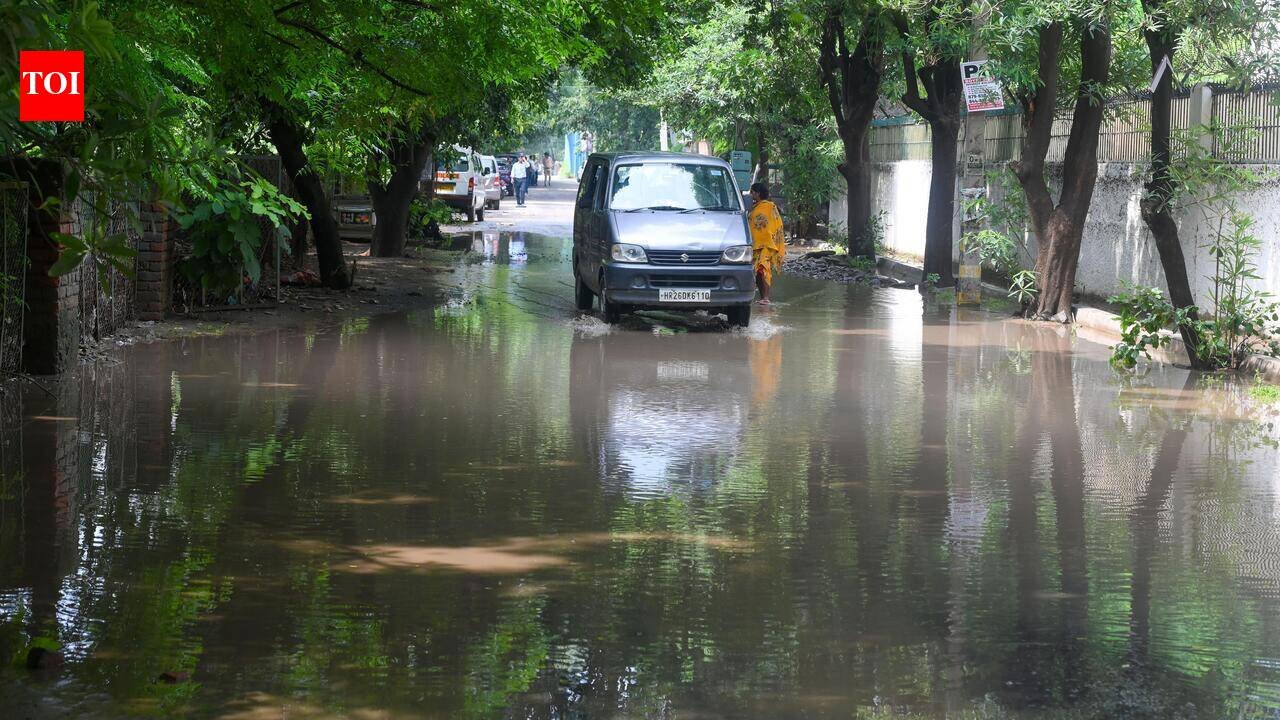
Gurgaon: MCG is exploring water injection wells and underground storage tanks to tackle recurring waterlogging at some of the city’s worst-affected locations.Officials are considering water injection wells with a capacity of 48 to 80 litres per second, along with underground storage tanks. The combined capacity is proposed to be three times the rainfall volume expected during the design storm, according to the civic body. In simple terms, the system would create an additional route for rainwater.MCG commissioner Pradeep Dahiya on Tuesday held a meeting with IIT Gandhinagar professors Udit Bhatia and Vivek Kapadia, along with senior MCG and GMDA officials and councillors to discuss a long-term solution.Dahiya emphasised completing the proposed works within one year and asked officials and technical experts to prepare a coordinated implementation plan.“We need permanent, technology-driven solutions that can manage excess rainwater at vulnerable locations. Along with strengthening the existing drainage network, we are exploring modern water-management systems that can store and inject rainwater underground, reduce pressure on drains and also help recharge groundwater,” Dahiya said.The IIT Gandhinagar team will visit the identified locations on Wednesday to assess the ground conditions and determine the technical feasibility of the proposed system.Unlike conventional pumping, which primarily shifts floodwater from one location to another, the proposed system is aimed at storing excess rainwater, reducing surface water accumulation and recharging groundwater.The first phase will focus on Subhash Chowk, Rajiv Chowk, Medanta Hospital Road and Sheetla Mata Road. The proposed system will combine underground storage tanks with water injection wells.The basic idea is to temporarily store excess rainwater underground when the existing stormwater drainage network is overwhelmed and then gradually inject the water into suitable underground strata, where geological conditions allow, an MCG official said.This came in the wake of Subhash Chowk, Sheetla Mata Road and Medanta Hospital Road having been severely flooded during Monday’s heavy rain.During heavy rain, excess water from roads and surrounding areas would be diverted into an underground storage tank. The tank would act as a buffer when the city’s stormwater drains cannot carry the entire volume immediately.The stored water would then pass through the required filtration arrangements before being sent into a water injection well. The well would carry the water below ground and release it into suitable permeable geological layers, allowing it to recharge the aquifer.However, the success of an injection well depends heavily on the local geology, permeability of underground layers, groundwater levels and the quality of water being injected. “The team from IIT Gandhinagar will visit these sites on Wednesday to assess the feasibility of implementing these measures,” the MCG office said.The proposal comes after severe waterlogging on Monday exposed the vulnerability of several major roads and junctions.Subhash Chowk, Sheetla Mata Road and Medanta Hospital Road area were among the severely flooded locations, disrupting movement and putting additional pressure on the city’s drainage and pumping arrangements.The civic body is now looking at whether underground storage and groundwater recharge can supplement the existing stormwater network instead of relying solely on emergency pumping during every major spell of rain.


