



Mumbai: The battle cries Indian cricket broadcasters use to market team contests have a recurring theme of revenge, pride and anger. But when these promos fall flat, the resulting roasting is just as brutal. Star, in its various avatars across mergers and rebrands, has consistently beamed live cricket to Indian homes. They have also consistently taken the flak.
Take the Cupcake promo ahead of the India-South Africa Super 8 tie in the ongoing T20 World Cup. This time, it wasn’t even about ‘revenge’. An Indian fan reminds a Proteas fan about their 2024 T20 World Cup final heartbreak, the cupcake the Proteas fan was munching chokes in his throat – a reference to the South African team’s old failing. To make it worse, cupcake is a nickname of the President of South Africa.
The haughty undertone of the advert was ridiculed by most cricket fans. The cupcakes made it to the pre-match South African media talk too. Once India lost badly, the broadcasters quietly took the advert offline, to avoid being trolled further.
“I think it was plain stupid,” said veteran adman Sandeep Goyal. “I know it’s a fun business and someone tried to be irreverent. But in this case, they crossed the line.”
Some felt this sneering-the-opponent theme was just a lazy pick from the old playbook and creatively poor. Others felt the backlash wouldn’t have been so bad, had the result gone in India’s favour.
“The promo is only as good or bad as the chemistry it creates with the viewers,” said Harish Bijoor, brand strategist. “I believe the cupcake promo got trolled because of the result. There is nothing good, nothing bad, nothing black, nothing white when it comes to promotions.”
Chasing eyeballs
Sports broadcast promos are often a chest-thumping exercise. The stakeholders are targeting greater eyeballs to cover costs.
Directed towards the casual fan, the promo is a tool to whip up interest. The devoted fan is going to tune in anyway and would approve of a promo with deeper meaning. When the stakes are so high, broadcasters are chasing mass appeal.
With the cupcake ad, though, the makers may have gotten the basic premise wrong. They may have overlooked that there is little animosity towards a South African team in India compared to an Australian team for their rough edges or Pakistan for obvious reasons. With South Africa, most cricket fans have endured their collective pain, and cheered them to win close matches when not facing their own team.
A similar promo, in anticipation of Australia’s qualification for the Super 8s was in waiting but got junked. The same broadcasters had delivered the popular ‘Mauka, mauka’ campaign ahead of the 2015 ODI World Cup. The advert perfectly summed up the pain of a Pakistan cricket fan, unable to burst his saved-up firecrackers over his adulthood, following his team’s repeated losses to India in World Cups.
On similar lines, a recent commercial in Pakistan tried to cash in on the handshake gate controversy by integrating a dig at the Indian cricket team while promoting a Pakistan-Australia bilateral series just before the World Cup. There have been better ads made, but few more perfectly timed to cater to the sentiment of its audience.
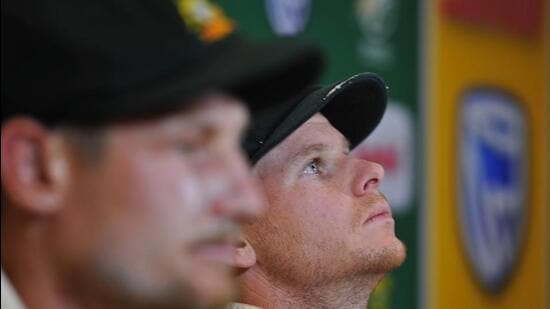
This week after Australia’s tour to South Africa was announced, Amazon Prime, the Australian broadcasters swiftly reopened old wounds from the Sandpaper Gate scandal. Unapologetically, images of Steve Smith and Dave Warner in tears were replayed to promote Australia’s first return Test to Cape Town after the infamous 2018 match.
It’s the promos that make prophecies before a ball is bowled that are vulnerable to falling flat. Take the 300 runs predictor used during the league phase of the T20 World Cup. In an attempt to play up the aggressive streak of the home side, pre-match programming centered around discussions on whether the Indian team would be able to touch Mt 300 in a T20I. Ultimately, they didn’t even come close in what was an underwhelming batting performance from the hosts in the early rounds.
The same script has played out before. Pepsi’s ‘Blue Billion’ campaign launched ahead of the 2007 ODI World Cup saw Sachin Tendulkar and his teammates transformed into on-field tigers while attempting to snatch a stolen cola bottle back. The much-promoted campaign was pulled down after India’s early exit from the tournament.
There have been craftier adverts made too which delivered top of the mind recall. In the 2000s, a Neo Sports advert depicted events in a chaotic household that left a chance of a gas leak and equated it to India-Pakistan match pressure. The tagline said “Get used to tension.”
Star themselves promoted the women’s ODI World Cup with a smart advert pitching for gender neutrality, where a lady demands a Deepti Sharma jersey over a Rohit Sharma jersey, opening the eyes of the shopkeeper.
One of the promos of the ongoing World Cup had Shafali Verma backing the men in blue saying “Mhare chore ka choriye se kam hai ke,” normalising a successful women cricketer backing the men’s team.
Us vs Them
“What happens is someone in the planning room will pitch for a share of heart over share of mind (consumer behaviour). That’s when you add a dash of patriotism,” said Goyal.
“Theoretically, the official broadcaster shouldn’t be taking sides. You should try to maintain neutrality,” the adman added. “Selling an India match is anyway not a problem. Selling the non-India matches smartly should be their objective.”
Ultimately, when it comes to promoting faceoffs, unapologetic banter and negative marketing prevails. The ‘us vs them’ script is perceived to be more bankable.
“Anything negative is that much more watchable, noticeable, and to that extent in sport, it is all about putting down the opponent,” said Bijoor. “It doesn’t work all the time as was seen in the current case. Eat pie or humble pie.”


