




Countries including the UK, Japan, China and South Korea have said they are still considering their options after the US president, Donald Trump, urged them to send warships to the strait of Hormuz to secure the vital shipping route.
In a post on his Truth Social platform, Trump called on the UK, China, France, Japan, South Korea and other countries to send ships to the waterway, the world’s busiest shipping route which is being violently blockaded by Iran.
In his post, Trump alleged that “many countries, especially those who are affected by Iran’s attempted closure of the Hormuz strait, will be sending war ships, in conjunction with the United States of America, to keep the strait open and safe”.
In a later post, Trump extended his callout to all “the countries of the world that receive oil through the Hormuz strait” to send military support.
The effective closure of the strait of Hormuz by Tehran, in retaliation for bombing by the US and Israel, has proved catastrophic for global energy and trade flows, causing the largest oil supply disruption in history and soaring global oil prices.
However, the international response to Trump’s callout for the ready dispatch of warships to the strait has so far proved vague and reluctant, with countries unwilling to commit to a military response that could prove treacherous for their navies.
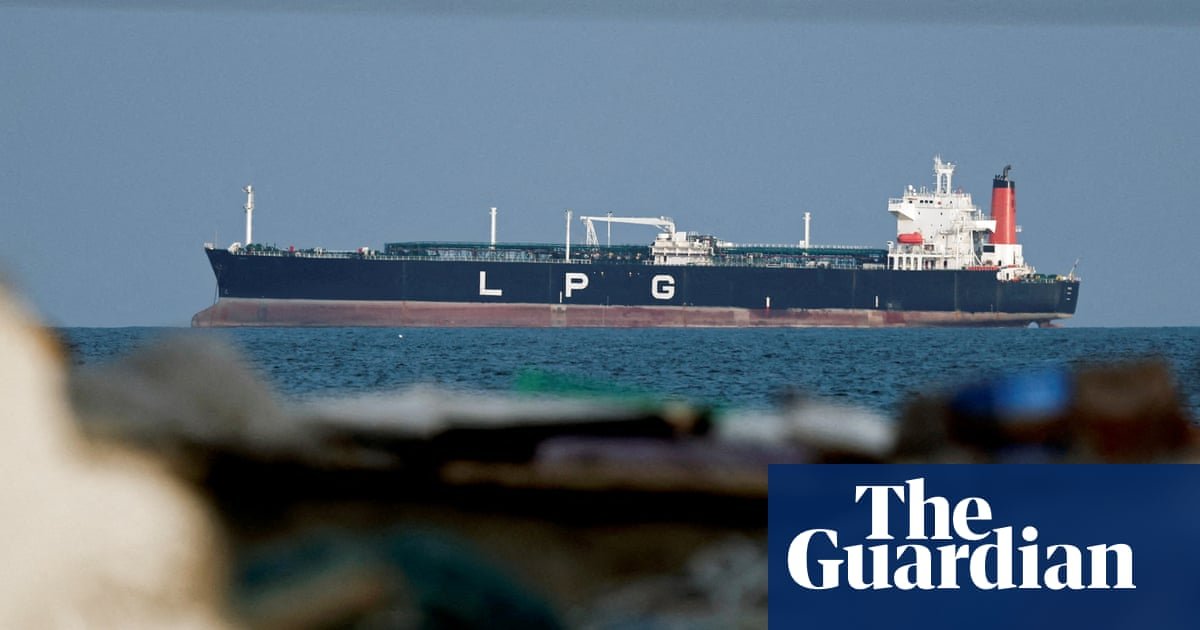
Tehran has said any oil tanker heading for the US, Israel or its allies was a legitimate target in the war and would be “immediately destroyed”. Sixteen tankers have been attacked in the strait of Hormuz since the war started in late February and Iran has threatened to lay explosive mines in the critical waterway. So far, the US has not sent its own navy ships to escort tankers through the strait.
A statement by the UK Ministry of Defence said they were in discussions with allies over “a range of options to ensure the security of shipping in the region”.
Speaking on the BBC, the energy secretary, Ed Miliband, said the UK had been in discussion with the US and other allies on how to keep the strait open and were considering sending mine-hunting drones. “Any options that can help to get the strait reopened are being looked at,” said Miliband.
A senior Japanese politician told the news channel NHK TV that Japan would not rule out sending warships to the region to secure the shipping lane but said the obstacles were very high.
“From a legal standpoint, the possibility cannot be ruled out, but given that the dispute is continuing, this is something we should judge cautiously. I think the hurdle is very high,” said Takayuki Kobayashi, the chair of the ruling Liberal Democratic party’s policy research council.
South Korea, heavily dependent on energy flows through the strait, said they had taken note of Trump’s comments but would communicate closely with the US and review the situation before making any decisions on how to help secure the shipping route.
“Our government is closely monitoring developments related to the Middle East situation,” said South Korea’s foreign ministry in a statement, adding that they were “exploring various measures from multiple angles to protect our citizens and secure the safety of energy transport routes”.
France had already made its position clear prior to Trump’s comments. Speaking on Thursday, the French defence minister, Catherine Vautrin, said France would not be sending warships to the strait of Hormuz while the conflict continued to escalate.
“I’m very clear and firm on this topic, at this point there is no question of sending any vessels to the strait of Hormuz,” said Vautrin. She said that France maintained a “purely defensive position” and there were no current plans to move the French navy’s flagship vessel, the Charles de Gaulle aircraft carrier, out of the eastern Mediterranean.
Speaking in Cyprus earlier in the week, the French president, Emmanuel Macron, had said that France and its allies were preparing a “purely defensive” mission to escort vessels through the strait of Hormuz, but only once the “most intense phase” of the US-Israeli war on Iran ends. Macron described it as a “purely escort mission” with involvement by both European and non-European countries.
According to the Financial Times, EU foreign affairs ministers are also considering widening the scope of the EU’s Aspides naval mission, which currently provides protection to ships in Yemen from attacks by Houthi rebels, to extend to the strait of Hormuz. The Aspides naval mission currently consists of three ships from France, Italy and Greece.
China’s response made no mention of military intervention. As an ally of Iran that is also highly dependent on crude oil imports from the strait, China is reportedly in talks with the Iranian regime about allowing oil tankers to pass through from the Gulf, but no definitive outcome has been agreed.
In a statement given to CNN by the Chinese embassy in Washington over the weekend, they said China would work to strengthen “communication with relevant parties” in the Middle East and “play a constructive role for deescalation and restoration of peace”.


