



Limited media exposure formed part of the plan
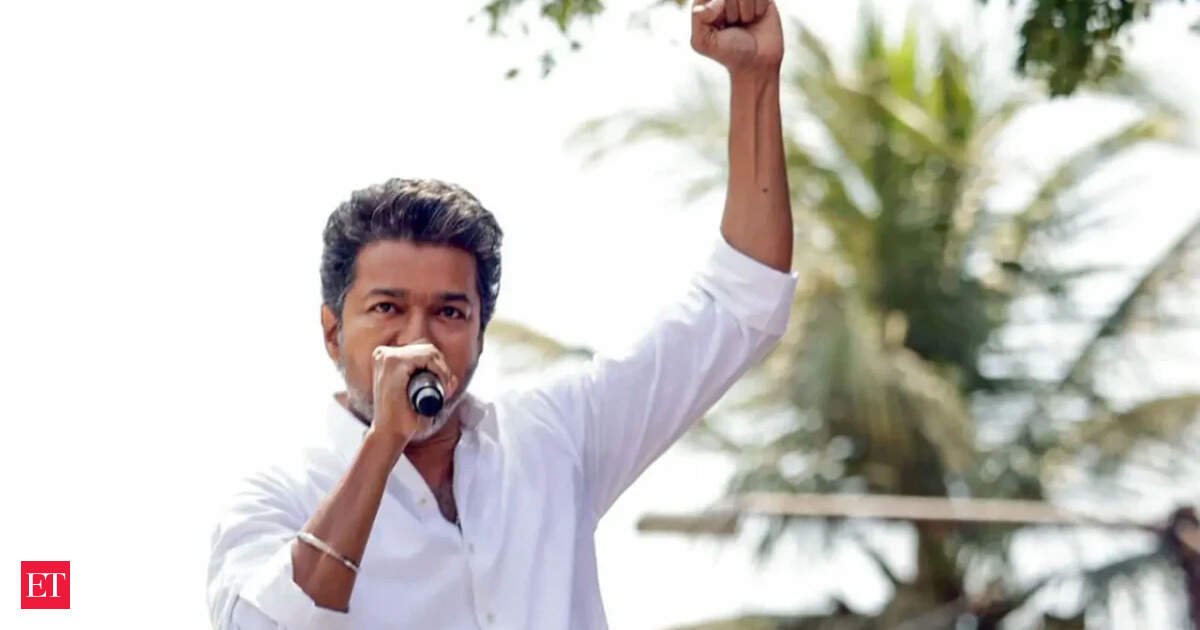
Vijay avoided traditional press conferences and unscripted interviews during the campaign. Even after the initial results, he did not speak to mainstream media outlets. While DMK and AIADMK leaders addressed the press daily, TVK limited its direct communication. This approach reduced the risk of controversies and kept each public statement focused.
Fan networks turned into political base
TVK built on Vijay’s pre-existing fan clubs under the Vijay Makkal Iyakkam. These clubs, active across Tamil Nadu before the party’s formation, had experience in organising events and welfare work. The party turned this network into a political structure.
In February 2025, TVK announced plans to appoint over 70,000 booth-level agents, close to the number of polling booths in the state. These agents handled voter turnout, local issues, and election-day work on the ground.
IT wing drove digital campaign
TVK’s IT wing played a central role. Vijay described his party’s IT and social media wing as “the best in India.” A team named “Voice of Commons” created short videos, reels, and visuals aimed at younger voters. The content focused on themes of social justice, secularism, egalitarianism, and welfare.
The party used Instagram, YouTube, X, and WhatsApp to share official messages and fan-generated content. Hashtags and challenges helped spread information without heavy spending on advertising. Supporters acted as “virtual warriors” and maintained disciplined online messaging.
Controlled visuals shaped public image
The campaign used carefully chosen images and videos that presented Vijay as a calm leader focused on issues rather than daily political fights. This direct reach through social media allowed the party to connect with voters without depending on traditional news outlets.
Reports showed strong support for TVK among first-time voters and the 20-29 age group. These voters responded to messages on dignity, women’s empowerment, and clean governance.
Major events and manifesto highlights
TVK’s state conference in Vikravandi in October 2024 drew large crowds. Vijay spoke about the party’s ideology based on the ideas of Ambedkar, Periyar, and Kamaraj, with focus on secularism, social justice, and state autonomy. Videos from the event spread widely online.
The party’s manifesto gave importance to women. It fielded 24 women candidates and promised monthly assistance of Rs 2,500 to women heads of households, free LPG cylinders, and gold for brides from poor families. TVK contested all 234 seats on its own.
Similar paths seen in other places
Vijay’s use of social media and fan base follows examples from other regions. In Nepal, Balendra Shah used online communication to rise to power. In New York, Zohran Mamdani combined digital outreach with ground efforts to win support among young voters.


