



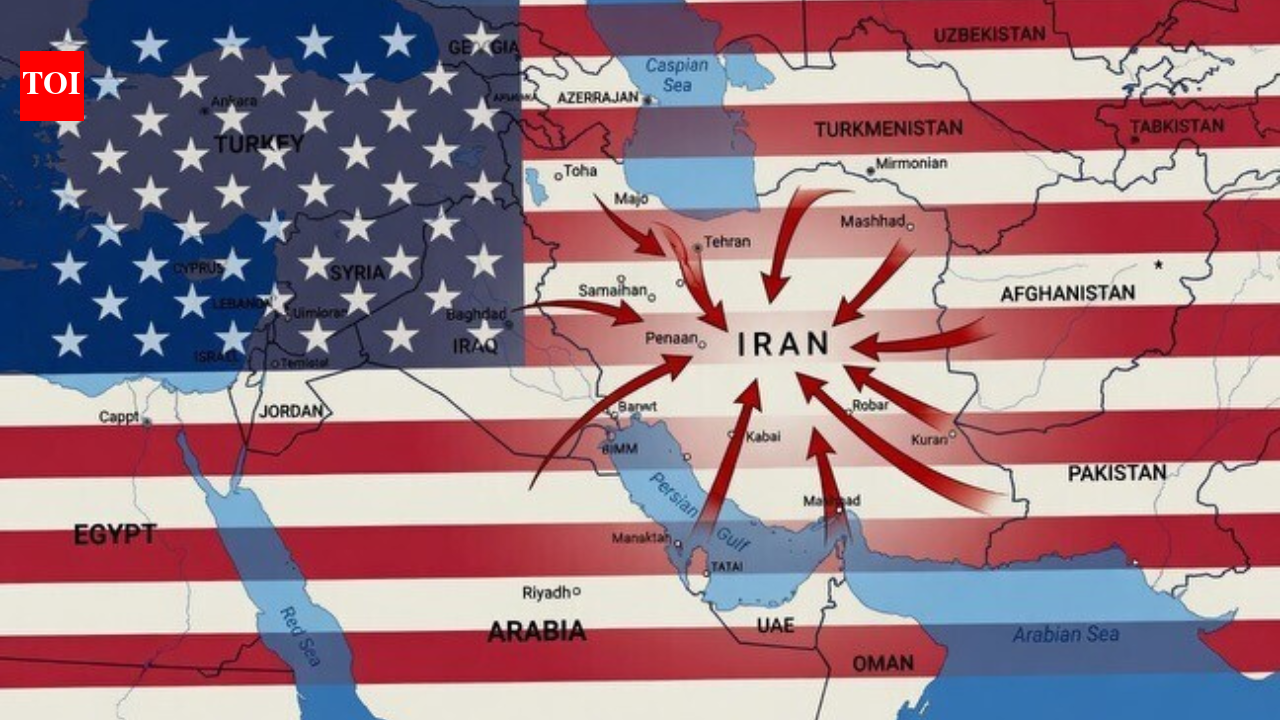
US President Donald Trump on Monday shared a map of West Asia on Truth Social featuring an American flag overlay and red arrows directed toward Iran.Chinese platforms including Douyin, Bilibili, and Weibo are now required to verify creators’ credentials.This law directs Influencers to also properly cite any studies or data used in their videos and clearly label AI-generated material featured in their content. Proof of expertise may include a professional licence, university degree, or other recognised certification.According to Dexerto, creators speaking on regulated or serious topics without verified qualifications could face fines of up to 100,000 yuan, roughly $14,000.Technology analyst Tim Bajarin raised concern over AI while writing in Forbes. “These fakes are no longer just still pictures. AI-generated faces today blink naturally. They breathe like real people. They talk using voices cloned from only a few seconds of sound. They show up in video calls. They drop voicemails that sound legit. They pop into news stories that spread worldwide. Fact-checkers do not even get a chance to catch them in time,” he mentioned.He added that whether the policy works or not, it is still a turning point. “For the first time on a large scale, professional codes of practice are being brought to the influencer economy.”While some supporters like Tim argue the law promotes higher standards for information on significant issues, critics worry that stricter limits on who can speak about certain topics may restrict public debate.The post came hours after Trump warned Iran that “the clock is ticking” to accept a US-backed proposal aimed at ending the ongoing conflict. In a message posted on Truth Social on Sunday, Trump wrote, “For Iran, the Clock is Ticking, and they better get moving, FAST, or there won’t be anything left of them. TIME IS OF THE ESSENCE!”The recent post has further escalated the tensions between Washington and Tehran amid stalled peace negotiations.Trump-Netanyahu talksThe warning followed discussions between Trump and Israeli PM Benjamin Netanyahu on Sunday evening, according to reports by The Times of Israel.The two leaders discussed the possibility of renewed military action against Iran, along with Trump’s recent visit to China.Ceasefire in placeThe conflict that began on February 28 after joint military strikes by the United States and Israel targeted sites inside Iran, has maintained a fragile ceasefire since April 8. However, negotiations aimed at reaching a broader peace agreement have reportedly failed to make progress.The war also has led to an effective blockade of the critical Strait of Hormuz, through which some 20 per cent of global oil exports pass in peacetime.Washington has demanded that Tehran should restrict nuclear activity to a single facility. Iran, meanwhile, has insisted that sanctions be lifted, overseas assets released and military operations across the region halted before any further negotiations can resume.


