



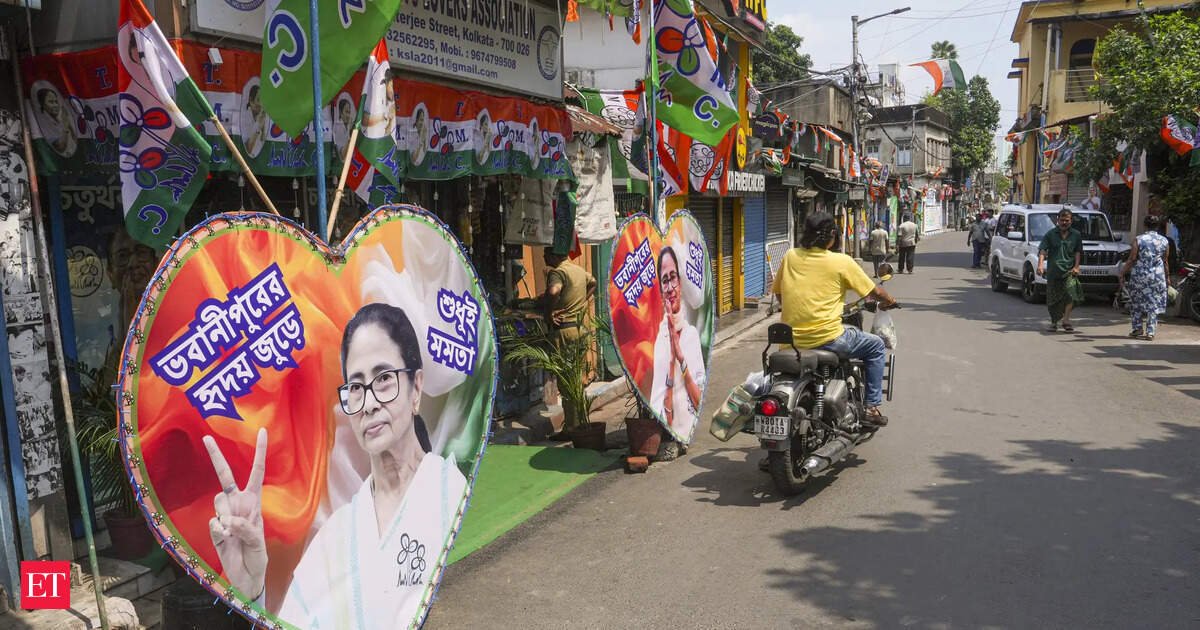
Both the Trinamool party symbol of ‘Jora Ghas Phul’ (two flowers and grass) and its substantial corpus of funds (Trinamool is the second richest regional party after TDP) are now effectively under jeopardy with paragraph-15 of the Symbols Order and the 1972 Supreme Court order in Sadiq Ali Vs Election Commission of India looming large.
Amid a party split, while the control of party funds and other assets including office spaces is not within the ECI’s remit but one for civil courts to assess with respect to a party’s constitution, it often tends to be a tricky road as the poll panel’s verdict on the ‘real Trinamool’ is bound to have ripple effects that may be felt in courts as well, as seen in previous cases. However, the ECI does not take suo motu cognisance of any party split until a faction reports it to the poll panel-a move still awaited.
Read more: Debate on real TMC settled; Mamata, Abhishek represent fake TMC: BJP
Once the latter happens, the dual touchstone deployed by EC to determine all such intra-party disputes for years now — from splits in the Indian National Congress to Samajwadi Party to Nationalist Congress Party and Shiv Sena — come into play.
One, Paragraph-I5 of the Symbols Order kicks in. It mandates that when the ECI is satisfied — on the basis of information in its possession — that there are two splinter groups within a recognised party, the question comes within its jurisdiction for adjudication.
Also Read: TMC Lok Sabha mass exodus: 19 MPs including Saayoni Ghosh and Satabdi Roy sign dissent note to SpeakerTwo, the road, thereafter, leads to quasi-judicial proceedings pinned on three key tests set out in the 1972 Supreme Court order in Sadiq Ali Vs. Election Commission of India — namely, test of aims and objectives of the party, test of party constitution and test of majority — in both organisational and legislative wings of the party. Several parties have failed the first two at the ECI and therefore the ‘test of majority’ becomes the final word. It is precisely this test of majority which is already not looking good for the Mamata Banerjee camp as the question of the ‘real Trinamool’ arises.
Legislative majority is clearly on very shaky ground with 19 of the 20 MPs which is two-thirds of the party’s strength writing on May 18 to the Lok Sabha Speaker to form a separate parliamentary bloc. This was preceded by 58 of the 80 Trinamool MLAs breaking off to form a separate Opposition bloc in the West Bengal assembly.
Organisational majority — still unclear in the Trinamool case — has proven to be a tricky affair in the past.
In the NCP split, the Ajit Pawar faction walked away with the symbol in 2024 with a clear legislative majority — of 51 of the 81 MLAs vis a vis 28 by his uncle Sharad Pawar’s faction.
The Sharad Pawar faction lost out also because it was unable to establish its organisational majority due to ‘absence of any coherent or substantial document’ proving the same.
Similarly, in 2023, the Shiv Sena symbol of bow and arrow went to the Eknath Shinde faction as the ‘organisational’ majority test stayed inconclusive while legislative majority was clear with 13 of the 18 Shiv Sena MPs and 40 of the 55 MLAs supporting Shinde.
There is also another kind of precedent set out in the Lok Jantantrik Party dispute where the ECI has frozen the party symbol and allotted the Chirag Paswan faction and Pashupati Paras different symbols to contest the polls.
The freeze is just as troublesome as the party/faction identity linked to its symbol gets compromised in the next round of elections.


