



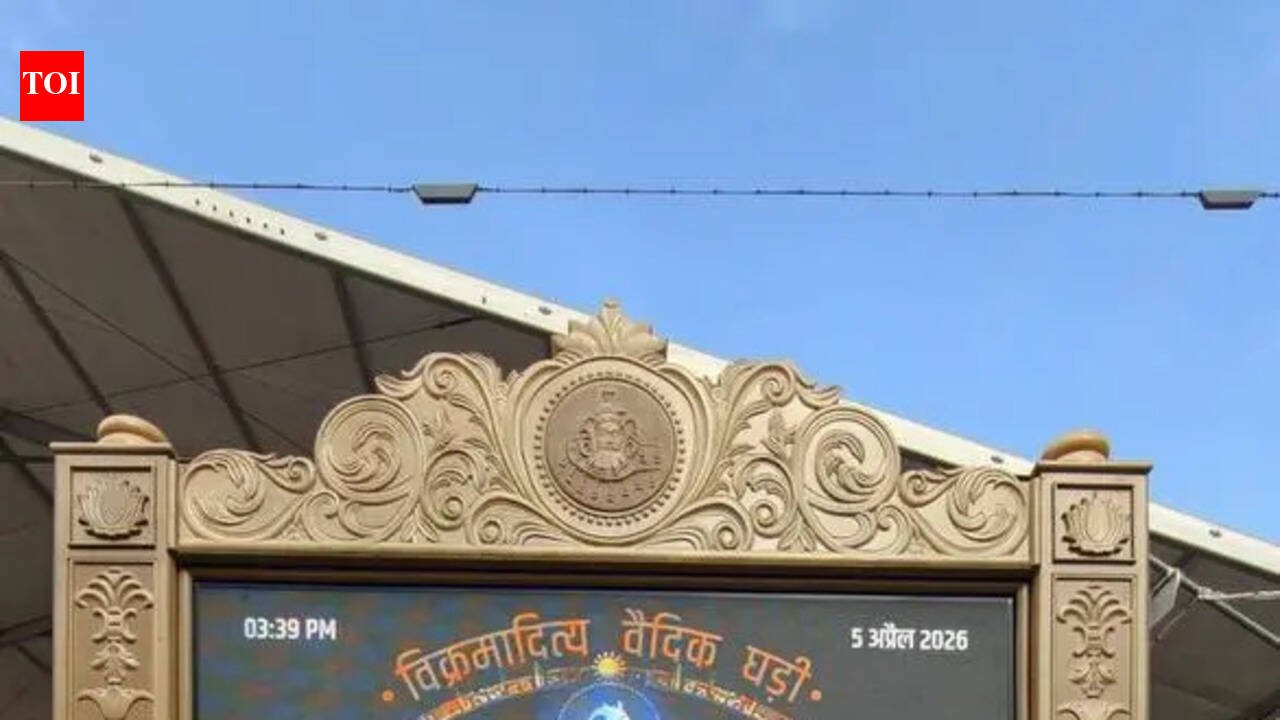
Varanasi: Kashi Vishwanath Dham now boasts the ‘Vikramaditya Vedic Clock’, a 700-kg marvel blending tradition and tech. Gifted by Madhya Pradesh CM Mohan Yadav, this unique clock showcases India’s ancient time calculation system, dividing the day into 30 ‘muhurtas’ and displaying Local Mean Time, ‘tithi’, ‘nakshatra’ and more.The clock was formally presented during a ceremony held in the presence of CM Yogi Adityanath on Friday. With its installation, devotees visiting the shrine will not only be able to soak in the spiritual vibes but also gain insight into India’s ancient and scientific system of time calculation. KVT CEO, Vishwa Bhushan Mishra, said the initiative will help introduce visitors to Vedic knowledge and Sanatan traditions.The ‘Vikramaditya Vedic Clock’ is touted as the world’s first clock designed to display time based on the traditional ‘Vedic panchang’ rather than the standard 24-hour Gregorian system. This clock flips the script on traditional timekeeping – a day starts at sunrise, not midnight, and wraps up with the next sunrise.It divides the day into 30 ‘muhurtas’, each lasting approximately 48 minutes. The clock begins at 0:00 at sunrise, with sunset typically occurring around the 15th muhurta. It also shows Local Mean Time (LMT), which is calculated based on the sun’s position, making it more location-specific.The clock also displays key ‘panchang’ elements such as ‘tithi’ (lunar day) and ‘nakshatra’ (constellation). It also provides information on festivals, eclipses, moon phases and astrological calculations. For reference, it simultaneously displays Indian Standard Time (IST) and Greenwich Mean Time (GMT).The initiative aims to revive the ancient Indian system of ‘kaal ganana’ (time reckoning) derived from Vedic texts, integrating it with modern digital technology. Officials said the installation reflects an effort to reconnect people with traditional knowledge systems while enhancing the cultural experience at the temple complex.Mishra said studies conducted in collaboration with meteorology and astrology departments have shown that predictions based on Vedic time calculations are 20% to 23% more accurate in certain cases, compared to modern methods, highlighting the potential of traditional systems in contemporary applications.


