






Versatility is a wonderful virtue to possess in any sphere of life. To be very good at more than one discipline is a grand trait not bestowed upon many. True, one must work unbelievably hard to maximise that gift, but as they say in a sporting parlance, primarily, you make your own luck.
Versatility can also be counter-productive, especially in a setting like a team sport. And in the context of Indian cricket, specifically.
Take Rahul Dravid as a case in point. Because he was so adept at so many different and often unrelated aspects, he was moved out of his comfort zone so many times that towards the end, even he may not have been sure what his comfort zone was. Need someone to fill the breach in Test cricket as an opener? Hey, there’s Rahul, you know. Need someone to drop down the order to accommodate a more attacking option at No. 3, as famously happened at the Eden game against Australia in 2001? Don’t look beyond Rahul. Looking for a dependable ‘finisher’ in 50-over internationals, long before that term became fashionable? Surely, Rahul? Require a gun batter to also don the wicketkeeping gloves because it can extend the batting order, provide a specialist option at No. 7 and not affect the balance one bit? Hello, wasn’t Rahul a wicketkeeper at school?
The same path
It’s amazing how his namesake from the same city has walked pretty much the same path. K.L. Rahul is the modern-day equivalent of Rahul Dravid, having donned each of the roles his illustrious predecessor did during a wonderful career that ran between 1995 and 2012. In those 17 years, just about the only thing Dravid didn’t do was keep wickets to his own bowling – he even took two wickets in an over in an ODI against South Africa in Kochi in March 2000, getting rid of left-handers Gary Kirsten and Lance Klusener with his off-spin. Perhaps the only reason ‘KL’ doesn’t have an international wicket is that successive captains from Mahendra Singh Dhoni to Shubman Gill, himself included, haven’t yet summoned him to the bowling crease.
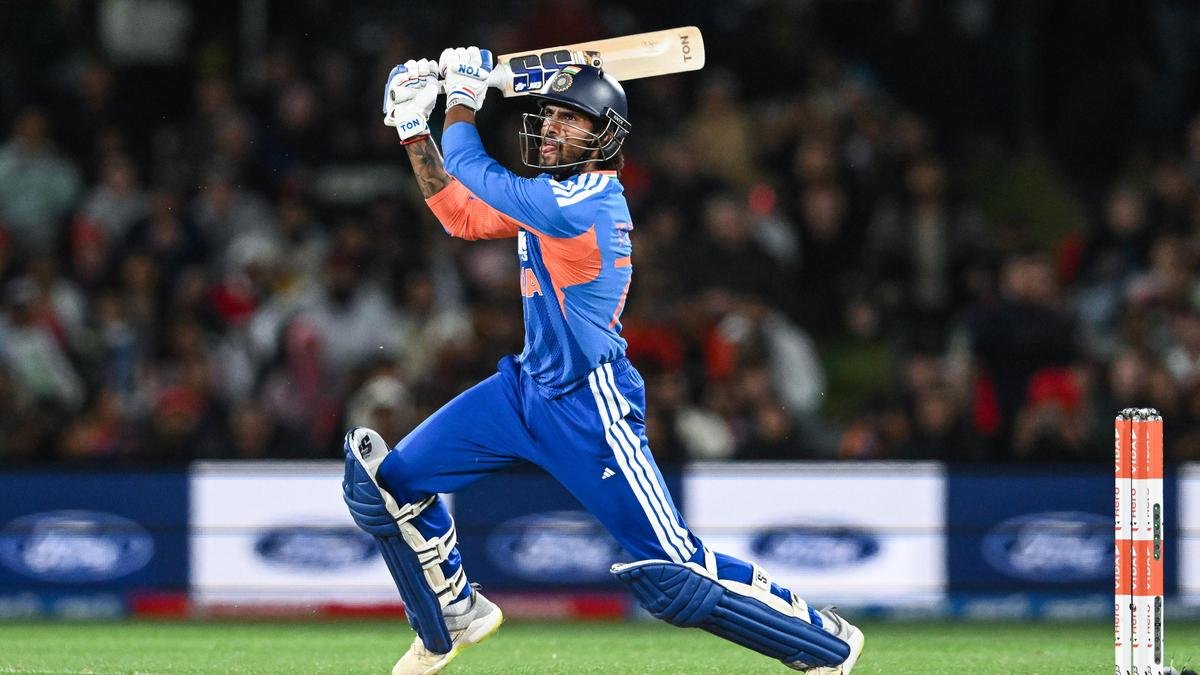
Tilak Varma hasn’t done all of the above things – he hasn’t even made his Test debut or opened the batting in white-ball internationals, though he does boast five T20I wickets – but he is fast emerging as the ultimate yo-yo man of the current T20I set-up. India’s vice-captain in the 20-over format provides the classic case of being asked to play the situation.
He doesn’t have a fixed batting position even though he has made no secret of the fact that his preferred slot is No. 3, from where he has uncorked both his international centuries. Forget about fixed, there is no guarantee that he will occupy the same berth for two games in a row – indeed, he has batted at a different slot in each of his last three innings – and yet, that hasn’t come in the way of an average of 44.13 and a strike-rate of 147.47 after 68 T20I innings.
Virat Kohli is acknowledged as the ultimate chaser in white-ball history and it is hard to argue with that tag, given how many times he has made the impossible look commonplace. But how is this for a stat? Tilak has remained unbeaten in 26 chases in all T20s, 12 of them in country vs country battles, and finished on the winning side every single time. What do you make of that, Virat?
The wirily elegant left-hander’s latest masterpiece came at the Hagley Oval in Christchurch on Saturday, in a match few believed was headed India’s way. New Zealand’s 180 for five was already a lot more than it read numerically, and assumed even more gargantuan proportions after India played themselves into a hole at 70 for five, skipper Mitchell Santner accounting for three of those wickets with his parsimonious, penetrative left-arm spin.
Tilak had walked in at 69 for four and taken a single off his first delivery from Santner, only for Axar Patel to be dismissed next ball, caught at long-on. India needed 111 off 55 deliveries with Tilak one ball young, and Naman Dhir and Nitish Kumar to follow. The odds of them pulling off a second consecutive stiff run-chase were pretty long.
But over the last year or so particularly, the 23-year-old Tilak has showcased a skillset that is clearly out of the ordinary. Like Kohli during a chase, he somehow swaps his brain for a computer, working out angles and areas to target and bowlers to attack, mentally recalibrating with every passing over and somehow insulating himself from the rising levels of panic that manifest themselves in addled decision-making when push comes to shove.
Instant hero
The Hyderabadi had become an instant hero to millions in September last year when he wrenched the T20 Asia Cup final rudely out of Pakistan’s hands. In the third successive Sunday showdown between the sides in the desert sands of Dubai, Pakistan seemed on course to avenge defeats over the two previous weekends and win the match that mattered the most by having India on the mat at 20 for three in response to their 146 all out, courtesy a dramatic meltdown that saw them lose their last nine wickets for 33 runs after looking good for 180, at the very least, at various stages.
Batting at No. 4, Tilak strung together a 57-run stand for the fourth wicket with a struggling, out-of-sorts Sanju Samson (24 off 21) before finding excellent support from the vastly underrated Shivam Dube. The tall left-hander contributed 33 in an alliance of 60 but when he departed off the last ball of the penultimate over, a nervy India still needed 10 with the speedy but profligate Haris Rauf thrown the ball by Salman Agha.
Tilak settled all the nerves with a thumping six off the second ball, smearing the short offering over the deep backward square-leg fence for a resounding six. Rinku Singh applied the finishing touches but there was no disputing who the real hero was. Tilak finished undefeated on 69 off 53 with only three fours and four sixes, but the timing of those boundaries complemented his hard running superbly as India pulled the fat out of the fire with something to spare.
The stakes were just as high in Nisshin earlier this month when India faced their arch-rivals, again, in the final of the Asian Games. This time, India batted first and seemed to have sold themselves a few short, despite opener Abhishek Sharma’s blazing 28-ball 61, when Tilak exploded in a frenzy of fours and sixes. Batting at No. 6, he reached his 50 off a mere 21 deliveries, helping India amass a frenetic 78 runs off the last 35 deliveries of the innings, a decisive contribution given that their final margin of victory was 19 runs.
In Christchurch on Saturday, there was just a straightforward victory – how extraordinarily naively simplistic to put it thus – on the line. No Asia Cup trophy (which India are still to receive, lest it should be forgotten), no Asian Games gold medal. Just a regular, regulation win and the chance to go 2-0 up with three to play, But this was neither a straightforward, nor a regular and regulation task, not with the top five back in the hut and Tilak having to make do with only Nos. 7 and 8 for meaningful company.
He wasn’t coming off a great immediate sequence of scores himself – 7 off 6 balls (at No. 5) in the rain-ruined game against West Indies in Bengaluru last Saturday, then 6 off 11 (at No. 3) in Thursday’s first T20I in Christchurch. His return to the middle-order was promoted by the adductor muscle injury to Ishan Kishan that brought Vaibhav Sooryavanshi into the XI at No. 3, but Tilak didn’t allow being tugged around repeatedly to faze him.
“I have said before that I want to finish games for the country,” Tilak had said in Bengaluru after the abandoned game. “I love doing that job. For me as an individual, it will be easier batting at No. 3 and finishing games. But Ishan is batting brilliantly at No. 3 and for me now, there is no option but to bat at 5 and 6 and do the job for the team.
Mentally prepared
“I am mentally prepared for that role. I have won a few games from there. As a finisher, most of the times in T20s, you will get a maximum of 5-6 overs to bat, so you have to play your strokes from ball one. I have batted up the order from my childhood, therefore I am confident that whether I bat at 3 and 5, I have got both the techniques where I can adapt (to the demands of each role).”
Perfect chasing template
As if to show that that was no empty boast, Tilak produced the perfect chasing template at the Hagley Oval. He also played it smart. Knowing that spin was doing the trick for New Zealand and that therefore to attempt anything outrageous against Santner and offie Michael Bracewell was nothing if not foolhardy, he bided his time, waiting for pace to be brought back into the attack. He didn’t, however, let the spinners apply the choke. First with the increasingly impressive Dhir and then with Nitish, Tilak ran wonderfully well between the wickets, using the dimensions of the ground to such great advantage that you could have been forgiven for mistakenly believing that he had played all his cricket at the Hagley.
Even when the task became more and more difficult – 46 needed off the last three overs – Tilak kept his wits about him. By now, Dhir had perished after a terrific cameo, 31 off 17, but Nitish was chugging along nicely. Tilak switched gears without seeming to, two fours in the 18th over (from Jacob Duffy) the precursor to three fours and a six from the next, sent down by Nathan Smith. That brought the equation down to a manageable 11 off the last over and Tilak calmly battered Duffy’s second ball wide of mid-off for four to practically finish off the chase.
By the time Nitish formally heralded victory, Tilak had conjured a 25-ball half-century and reiterated his chasing credentials. No. 3 might be his favourite position, but how can he expect to get a sustained run there when he is so good at No. 5 and 6 and 7 when he refuses to take a backward step. Tilak is working zealously on the approach – batting-wise and mentally – needed in the middle order, and is well on his way to mastering it. To say that he won’t be occupying the No. 3 slot on even a semi-permanent basis in a hurry is no exaggeration, but no one, not even he, is complaining.


