






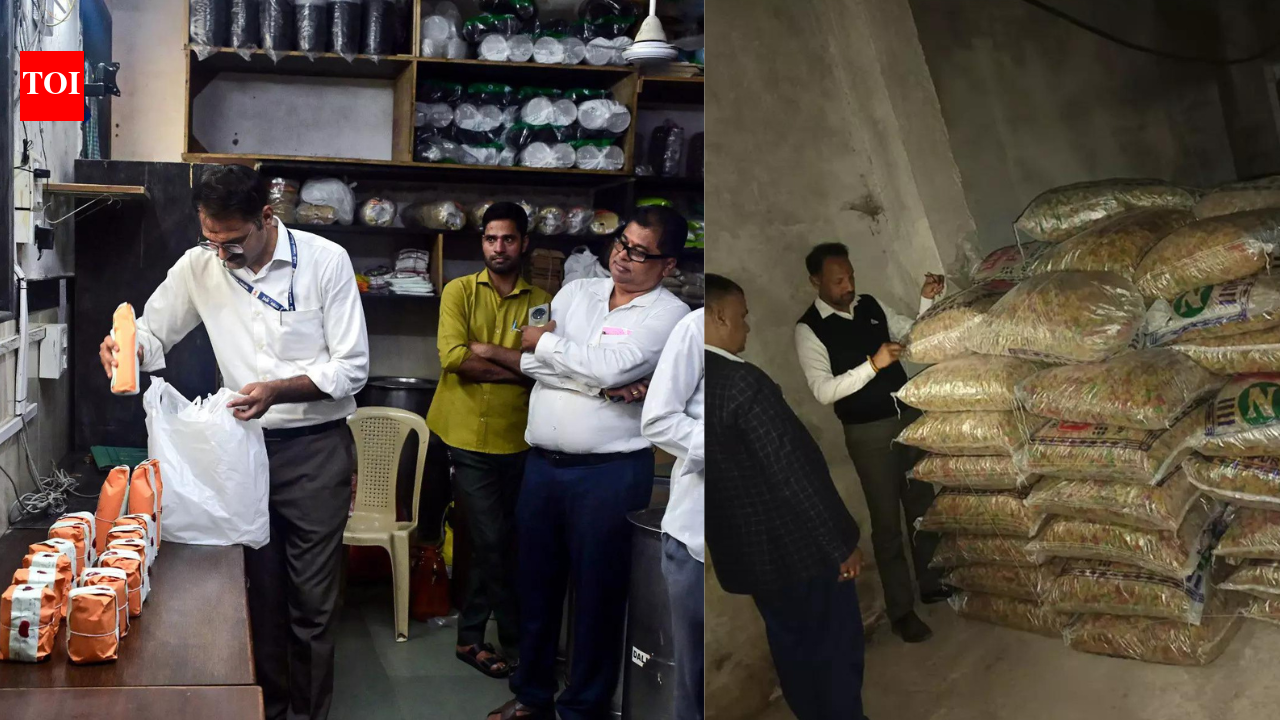
New Delhi: For long, food safety enforcement in India was synonymous with dirty roadside stalls and small eateries operating without licenses. That picture has changed dramatically over the past few months as food safety regulators, in tandem with state FDAs, have set their sights on some of the biggest names in the packaged food, quick-commerce and liquor industries.What began as mere hygiene drives has now snowballed into a sustained multi-city operation that is showing no signs of abating with new names being added to the list of companies under the scanner almost every week.
From dark stores, to dinner tables
Brands under scanner
The range of the crackdown has been astonishingly broad. In one fell swoop, authorities suspended licences at 16 restaurants and e-commerce warehouses in Mumbai, including dark store operators in Mumbai and Pune.Inspectors suspended permits for 12 warehouses run by major grocery and delivery platforms after finding cockroach infestations and rotting vegetables in cold storage units.These findings have been deeply embarrassing for an industry built on speed and freshness and have forced companies to commit publicly, within weeks rather than months, to overhaul their storage and hygiene protocols.
Food players exposed too, tied to big pharma
And the action hasn’t been confined to grocery platforms. In July, regulators suspended the licences of two food manufacturers linked to pharmaceutical companies after inspectors found serious lapses in Good Manufacturing Practices and hygiene standards, including poor sanitation, inadequate pest control, weak water quality monitoring and sloppy record keeping.Both had to stop production completely until all deficiencies were rectified and independently verified. It is a very rare and costly outcome for companies of their size.Such cases show size and market reputation offer little real protection once an inspection turns up hard evidence of non-compliance on the ground, regulators say.
Liquor brands that had to change their recipes
Perhaps the biggest surprise in the crackdown has been its spillover into the alcohol industry, an area that has largely escaped this level of food-safety scrutiny in the past.One of India’s biggest spirits makers has agreed to reformulate several of its top-selling products completely following a national outcry over the use of artificial flavoring in some of the country’s most popular whiskey and rum brands.The move comes as regulators in a handful of states have banned the practice outright and industry insiders say more liquor companies could face similar demands as regulators turn their attention to the “100 per cent purity” claim on bottled spirits after scrutinizing it on food labels.
Safety fights escalating into legal battles
Cases total 800 as legal battles mount
Perhaps the best indicator of the scope of this enforcement drive is the numbers.The food safety regulators are currently handling more than eight hundred pending cases in courts and tribunals across the country, a load so heavy that the regulator recently doubled the size of its legal panel, from four firms to eight, calling in specialists to handle disputes before the Supreme Court, various High Courts and the Central Administrative Tribunal.Several affected restaurants and brands have already set the courts in motion to challenge licence suspensions, with matters now before the Bombay High Court, suggesting that the legal ramifications of the crackdown could drag on for months even after the ground-level raids taper off.
Multi-city enforcement
Multi-city crackdown
The crackdown has so far spread across Karnataka, Mumbai, Pune and several other cities across India, with inspections targeting restaurants, food manufacturers, warehouses, dark stores and other food businesses.The action has involved state food-safety authorities and FDAs in multiple states, making it a multi-city and increasingly nationwide enforcement drive rather than a campaign limited to one urban centre.
What this means for the future
Regulators say this is not an isolated drive but a structural change in the way food safety will be monitored in the future with risk-based inspections now targeting high-risk categories like milk, edible oils, spices and honey on a sustained basis rather than by sporadic raids.For consumers, this expanding list of investigations is a reminder that a familiar logo or a premium price tag never guarantyd safety, and that the products in kitchens and liquor cabinets around the country are now under more serious scrutiny than at any time in recent memory.The message to the industry is blunt: compliance is no longer optional and the next name on the list could be you.


