



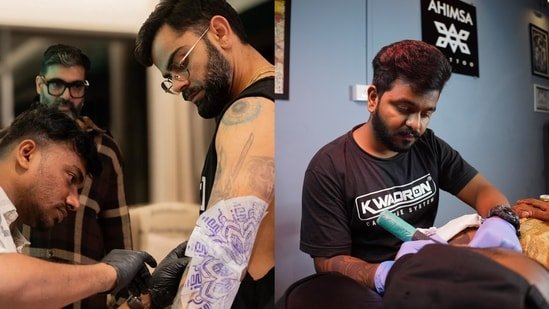
When Virat Kohli debuted his latest tattoo, the spotlight quickly shifted from the design to one label, ‘vegan ink’. It sounded like a new-age upgrade, but here’s the twist: chances are, your tattoos are already vegan too.


What makes a tattoo ‘vegan’?
Earlier, tattoo inks often contained animal-derived ingredients such as glycerin from animal fats, gelatin and even bone char for black pigments. Today, that has largely changed. Most inks used in India are imported from the US, where vegan-certified formulations are now the norm, replacing animal-based components with plant-based or synthetic alternatives. As a result, the ink itself is rarely the concern anymore.
It’s not just the ink
According to George, founder of vegan tattoo studio Ahimsa Tattoo, the real distinction lies in the overall process. “People focus on the ink, but a truly vegan tattoo goes beyond that. Studios that identify as vegan-friendly go a step further by ensuring that even furniture, gloves, and accessories are free from animal-derived materials. For many artists who are vegan themselves, this is about maintaining consistency in both personal values and professional practice,” he explains, pointing to elements like tracing sheets, razors, soaps and aftercare products.
Historically, these could contain ingredients such as lanolin (from sheep’s fat), gelatin or petroleum-based compounds. While many studios are now switching to plant-based alternatives, awareness remains low. As a result, clients often assume their tattoo is fully vegan when only the ink meets the criteria.
So why are people asking for vegan tattoos?
For many, it’s less about trend and more about awareness. Latika from Mumbai recalls discovering the concept through the vegan community and realising that tattooing, like food, could align with personal values. “I didn’t know the tattoo process could contain animal products. Once I understood that, it changed how I approached getting tattooed,” she says. Furthermore, her experience at a vegan-conscious studio was slower, more collaborative and transparent, with artists explaining ingredients and techniques before starting. “The artists took time to explain their approach, sharing ingredient lists and their larger mission. It felt less like a transaction and more like an intentional experience,” she adds.
Is there a difference in cost or quality?
Not anymore. George says vegan tattooing is no longer niche or significantly more expensive. When he started, importing vegan inks into India did raise costs, but that gap has largely evened out. Today, pricing is less about the ink and more about the overall experience. Studios that position themselves as vegan-friendly often extend that philosophy to everything—from furniture and materials to aftercare—creating a more conscious, detail-oriented environment. If it does cost more, it’s usually because of that added level of care, not just the ink itself.
So the next time you hear about a ‘vegan tattoo’, you should know that it’s likely your previous tattoos were already vegan, at least in terms of ink. The real distinction lies in the details.


