



The white coat has long been a symbol of precision and healing. Traditionally, that image was reserved for the corridors of a hospital. But, as Indian cuisine regains its status as a global powerhouse of wellness, a new perspective is emerging – that the chef’s coat and the doctor’s coat are two sides of the same coin.

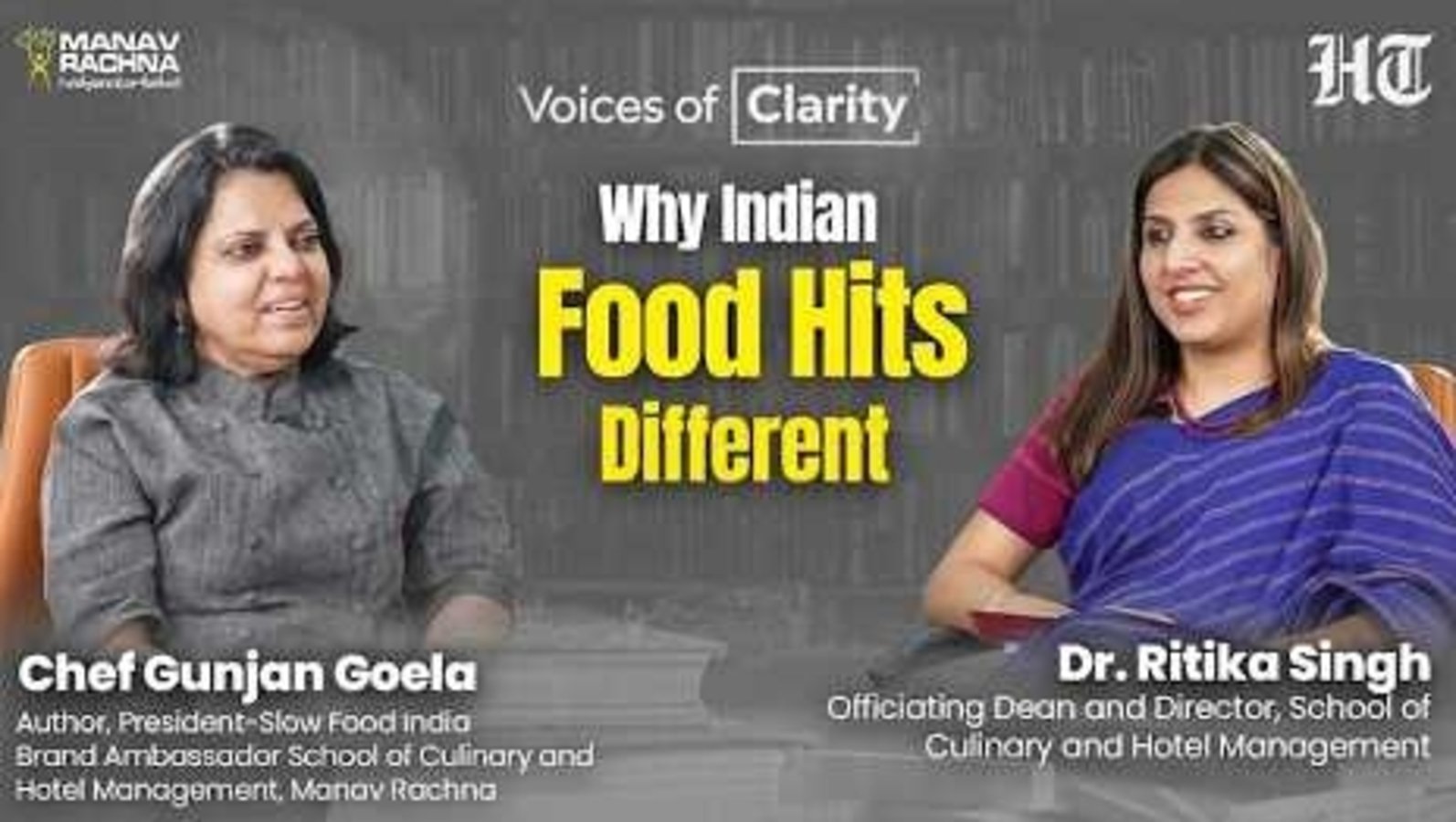
During a recent episode of Voices of Clarity, presented by Manav Rachna, celebrated author and President of Slow Food India, Chef Gunjan Goela, shared a philosophy with Dr. Ritika Singh, Director, Manav Rachna School of Culinary and Hospitality. She said that the chef is the first line of defence in public health because if a chef masters the alchemy of ingredients and the science of nutrition, the need for medical intervention diminishes.
“There are two white coats you must earn – the chef’s coat and the doctor’s coat. If the person in the chef’s coat does their job well, you may never need the other one,” she said. This preventative healthcare through the plate is redefining how the next generation views culinary arts.
The purity of the craft
For Chef Goela, the resurgence of Indian cuisine is not merely a trend but a return to a sacred responsibility. She emphasised that the role of a chef goes beyond the aesthetic of the plate; it is a vocation rooted in integrity and a deep-seated respect for the consumer. Ingredients like Moringa, Amla and Sattu, once relegated to humble home kitchens, are now being celebrated as superfoods on global menus, proving that the kitchen is a pharmacy of the future.
“To be a chef, you have to be a very good human being first. You have to be very honest and pure in your thoughts, because you are responsible for someone’s health,” she said.
From home kitchens to global menus
Historically, Indian food was a private affair, tucked away in homes or served at large-scale banquets by traditional halwais. Meanwhile, the formal education system in India, specifically through older IHMs, focused heavily on Continental cuisine. This created a paradox where, while the world craved Indian flavours, Indian chefs were being trained primarily in Western techniques.
That dynamic has flipped in recent years as the rise of social media, the influence of Michelin-starred Indian restaurants abroad and a growing sense of national pride have brought regional Indian food into the limelight. Today, trained professionals are looking back at their roots with a newfound rigour, applying modern standards of scalability and hygiene to the complex, ancestral recipes that once remained within family lineages.
The millet revolution
A significant catalyst for this change has been the endorsement of traditional grains at the highest levels of leadership. The focus on millets, of which India is the world’s largest producer, has transformed what was once considered a “poor man’s grain” into a premium export and a staple of modern wellness cafes.
Chef Goela said: “In India, we have a large variety because we are a country of farmers; the entire vegetation changes from Kashmir to the South, and so does the flavour profile.” This geographical diversity is fuelling a new sector known as Food Tourism.
A new career horizon
For the younger generation, the image of a chef has evolved from a back-of-house worker to a global celebrity and a respected thought leader. Institutions like Manav Rachna are now benchmarking Indian cuisine at the same level as international arts, preparing students for a diverse range of careers that go far beyond the traditional stove.
These emerging verticals include wellness and Ayurvedic consultation, where menus are designed specifically for individual body types, as well as food journalism and photography that capture the rich narrative of Indian heritage. Furthermore, there is a burgeoning market for entrepreneurship, where traditional snacks are being scaled for global distribution, much like the famous story of the Samosa Queen in London who turned a home-based craft into an international success story.


