



TECHNOLOGY & NATIONAL SECURITY
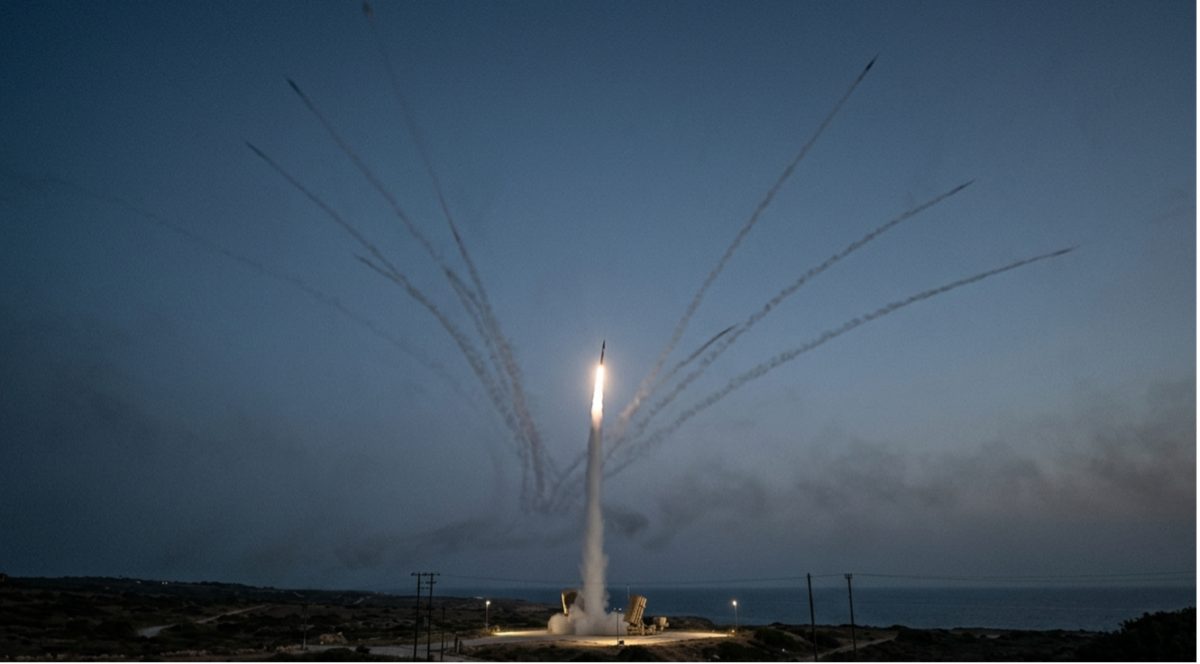
On 10 and 11 June, the DRDO fired two interceptors from Chandipur off the Odisha coast. The AD-1 caught its target inside the atmosphere. The AD-2 caught its target in space. The Ministry of Defence said the country could now engage threats up to the intercontinental class, and it placed India in the small group of states able to shoot down a ballistic missile.
The story sold itself as safety. A dome over the cities. A wall against the missiles of two nuclear-armed neighbours.
That is not what a missile shield does. A working shield is the one defensive system that pushes the other side to build more offence. India has not bought cover with these tests. It has told Islamabad and Beijing that their retaliation may not get through, and both have a single sensible answer, which is more warheads on faster launchers.
What the June tests proved
The two interceptors belong to Phase-II of India’s ballistic missile defence programme. The AD-1 works in the terminal phase, low down, where a warhead is about to arrive. The AD-2 works high in space during mid-course, while the warhead is still coasting. Together they cover threats in the 2,000 to 5,000 km class, and defence officials compared the AD-2’s reach to intercepting something like China’s DF-41. The targets in the June trial were Agni-series missiles standing in for hostile ones.
The more revealing detail sits in Phase-III, already sanctioned. Two new interceptors are under development, one to catch hypersonic glide vehicles, and one built specifically to counter MIRVs, the missiles that split into many warheads before they land. Read that plainly. India is already designing defences against the exact countermeasures a shield invites. The programme has priced in the arms race it is about to set off.
Why a shield reads as a sword
Here is the mechanism, in plain terms. A missile shield is only useful in the seconds after someone fires. It does nothing on a normal day. Its whole job is to catch what comes at you once shots are exchanged.
Now put the shield next to the rest of India’s arsenal. The Agni-V is canisterised, which means the missile sits sealed in its launch tube, ready to fire, often with the warhead already fitted. In March 2024, India tested it with MIRVs under Mission Divyastra, and SIPRI assesses it can carry up to three warheads on a single missile. Accurate missiles, kept ready, splitting into many warheads, sitting behind a shield that mops up whatever the enemy manages to fire back.
That combination has a name in the strategy literature. Christopher Clary and Vipin Narang, writing in International Security, list precisely this bundle, accurate MIRVs at high readiness alongside layered missile defence, as the toolkit of a counterforce posture. Counterforce means going after the enemy’s weapons before they launch, then catching the ragged few that survive. India declares No First Use. The neighbour does not read your speeches. It reads your hardware, and the hardware now looks like the back half of a first strike.
A missile shield only earns its cost after someone has already fired. That is why the other side reads it as the second half of a first strike.
Pakistan already answered, China is next.
None of this is a forecast. Pakistan started building its reply in 2017, when it first tested the Ababeel, a medium-range missile that carries MIRVs. Its stated purpose, in the Pakistani military’s own words, is to keep its missiles survivable in what it called the growing regional ballistic missile defence environment. Translated, it is a tool to punch through an Indian shield.
The maths favours Pakistan here. A MIRV splits one missile into several warheads plus decoys, and no interceptor screen can catch all of them. Warheads are cheap. Interceptors are expensive. Every rupee India spends on the wall, Pakistan answers for less, and comes out ahead on the exchange.
China is the larger version of the same problem. The US Department of Defense projects that China could hold around 1,000 nuclear warheads by 2030, up from roughly 300 for decades. It already fields the DF-41 and the dual-use DF-26. Indian analysts expect Beijing to drift toward launch-on-warning, firing on the alert rather than after absorbing a hit. An Indian shield gives China one more reason to hold more warheads and keep them on a shorter fuse.
The case for building it anyway
The honest counter-argument is that India’s arsenal is too small to attempt any of this. Rajesh Rajagopalan of the Observer Research Foundation makes the point directly. Once India reserves a large share of its warheads to deter China, what remains falls well short of the numbers needed for a disarming first strike on Pakistan. On that reading the shield is genuinely defensive, meant to protect leadership and command centres, and to stop the drones and cruise missiles that flew during the May 2025 Operation Sindoor exchanges.
That case is real, and it may even be right about India’s intentions. It still misses how the security dilemma works. An adversary does not respond to what you mean. It responds to what you can do. The bundle of ready MIRVs and layered defence looks like counterforce from Islamabad whatever Delhi intends, and perception is what starts the build. The Ababeel exists today because of what India was assembling a decade ago, not because of anything India said.
Bottom Line
The shield works exactly as advertised, and that is the trouble. Each clean interception buys India a thin layer of cover and hands its neighbours a strong reason to add warheads and put them on a shorter fuse. The question the June tests leave unanswered is whether India wants the dome badly enough to live under a sky more crowded with weapons, on higher alert, and aimed its way.
(The Author studies Computer Science and Artificial Intelligence at Rutgers University, New Jersey, USA. He is interested in emerging technologies and innovation, and can be reached on LinkedIn at @arssh-kumar14)


