



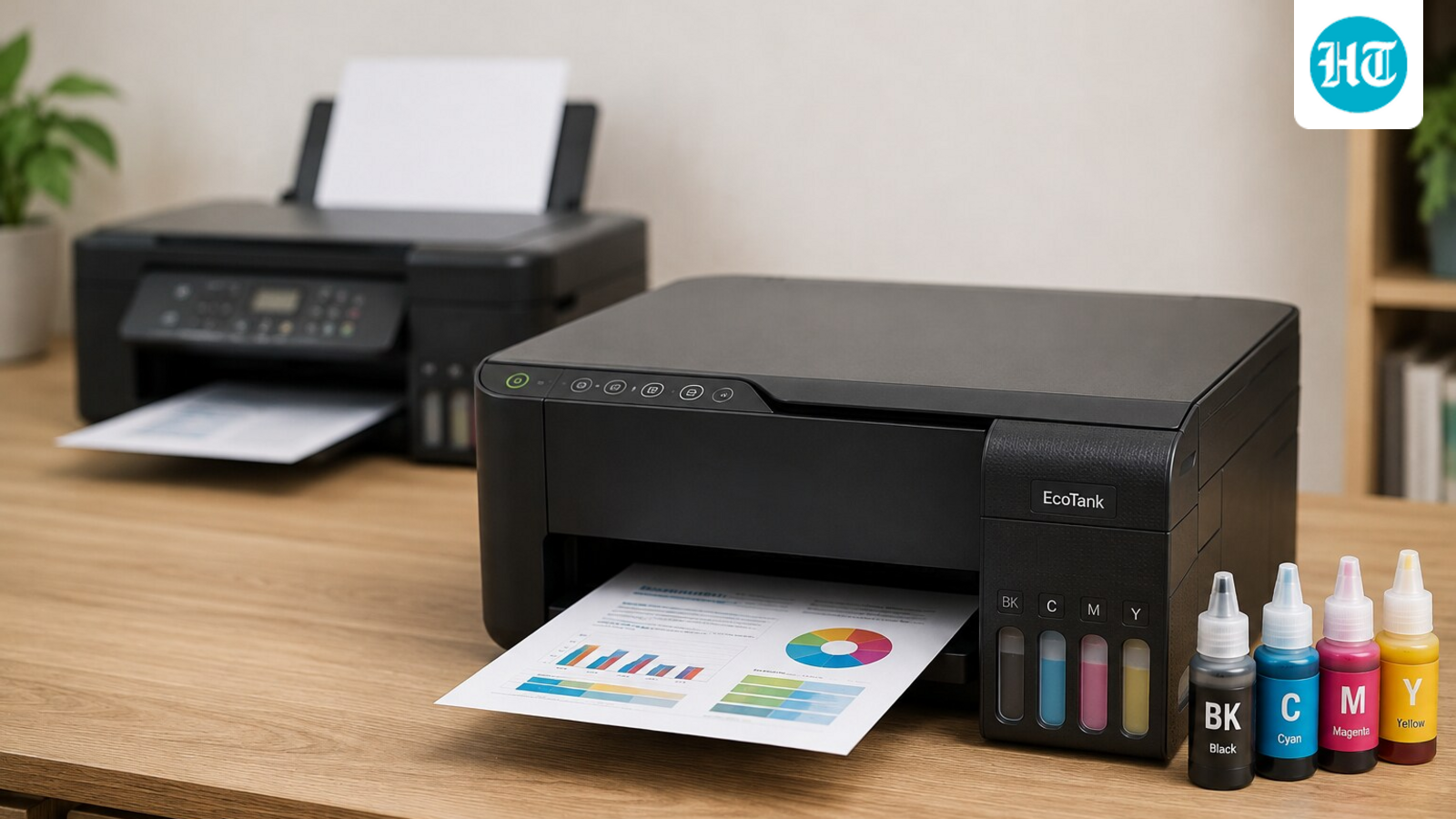
Buying a printer often starts with looking at the price tag, but that rarely tells the whole story. Many buyers choose an inexpensive cartridge printer only to discover that replacing ink every few weeks or months quickly becomes more expensive than the printer itself. This is often called the “ink cartridge trap”. While ink tank printers usually cost more upfront, they are designed to print thousands of pages before requiring a refill.
Over several years of use, they can significantly reduce printing expenses, making them a smarter investment for students, families, small businesses and anyone who prints regularly. With Amazon’s latest sale bringing discounts on a wide range of printers, it is also a good time to compare long term running costs instead of focusing only on the initial purchase price.
Ink tank vs cartridge comparison
The ink cartridge trap: Why tank printers cost 90% less to run long term
Many people purchase a printer based solely on its upfront price. A cartridge printer can often cost less than ₹5,000, while an ink tank printer may start at around ₹10,000 or even higher. At first glance, the cheaper printer appears to be the better deal. The problem starts when the first set of cartridges runs out.
Replacement cartridges are expensive because manufacturers earn a significant portion of their profits from ink rather than printer hardware. Depending on the model, a complete set of cartridges can cost anywhere between ₹2,000 and ₹6,000. If you print regularly, you could end up buying several sets every year.
This is exactly what people refer to as the “ink cartridge trap”. The printer itself may have been inexpensive, but the ongoing cost of replacing cartridges gradually becomes the biggest expense.
Why ink tank printers are cheaper in the long run
Ink tank printers follow a completely different approach. Instead of sealed cartridges, they use large refillable ink tanks that are topped up using inexpensive bottles. A single bottle of black ink can often print thousands of pages, while colour bottles also offer significantly higher page yields compared to cartridges.
Although the printer costs more initially, the running cost per page is dramatically lower. For someone printing homework, office documents, invoices or study material every week, the savings become noticeable within the first year. Many users recover the higher purchase price simply through lower ink costs after printing a few thousand pages.
Cost per page makes the biggest difference
The purchase price of a printer matters only once. Ink costs continue for the entire life of the printer. A cartridge printer may cost several rupees for every colour page printed. An ink tank printer can reduce that figure to just a few paise per page, depending on the model and ink prices.
Imagine printing 5,000 to 10,000 pages over three or four years. The difference in operating cost can easily reach tens of thousands of rupees. That is why schools, coaching centres, offices and small businesses have increasingly shifted towards ink tank printers. The more you print, the greater the financial advantage becomes.
Who should choose a tank printer?
Tank printers are ideal for users who print regularly throughout the year. Students often need assignments, project reports and study material. Parents print worksheets and educational content for children. Small businesses print invoices, shipping labels and reports almost every day. Home offices continue to rely on printed contracts and official documents despite increasing digital adoption.
For these users, an ink tank printer offers much better long term value than repeatedly purchasing expensive cartridges. However, if you only print a few pages every couple of months, a basic cartridge printer could still make sense because the higher purchase price of a tank printer may take much longer to recover.
Is the higher upfront price worth paying?
A cartridge printer may save money on day one, but frequent cartridge replacements can make it considerably more expensive over the next three to five years. A tank printer asks for a larger initial investment but rewards regular users with significantly lower operating costs and fewer interruptions caused by empty cartridges.
Looking beyond the purchase price is the best way to avoid the ink cartridge trap. For anyone who prints regularly, an ink tank printer is usually the more economical choice and can reduce long term printing expenses by a substantial margin compared to traditional cartridge based models.
Similar articles for you
Your productivity deserves more than a laptop screen. These monitors deliver exactly that
Tired of carrying your charger? These laptops deliver the battery life most people actually need
Still paying for cloud storage? Here’s when an SSD is the better buy in 2026
Disclaimer: At Hindustan Times, we help you stay up-to-date with the latest trends and products. Hindustan Times has an affiliate partnership, so we may get a part of the revenue when you make a purchase. We shall not be liable for any claim under applicable laws, including but not limited to the Consumer Protection Act, 2019, with respect to the products. The products listed in this article are in no particular order of priority.


