



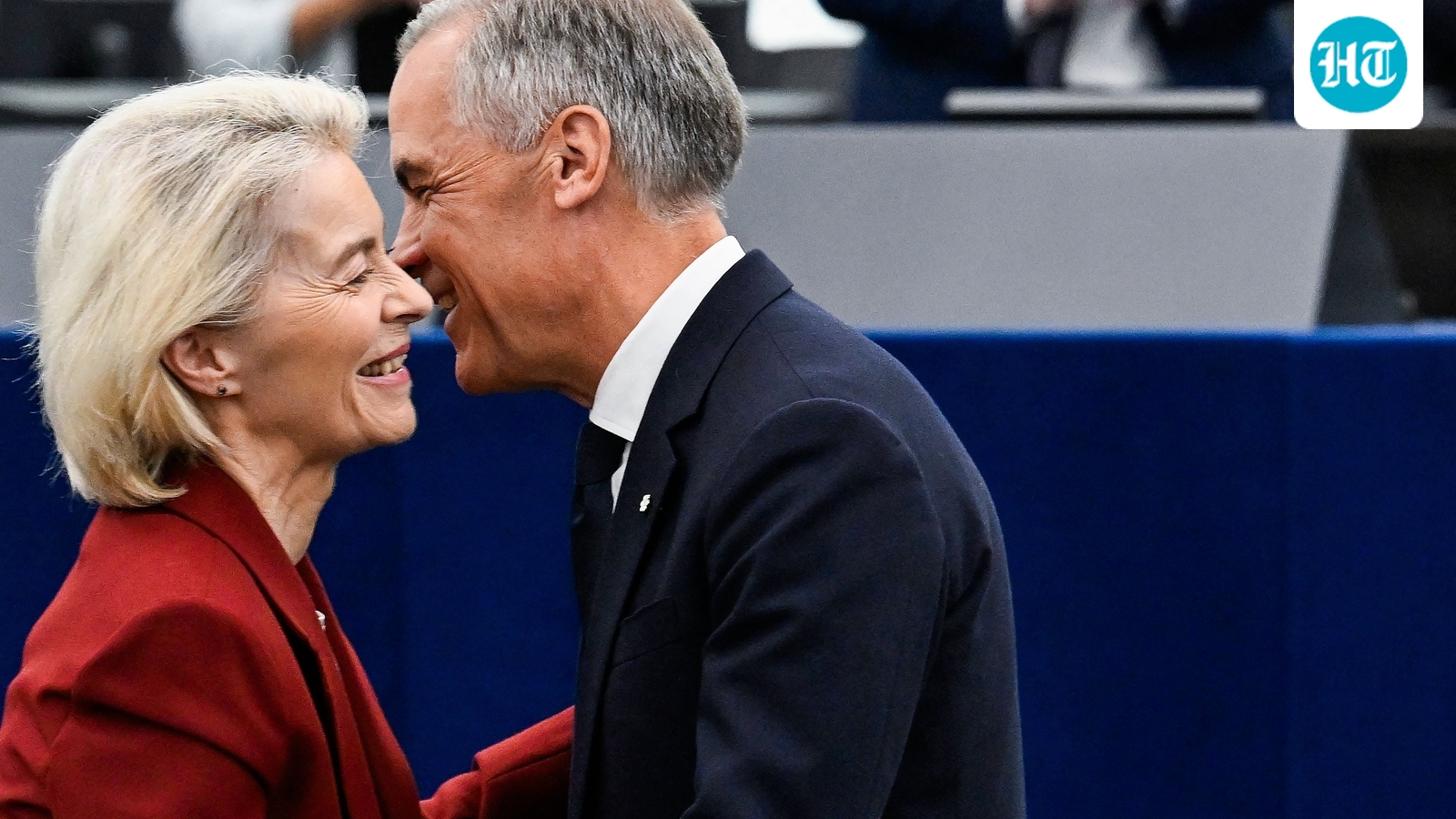
Europe has spent the Trump years learning what it is to deal with an ally that cannot be relied on to stay one. Tariffs used as leverage, financial pressure deployed against friends as readily as rivals, a transatlantic relationship that resets with every news cycle. What Brussels wanted, quietly, was a partner with real weight who would not do any of that. On September 17, in the European parliament, it got a name to put to the wish list: Canadian prime minister (PM) Mark Carney. Commission President Ursula von der Leyen had floated something the EU has never offered anyone in her State of the European Union address the day before, associate membership, with Canada as the first candidate ever considered for it. That is not a trade footnote. That is Brussels telling a G7 democracy, unprompted, that it wants something closer to political union.
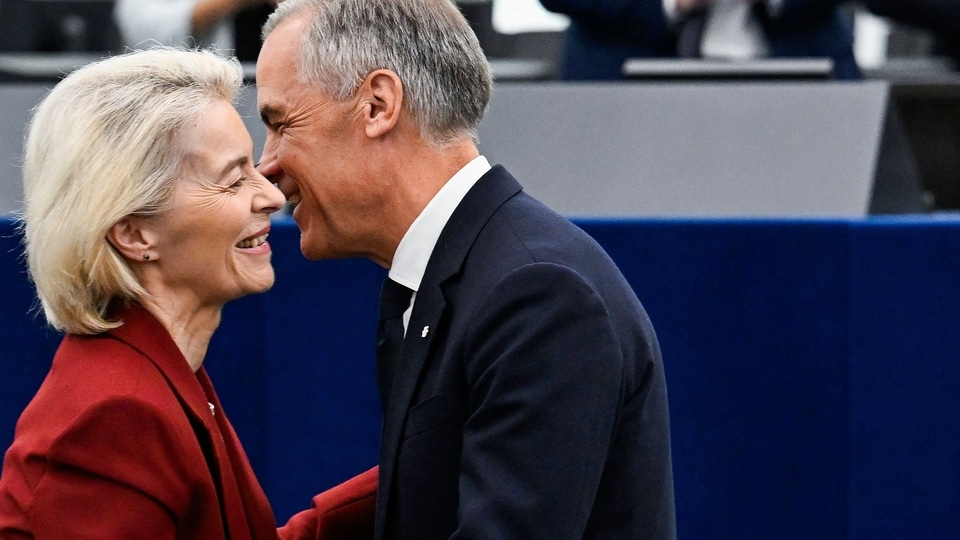
Carney’s own words matched the weight of the offer. Canada and Europe, he told the chamber, are each strong, but stronger together, and sovereignty today means the capacity to withstand shocks, not simply the right to declare independence from them. It is worth sitting with how unusual this moment is. The EU has spent decades keeping outside partnerships at careful arm’s length: Norway’s arrangement, Switzerland’s bilateral patchwork, the UK’s still-raw post-Brexit settlement. Canada jumping that queue, however loosely defined the new status remains, says less about Ottawa’s powers of persuasion than about how exposed Europe has come to feel standing without it.
Europe did not summon Carney because it suddenly discovered Canadian critical minerals. It summoned him because Washington’s approach to allies has left European capitals recalculating who they can actually count on. Carney named this directly in his speech without naming names, warning against “the weaponisation of trade” and the use of payment systems and market access as instruments of coercion. Everyone in that chamber knew who he meant.
This is the deeper reason Carney fits Europe’s current mood so well. He arrived in politics as a former central bank governor, first of Canada, then of England, someone who spent a career being the calm counterweight to volatility rather than a source of it. At a moment when European leaders are worn down by unpredictability from Washington, a Canadian prime minister who talks about resilience and secure supply chains for AI, semiconductors, and clean energy sounds less like a politician and more like a stabiliser. Europe is not just shopping for a trade partner. It is shopping for predictability, and Carney has built his public identity around projecting exactly that.
The substance on offer is real, even if unfinished. Carney described moving “beyond CETA to an alliance for the future,” covering seamless digital trade, youth mobility across the Atlantic, Canadian participation in Erasmus+ and Horizon research programmes, coordinated critical minerals supply chains, and joint work on LNG, hydrogen, and AI safety protocols. Industry minister Mélanie Joly has pointed to more concrete near-term gains too, including possible exemptions from European steel and aluminum restrictions.
Layer onto this Carney’s stop in Liverpool before Strasbourg, where he met new UK PM Andy Burnham and applied for Canada to join the Joint Expeditionary Force, while advancing Canada’s role in the Global Combat Air Programme. Add UK-Canada trade now running near $ 85 billion annually. What is forming is not a single deal but a lattice of defence, technology, and economic ties that increasingly treats Canada as a European security partner in most respects but geography.
None of this should be read as settled. Associate membership, as analysts at the Atlantic Council have pointed out, does not exist anywhere in EU treaty law. Nobody, including the officials proposing it, can yet say what it actually entails. That ambiguity cuts both ways. It gives Carney and von der Leyen room to define the relationship expansively, but it also means Canada could end up more integrated into European rules without a seat at the table where those rules get written, a rule-taker rather than a rule-maker, the same complaint Norway has voiced for years about its own arrangement.
There is domestic friction too. Some Conservative members of Canada’s parliament have already raised sovereignty concerns about what deeper EU integration might cost. And some EU member States, by most accounts, were caught off guard by von der Leyen’s announcement, which is never a good sign for durability. The real test comes in late October, when Carney is set to host EU leaders in Montreal and the architecture sketched in Strasbourg has to become something with actual legal form.
Carney has been careful, almost pointedly so, not to frame this as an anti-American project. He has said explicitly that the Canada-EU alliance is not meant to be a rival to the US with better manners. That framing matters. It lets Carney pursue diversification without staging a rupture he cannot afford, since the US remains Canada’s largest trading partner by a wide margin regardless of how warm the Strasbourg reception was.
What this really represents is the maturing of what some observers have started calling the Carney Doctrine, the idea that middle powers should not simply pick a superpower patron and hope for the best, but should actively build redundancy into their alliances. Carney previewed this thinking at Davos earlier in the year, arguing that smaller and mid-sized democracies need to resist being coerced by any single dominant power, including allies.
Europe did not go looking for Canada because Canada is powerful in the way China or the US is powerful. It went looking because it needed a democracy with resources, institutional credibility, and no interest in bullying it, and Carney happened to be standing there with exactly that profile. Whether Strasbourg becomes the start of a genuinely new architecture or a symbolic high point that fades once the legal drafting gets hard is still an open question. But for a continent that has spent the Trump years feeling exposed, Carney offered something rarer than a trade deal. He offered the appearance of an ally who will still be predictable next year. That, more than critical minerals or defence pacts, is what Europe has actually been asking for.
(The views expressed are personal)
This article is authored by Rashi Randev, geopolitical analyst, Canada.
