



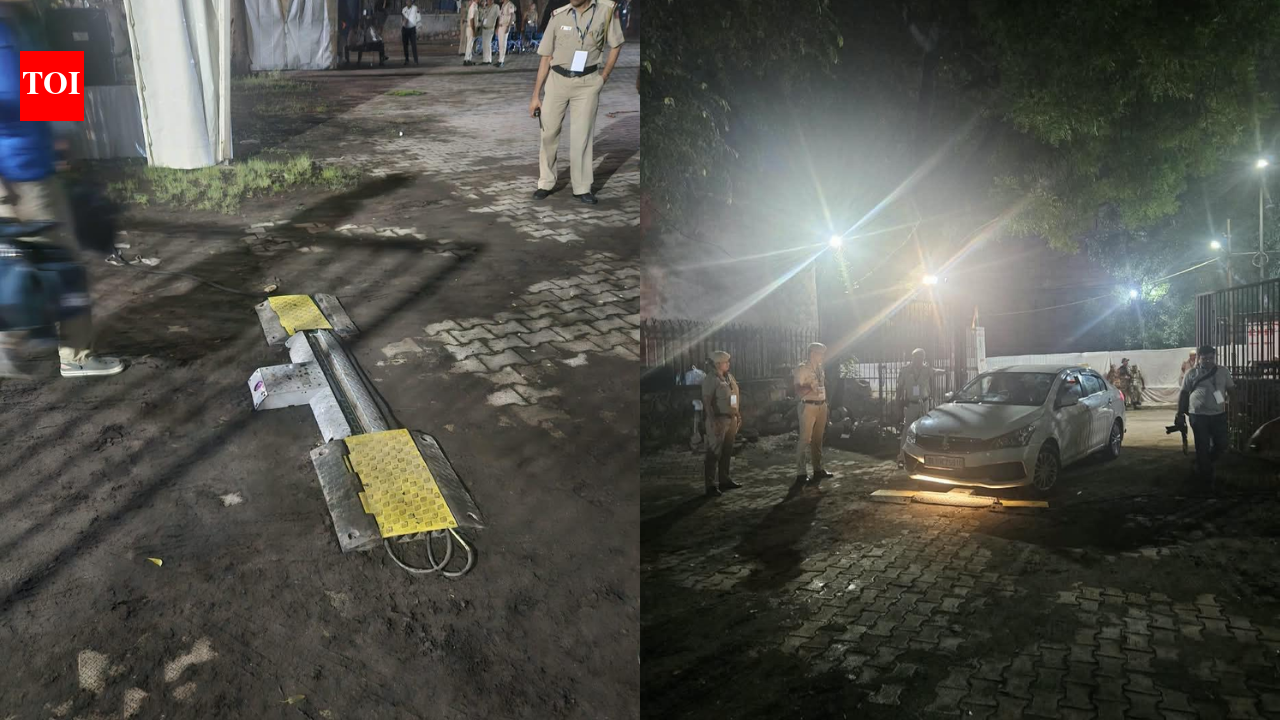
NEW DELHI: This Independence Day, the Red Fort was guarded not just by a heavy security presence but also by a layer of technology working round-the-clock behind the scenes. As India celebrated its 80th Independence Day, multiple security agencies had strengthened arrangements in and around the historic venue, with personnel maintaining a close vigil on the ground.Among the technologies reportedly being used was Abhigyan app, which allowed police personnel to check a person’s identity against a database of over a crore people. Using handheld devices, officers could also scan a person’s fingerprint and receive results within seconds. A red indication flagged a possible criminal record, with details displayed on the device, while a green indication showed that no record had been found.Facial Recognition System (FRS) vans added another layer of surveillance. The vans scanned faces in crowded areas and compared them against available databases. If a suspicious person was detected, an alert was reportedly sent to the control room, where security personnel could verify it.In and around the fort, CCTV cameras, which were reportedly AI-enabled, also kept watch. The feeds were reportedly monitored from a control room, with surveillance extending beyond the vicinity of the fort. Surveillance cameras surrounded the Red Fort.TOI observed another technology being used at parking areas — Under Vehicle Surveillance Systems (UVSS). At the entrance to parking spaces, vehicles were driven over platforms equipped with high-resolution cameras that captured images of their undercarriages. The footage was displayed at a designated monitoring point as vehicles passed through. Police personnel also used mirrors to inspect the underside of vehicles and visually check for anything suspicious. Officers were seen recording vehicle registration numbers for surveillance.Security was also maintained in the air. Anti-drone systems were reportedly deployed around the venue to detect and counter unauthorised aerial activity. Drones and kites were prohibited in the area as part of the security measures.But technology remained only one part of the security grid. Police personnel were deployed at every enclosure, keeping a close watch on movements around the venue and in the air, while other security teams maintained the perimeter.As India marked another year of independence, advancements in technology were increasingly becoming part of how the country protected its most important national occasions. Behind the visible presence of officers and barricades, these systems worked quietly, helping security personnel detect, verify and respond to potential threats while keeping the celebrations safe.


