






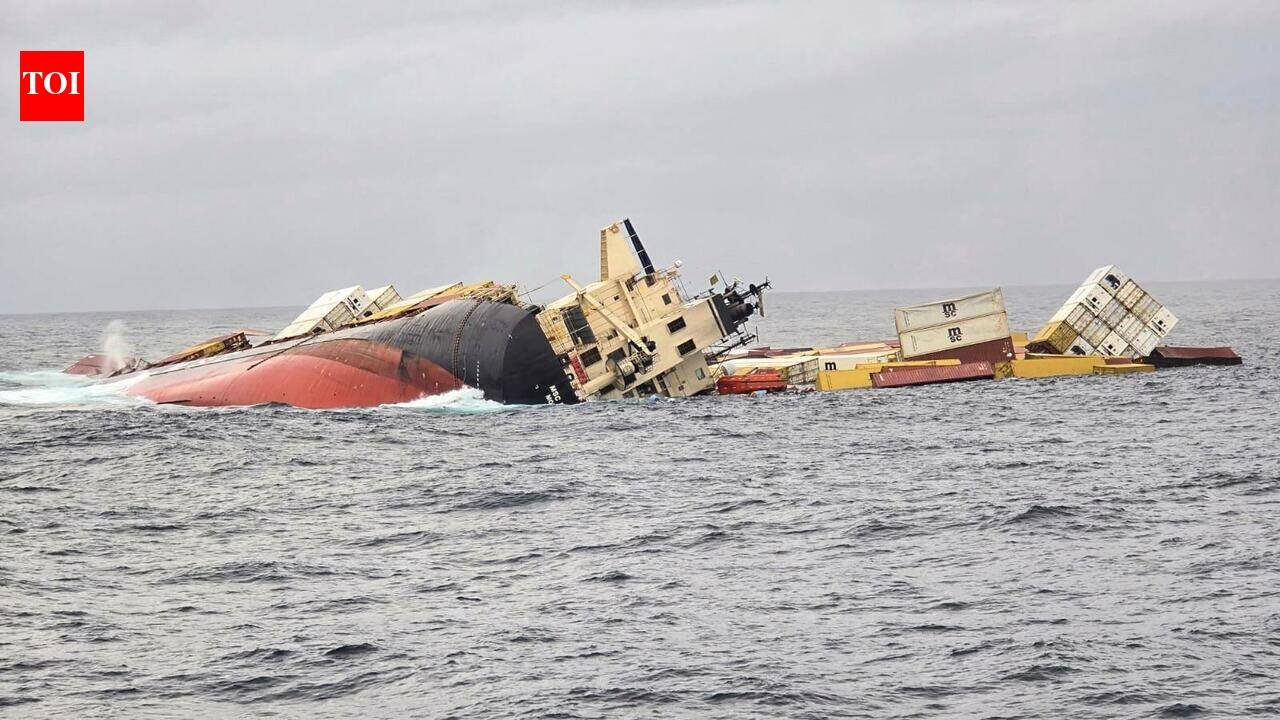
Thiruvananthapuram: Plastic resin pellets, or nurdles, released after container vessel MSC ELSA-3 sank off Kochi on May 25, 2025, continued to contaminate stretches of the southern Keralam and Tamil Nadu coasts for a year, with some reaching the Gulf of Mannar and beyond. Some pellets were found buried up to 20 cm beneath beach sediments.A year-long study found that the pellets accumulated pollutants, including heavy metals, and were ingested by fish. Researchers from Suganthi Devadason Marine Research Institute, Tuticorin; Tamil Nadu Pollution Control Board; department of aquatic biology & fisheries, University of Kerala; and Kerala University of Fisheries and Ocean Studies (Kufos) surveyed 93 coastal sites across Keralam, Kanniyakumari, the mainland coast of the Gulf of Mannar and its islands.The study, published in Marine Pollution Bulletin, examined shoreline contamination, sediment burial, chemical weathering, pollutant accumulation, microbial growth and exposure of marine fish. Elemental analysis detected aluminium, antimony, arsenic, cadmium, chromium, copper, lead, mercury, nickel, vanadium and zinc in the pellets, along with polycyclic aromatic hydrocarbons and petroleum-related hydrocarbons.Nurdle concentrations peaked at 31,230 pellets per square metre at Varkala and 26,102 at Kovalam soon after the spill, but fell by more than 80% within three months. New hotspots emerged in the Gulf of Mannar, including Mookaiyur, where concentrations reached 10,875 pellets per square metre. By October 2025, pellets had spread from Hare Island to 13 of the 19 surveyed islands, with Upputhanni recording 2,960 pellets per square metre.Changing currents, winds, waves and monsoon conditions redistributed the pellets along the coast, researchers said. By May 2026, they were found buried up to 20 cm on the Kanniyakumari coast, 17.5 cm on the Gulf of Mannar mainland and 12.5 cm on its islands. Such buried pellets could resurface through erosion, storms and sediment movement, making beaches long-term sinks as well as potential secondary sources of pollution.Of the 2,413 fish examined, 26 (1.08%) had ingested nurdles or had pellets trapped in their gills or digestive tracts. Exposure was higher among fish living in open water. Pollutant-laden nurdles were associated with oxidative stress and moderate tissue damage in the gills, liver, intestines and kidneys. Affected species included frigate tuna, Indian mackerel, yellowtail scad, shrimp scad, milkfish, bigeye scad and torpedo scad.The study, one of the first comprehensive assessments of post-spill transformation of resin pellets in a tropical coastal ecosystem, provides a scientific basis for improving spill response, ecological risk assessment and long-term coastal management.Kufos vice-chancellor A Biju Kumar, co-author of the study, said nurdles could cause long-term contamination of marine ecosystems and called for sustained monitoring. “Nurdles are still settling at Kovalam and need to be monitored and removed,” he said.Recent maritime accidents in Hong Kong (2012), South Africa (2017), Sri Lanka (2021) and northwest Spain (2024) have also released billions of resin pellets, highlighting their ability to travel long distances and carry pollutants and microorganisms.


