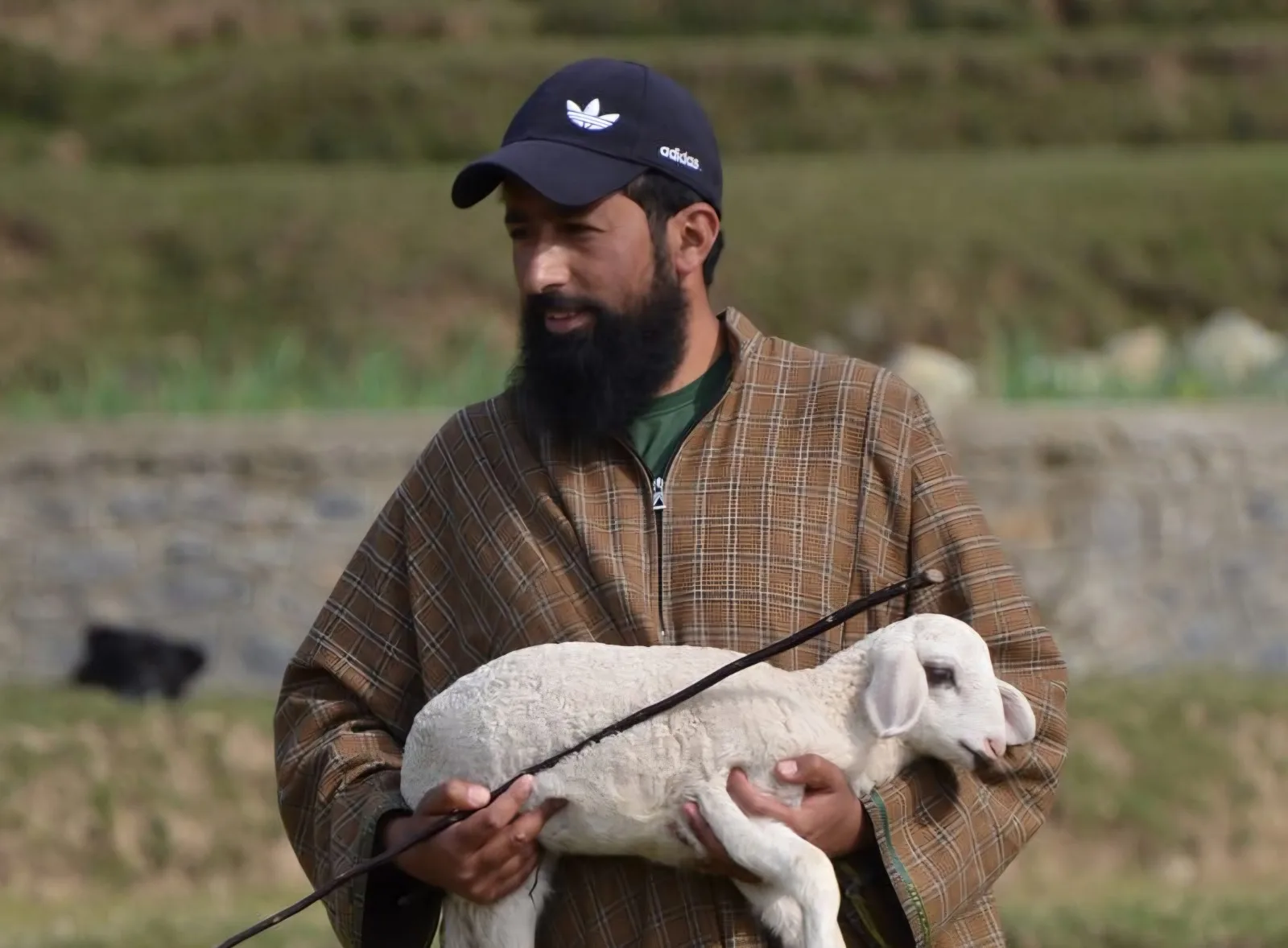
TRIBUTE
The news came on the evening of Eid al-Fitr, March 21. It was meant to be a day of celebration. Instead, it became the day the ground shifted beneath everything familiar. I heard that Salim had met with an accident and had been taken to the District Hospital in Bandipora. I called a friend there immediately, asking him to go inside the minor operation theatre and keep me on the line. Minutes passed. When he returned, his words were careful, but the meaning was unmistakable. The hospital was overwhelmed. Salim, he believed, would not make it.
I refused to accept it. Even as the person on the other end of the line stood before him, even as the truth was being spoken, I told myself Salim might still be referred to Srinagar for an MRI.
There were people around me, villagers who had gathered there, and I spoke the words aloud, as if saying them could make them real. It took the comfort out of the day. My blood pressure dropped. My back began to ache, a heaviness that, in local belief, is sometimes said to accompany the loss of someone deeply close.
Six days later, I still find myself struggling to accept that he will not return.
Salim was older than me. But the way he spoke to me, the ease with which he carried himself in our conversations, made it feel otherwise. There was no hierarchy in his kindness. No weighing of who deserved what. He gave without calculation, and he gave without making the other person feel small.
He was not the kind of man who sought attention. He ran a small crockery shop in our village, a modest occupation, but one through which he quietly touched more lives than perhaps he ever knew.
Not long ago, a man from the village, someone struggling financially, came to his shop and asked for an induction heater. He did not have the money to pay. Salim did not hesitate. He handed over the induction heater and told the man to pay whenever he could, even a hundred or two hundred rupees a month. There was no contract, no reminder. Just trust extended without condition.
That was Salim.
I have known him since my growing years. But it was during my sister’s wedding that I saw, once again, what his presence truly meant.
I had decided, rather suddenly, to arrange firewood for the wazwan. Most of my relatives were occupied, and there were few hands available. The task seemed impossible to complete in a single day with just axes. I called Salim. I asked him to come with his wood-cutting machine.
Within an hour, he was there.
He worked through the day. When the work stretched into the evening, he told me not to worry, we would finish, even if it took longer. At one point, he got injured. He did not stop. When I asked him to rest, he brushed it aside. “It is my sister who is getting married,” he said. That was explanation enough.
At his funeral, I saw something that has stayed with me.
Men I had known for years, men I had seen described by the village in unkind terms, men I had seen behave in ways that invited criticism, were weeping. They stood around, struggling to speak, and then they told their stories. Stories of how Salim had helped them. Stories of moments when he had shown up, without being asked, without expecting anything in return.
It was in that moment that I understood Salim more fully than I had in all the years I knew him.
He had a way of reaching people that transcended reputation, that did not ask for credentials of worthiness. He simply gave. And in doing so, he became someone the entire village, in its own way, owed something to.
There is a belief, perhaps it is more than that, that a person of genuine goodness sees their death forty days before it arrives. I do not know if Islam speaks of this, or if it is simply something we tell ourselves to make sense of what we cannot understand.
But forty days before he left this world, Salim posted two lines on his Facebook account:
“Mujhpai Tehqeeq mere baad karegi Duniya” (The world will inquire about me after I am gone)
Mujhe samjhengay mere baad zamane waale” (People will understand me after I am no longer here)
It reads now like a premonition. Or perhaps just the quiet awareness of a man who knew, without arrogance, that his life had mattered.
For me, Salim was more than a friend. He was part of the architecture of my life, someone who was present through ease and difficulty alike, without ever needing acknowledgement. Some friendships are expressed in words. Ours was understood in silence.
I find myself thinking now about how some people leave without taking anything, and yet somehow make the world feel smaller behind them. The streets are the same. The doorknobs, the air, the rhythm of village life, nothing has changed. But nothing fits anymore.
There was a version of me that existed only while Salim was here. That version laughed easier, trusted more, believed longer. When he left, that version did not follow me forward.
Salim was not defined by wealth, nor by position, nor by any outward measure of success. Yet he commanded a respect that cannot be acquired, only earned, over time, through consistency of character. Through the quiet accumulation of small acts that, together, become a legacy.
He showed up. For people. For moments. For responsibilities that were not always his to carry. Some people go away without taking anything. Yet somehow they leave the whole world smaller behind them.
Salim may no longer walk among us. But the imprint of his life remains, in the people he helped, in the stories now being told, in the silent ways he shaped the lives around him and in that sense, he has not entirely left.
(The Author is a reporter at Rising Kashmir. He can be reached at: [email protected])