



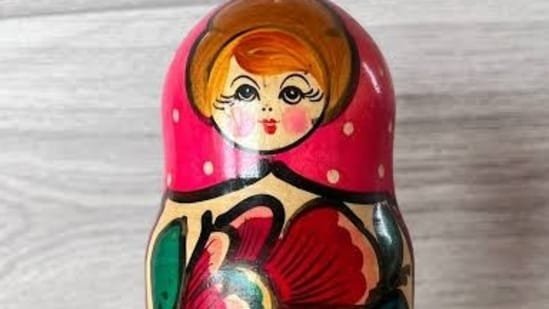
As urban lifestyles grow increasingly fast-paced, many in metro cities are seeking mindful, creative escapes. Alongside this shift, there is a rising curiosity for global art forms. Among these, Russian art workshops are carving out a niche, drawing enthusiasts toward practices like Matryoshka doll painting and sculptural painting.
Layers of tradition
A Matryoshka doll, also known as a Russian nesting doll, is a set of wooden figures placed one inside another, each decreasing in size. Traditionally, the outermost figure depicts a woman dressed in a sarafan, symbolising Mother Russia and representing continuity. Much of its beauty lies in the painting, where every layer demands precision.
Saurav Arya, founder of Small World, which conducts Matryoshka doll painting workshops across cities, says, “Workshops like Matryoshka painting attract people who want to experience Russian art and craft in a hands-on way. This art form requires patience and attention to detail. It is a slow and mindful process.”
For participants, the appeal goes beyond technique. Artist Sneha Deb Barma, who attended one such workshop, shares, “I’ve always wanted to experience international art forms firsthand. As I painted the doll, immersed in its intricate details, and listened to traditional Russian folk music, it truly felt like I was experiencing a slice of Russia right here.”
Art in relief
Another Russian art form gaining traction is sculptural painting, a fine art technique that blends painting with three-dimensional form. Using a specialised paste and palette knife, artists create textured, raised compositions that harden into stone-like surfaces. Unlike classical sculpture or bas-relief, this technique relies on painterly methods to build depth and dimension.
Sculpture artist Marina Shoeb Ali, who conducts workshops across the country, explains that Russian art is deeply rooted in realism, discipline, and emotional depth.
She adds, “I work with Russian sculpture paste, which is made using specialised sculpting compounds that allow flexibility and fine detailing. These materials are easily available in the market, and students are guided on all required materials.”
The versatility of the medium further adds to its appeal. Sculptural artist Deeya Deshwal notes, “Sculptural painting is not just limited to paintings, participants use it to create fashionable accessories, unique jewellery, home decor and much more, which is why it’s a big draw.
Know your art
Matryoshka doll painting sessions start at ₹999 per class. And basic workshops on Russian sculptural painting begin at approx ₹8,500, while advanced courses spanning one to three months can go up to ₹1,00,000.


