






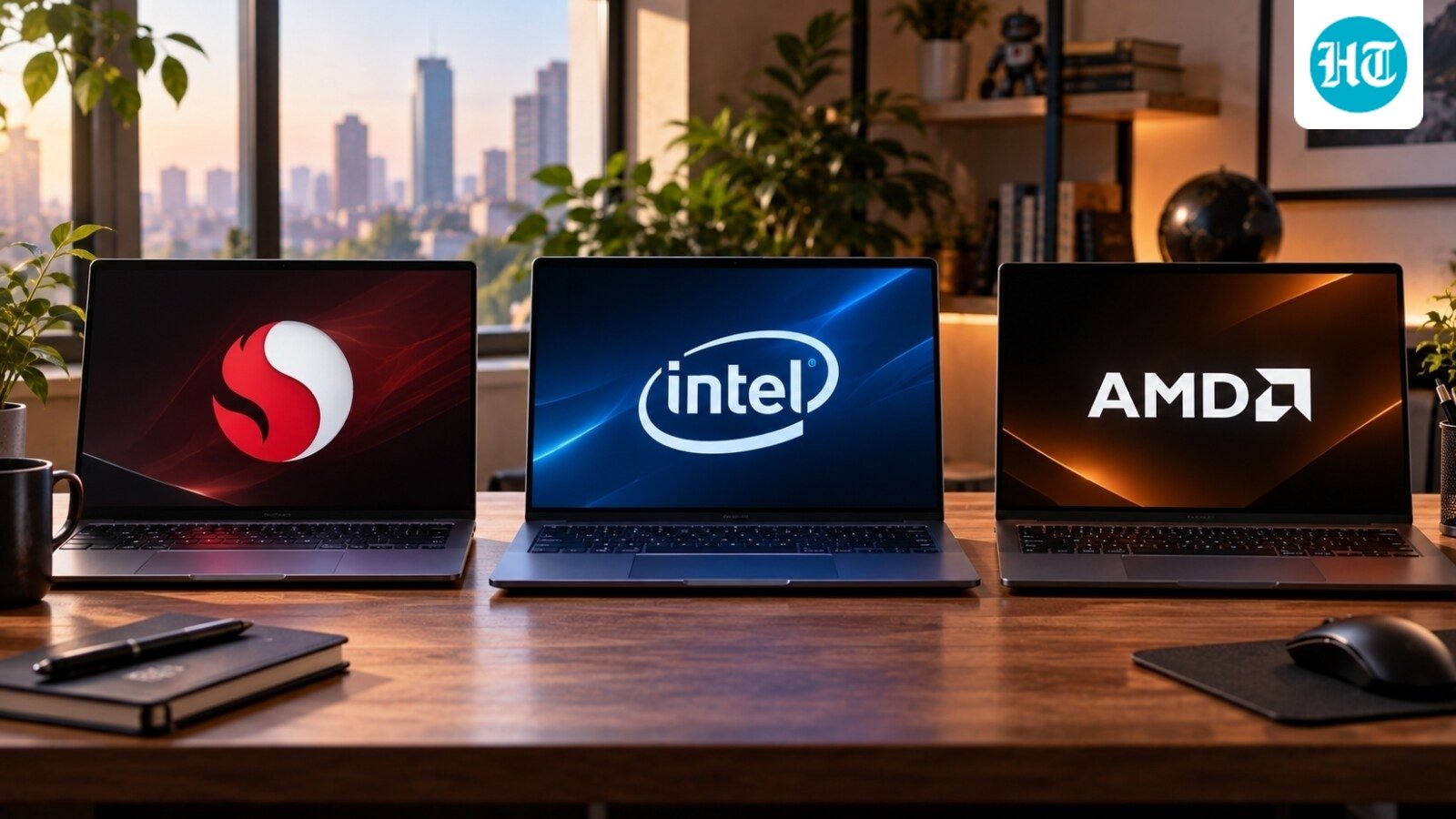
Buying a laptop used to involve a simple question: Intel or AMD? That has changed now. Qualcomm’s Snapdragon processors have become a serious option in Windows laptops, while Intel and AMD continue to bring newer chips with stronger performance, graphics and AI features. The processor you choose can affect battery life, app compatibility, gaming performance and even which laptop models are available to you. So instead of looking only at the brand name, it makes sense to start with how you actually plan to use the laptop. Here is how Snapdragon, Intel and AMD compare.
Snapdragon: Built around efficiency and battery life
Snapdragon laptops use Arm-based processors, which makes them different from the traditional x86 chips used by Intel and AMD.
Qualcomm’s current Snapdragon X family includes models with up to 18 CPU cores and NPUs rated at up to 80 TOPS. Qualcomm also continues to focus heavily on battery life and thin, portable Windows laptops.
For someone who spends most of the day working in a browser, writing documents, attending video calls or travelling with a laptop, that combination can be useful.
There is one thing you should check before buying, though: software compatibility.
Windows 11 on Arm can run x86 and x64 applications through Microsoft’s Prism emulation layer. Microsoft says native Arm versions can deliver better performance and battery efficiency than running applications through emulation.
That means most everyday users should have fewer compatibility concerns than they might have had with early Windows-on-Arm machines. However, if you rely on older professional software, specialised applications, plugins or hardware that requires specific drivers, check compatibility first.
Who should consider Snapdragon?
- Students and office users
- Frequent travellers
- People who prioritise battery life
- Users who spend a lot of time in browsers and productivity apps
- Buyers interested in thin, lightweight laptops with built-in AI features
Intel: The familiar all-rounder
Intel remains one of the easiest choices for buyers who want a Windows laptop without spending too much time thinking about processor architecture.
Its newer Core Ultra processors cover a wide range of laptops, from thin-and-light machines to systems designed for heavier workloads. Intel’s latest Core Ultra Series 3 platform also combines CPU performance, integrated Arc graphics and an NPU for AI workloads.
For most buyers, the bigger advantage is the variety of laptops available with Intel chips. You can find them in business notebooks, premium ultrabooks, gaming laptops and creator-focused machines.
Intel also makes sense when compatibility is a major concern. Its processors use the x86 architecture that has long been used across Windows PCs, so there is no Arm emulation layer involved.
That does not automatically make every Intel laptop better for every task. The exact processor, cooling system, RAM, storage and GPU still matter.
A Core Ultra 5 laptop and a Core Ultra 9 gaming machine, for example, are designed for very different workloads.
Who should consider Intel?
- Office and business users
- Students
- Buyers who want a wide range of laptop choices
- Users with older or specialised Windows software
- People looking for a laptop that can handle a mix of work and entertainment
AMD: A strong option for performance and gaming
AMD’s Ryzen processors have become particularly interesting for users who want performance without necessarily moving to a high-end desktop-style laptop.
The company’s current Ryzen AI range combines CPU and Radeon graphics with dedicated AI processing. AMD’s Ryzen AI 400 Series also includes mobile processors aimed at productivity, content creation and AI PC workloads.
For gaming, the processor should not be considered in isolation. A laptop’s dedicated GPU will usually have a much bigger impact on demanding games. Still, AMD’s CPU and integrated Radeon graphics options can be useful for buyers who want a capable machine without adding a separate graphics card.
AMD laptops are also available across a broad price range, so the brand is not limited to expensive performance machines.
Who should consider AMD?
- Gamers
- Content creators
- Users running demanding applications
- Those who want strong multi-core performance
- People looking for capable integrated graphics
What about gaming?
If gaming is your main reason for buying a laptop, do not choose between Snapdragon, Intel and AMD based on the processor name alone.
Look at the dedicated GPU first, followed by the CPU, cooling system, RAM and display.
For serious gaming, an Intel or AMD laptop with a dedicated Nvidia or AMD GPU will generally give you a much wider selection of gaming hardware than a Snapdragon-based Windows laptop.
Snapdragon is more interesting for casual gaming, cloud gaming and everyday workloads where portability and battery life matter more.
What about work and college?
For everyday college and office work, all three platforms can handle common tasks such as browsing, Microsoft Office, video calls, presentations and streaming.
The difference becomes more noticeable when your workload gets specialised.
If your work depends on software that has not been properly optimised for Arm, an Intel or AMD laptop can be the simpler route. Windows on Arm has improved significantly, but Microsoft still recommends native Arm versions when available for the best performance and battery efficiency.
For basic productivity, however, Snapdragon laptops can make a lot of sense if long battery life and portability are high on your list.
Which one should you choose for creative work?
This depends heavily on the application.
Photo editing, video editing and other creative workloads can benefit from a powerful CPU, plenty of RAM and a capable GPU. If you regularly work with high-resolution video or demanding 3D applications, check the exact software and hardware requirements before buying.
AMD and Intel currently offer a wider selection of performance-oriented laptops, including models with dedicated GPUs.
Snapdragon can still work well for lighter creative workloads, particularly on newer applications with native Arm support. But compatibility should be part of your buying checklist.
Snapdragon vs Intel vs AMD
| Feature |
Snapdragon |
Intel |
AMD |
|---|---|---|---|
| Architecture | Arm | x86 | x86 |
| Main strength | Efficiency and battery life | Versatility and compatibility | Performance and graphics |
| Battery focus | Strong | Varies by processor and laptop | Varies by processor and laptop |
| Gaming | Casual and cloud gaming | Strong with dedicated GPU | Strong with dedicated GPU |
| App compatibility | Check specialised software | Broad Windows compatibility | Broad Windows compatibility |
| AI hardware | Dedicated NPU | NPU on newer Core Ultra chips | NPU on Ryzen AI chips |
| Best suited for | Portable productivity | All-round use | Performance and gaming |
The processor brand is only part of the decision
This is probably the most important thing to remember when shopping for a laptop.
Do not buy a laptop simply because it has a Snapdragon, Intel or AMD sticker on it.
Two laptops using processors from the same company can perform very differently because of differences in cooling, RAM, storage, power limits and graphics hardware.
For example, someone buying a laptop for gaming should pay close attention to the GPU. Someone travelling frequently may care more about battery capacity and weight. A student may want a balance between price, battery life and everyday performance.
The processor is the starting point, not the entire laptop.
Final verdict
There is no single processor family that makes sense for every laptop buyer.
Snapdragon is worth considering if you want a lightweight Windows laptop with strong efficiency and long battery life, provided the software you use works well on Arm.
Intel remains a practical choice for buyers who want a broad selection of Windows laptops and wide software compatibility.
AMD is particularly relevant if performance, gaming or graphics capability is high on your list.
Before making the final decision, compare the complete laptop configuration rather than the processor badge alone.
Similar articles for you:
Need more screen space for work? These 16-inch laptops balance display size and everyday performance
Why 16GB RAM laptops are becoming the smarter choice for everyday work
A tablet can be your cinema, console and companion, and these 5 models prove it
Disclaimer: At Hindustan Times, we help you stay up-to-date with the latest trends and products. Hindustan Times has an affiliate partnership, so we may get a part of the revenue when you make a purchase. We shall not be liable for any claim under applicable laws, including but not limited to the Consumer Protection Act, 2019, with respect to the products. The products listed in this article are in no particular order of priority.


