







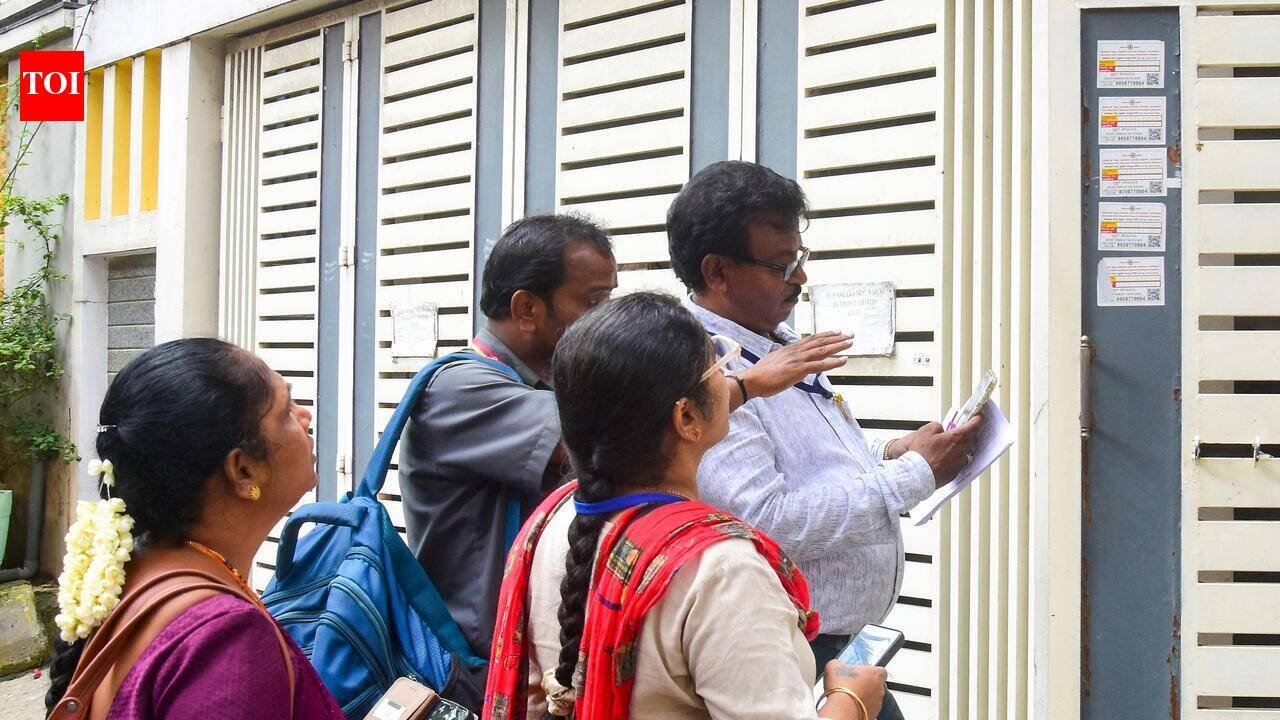
Starting Tuesday, The Election Commission’s Special Intensive Revision (SIR) of electoral rolls will be carried out in six stages over nearly three months, ending with the publication of the final electoral roll on Oct 7. The exercise involves fresh verification of voters, family mapping and correction of electoral records. Here is a step-by-step guide.What is SIR?SIR is a voter verification exercise conducted by the Election Commission to update electoral rolls through house-to-house verification, family mapping and removal of duplicate, incorrect or ineligible entries. Existing voter ID holders are also covered.How will it unfold* June 30-July 29: Door-to-door verification by booth-level officers (BLOs), distribution of forms and voter verification*Aug 5: Publication of draft electoral roll* Aug 5-Sep 4: Filing of claims and objections* Aug 5-Oct 3: Disposal of claims and objections* Oct 7: Publication of final electoral rollWhy is SIR different from a routine revision?* Existing voters also undergo fresh verification* Family relationships and historical voter records are checked* Greater emphasis is placed on data consistencyWhat is progeny (family) mapping?* Links every voter with parents or spouse* Helps identify duplicate or ineligible entries* Incorrect information on the system may trigger further verificationWho is most likely to face verification issues?* Tenants and recent migrants* People with name mismatches across documents* Families using different initials or surnames* Senior citizens unavailable during BLO visits* Voters with incomplete or outdated recordsCan you lose your vote even if you have a voter ID?A voter ID alone does not guarantee inclusion in the electoral roll. If records cannot be verified in case of discrepancies, further scrutiny will followWhy do records become unmapped?If a voter is absent, shifted or dead or in case of duplicationWhat documents help during verification?* Birth certificate* Passport* Educational certificate by recognised boards/universities* Permanent residence certificate issued by state authorities* Caste certificate* Forest rights certificate* Land or house allotment certificate* NRC entry (where applicable)* Govt family register* Identity card/certificate/document issued before July 1, 1987, by a govt department, local authority, LIC, PSU bank or post office*Identity card/pension payment order issued to a regular employee/pensioner of central/state govt or PSUs*AadhaarWhich forms should voters use?* Form 6: New inclusion or shifting constituency* Form 7: Objection or deletion* Form 8: Correction of name, age, gender, address or photographWhat should voters do?* Check their name in the electoral roll* Verify personal and family details* Correct errors immediately* Keep supporting documents ready* Submit the appropriate statutory form if requiredWhy are applications rejected?* Wrong form submitted* Name mismatch across records* Invalid or unclear documents* Incomplete address proof* Missing family linkageWhat if someone files Form 7 against your name?* Respond with valid address and identity proof* Attend hearings if notified* Submit supporting documents within the prescribed timeKey takeaways* Check voter details early* Correct errors before the final roll is published* Ensure names, addresses and family details are consistent across records* Do not assume that a voter ID alone guarantees inclusion in the electoral roll


