







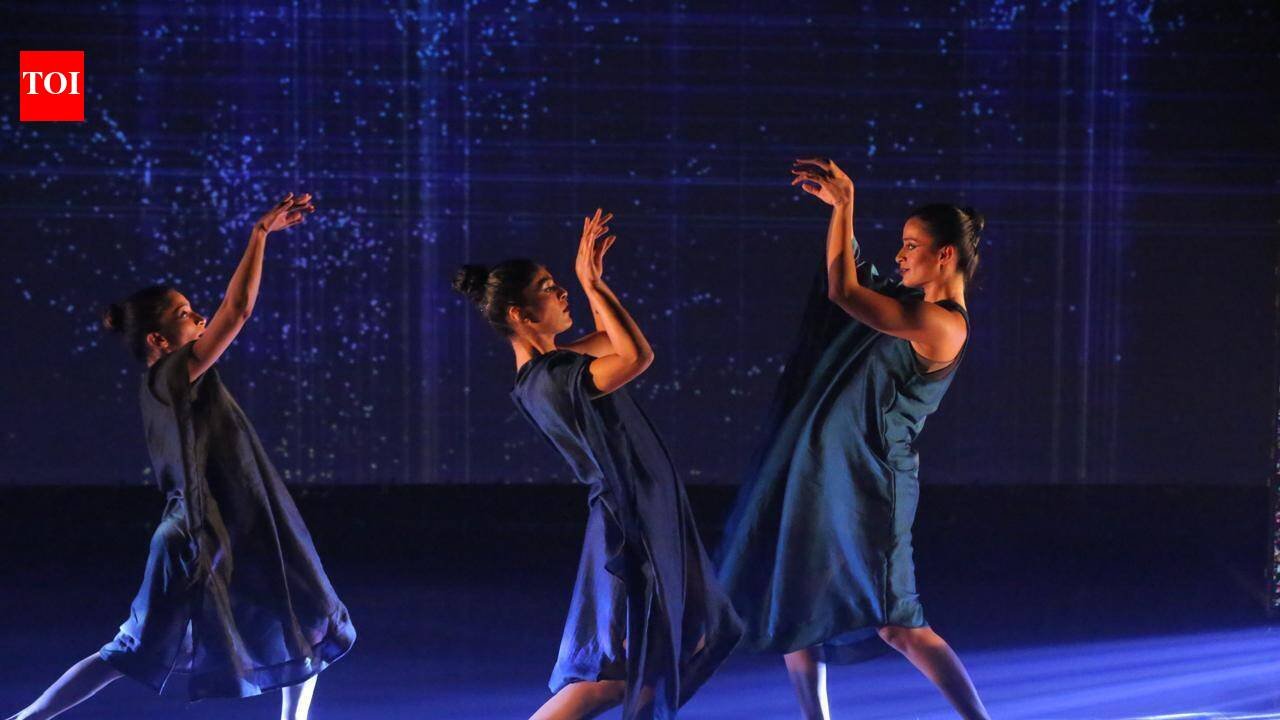
– Evelyn Ann AbrahamBengaluru’s cultural calendar has always been packed with performances, but a noticeable shift is unfolding on the city’s dance stages. Across classical sabhas and commercial street dance platforms, performers are stepping away from familiar mythological narratives and viral social media trends. Instead, they are using dance to engage with questions of identity, politics, trauma, motherhood, climate change and social justice. Driven by artists such as Madhu Nataraj, Bharatanatyam practitioners Rukmini Vijaykumar and Aranyani Bhargav, and street-style choreographer Sandy Sundar, dance in Bengaluru is increasingly becoming a powerful language that responds to the world in real time.‘Dance must respond to what’s happening around us’Aranyani Bhargav has been dancing Bharatanatyam for over two decades, pushing the form into territory it doesn’t traditionally occupy, not by leaving it behind, but by refusing to believe it has a ceiling. When she was pregnant, she kept dancing. “In India, what tends to happen is that because of superstitions, we actually conceal the pregnant body. Why should a dancer not dance just because she’s pregnant? We celebrate motherhood, mother earth, mother nature and yet we are not celebrating pregnancy,” she says. Her piece, Lori, went further still, responding to the suffering of children in Gaza. “I couldn’t separate myself from being a mother and being a dancer. My identity as a mother, as a human being, as a dancer, it’s still the same,” she added. Aranyani also believes artists should not shy away from political realities. “There seems to be a lot of resistance in the artist world in India that wants to keep politics out of the arts. We have a rich tradition of paintings, poetry and literature being used to express solidarity and resistance. Yet classical dance often prefers to stay within mythological narratives rather than address issues that are pressing matters for humanity.” ‘Dance can make people confront uncomfortable truths’For Rukmini Vijaykumar, evolving as an artist means pushing the boundaries of what Bharatanatyam can communicate by dropping the traditional mythological safety net. When the theme turns to heavy contemporary realities, she doesn’t mind if the energy in the room shifts. “Some contemporary pieces are a little uncomfortable. I have a work called Abducted, which is about abuse, and that is uncomfortable. It just depends on the subject,” she shares. To ensure that these contemporary themes remain high art rather than simple theatrical acting, she deliberately alters her physical focus. “I think of using my body to tell the story as opposed to just my facial expressions, especially when it’s contemporary work,” she explains. ‘Dance can honour tradition while confronting the present’Kathak exponent Madhu Nataraj believes classical dance already contains the vocabulary needed to address contemporary issues. “Whether it is beauty or grotesqueness, fear or love, all of them are already available in the expressive vocabulary of the form. You really don’t have to deviate,” she says.Over the years, she has created works exploring climate action, sexuality and mental health. One recent production on climate change incorporated AI and virtual reality, while another addressing sexual harassment was performed as a stripped-down solo. “The truth makes you uncomfortable, but I want the audience to have some stake in it, some sense of, can I help with this? One doesn’t have to choose. The uniqueness of us Indians is that we balance tradition and modernity every day, and that is reflected in our dance forms.“‘I wanted my choreography to be rooted and not just entertainment’Sandy Sundar has been using commercial and street dance styles to push the form into spaces it doesn’t traditionally occupy by refusing to let it stay in the safe comfort zone of entertainment. “If we do a normal commercial dance, people will forget it that same day because once they go back home and once they open Instagram, someone is already dancing on their small screen,” he says. “But they can’t even compare us to that because of the story itself. It stands alone so much stronger, and they will remember it forever. I’m not just giving them entertainment; I’m making them think.”When he choreographed a piece for his dance troupe at an international competition, he didn’t lean on safe commercial tropes; instead, he chose to bring an uncomfortable, real-world tragedy onto the stage by portraying the raw history of Sri Lankan Tamil immigrants. “As time goes by, everyone normalises these tragedies and moves away from them. But these people are still holding that pain back, and they know how it feels to leave their own home when a crisis happens. If you want to tell the true story of what your country or your people went through, dance is the best way to do it. I wanted my choreography to be rooted, and I wanted those roots to be presented on a bigger stage,” he says.


