





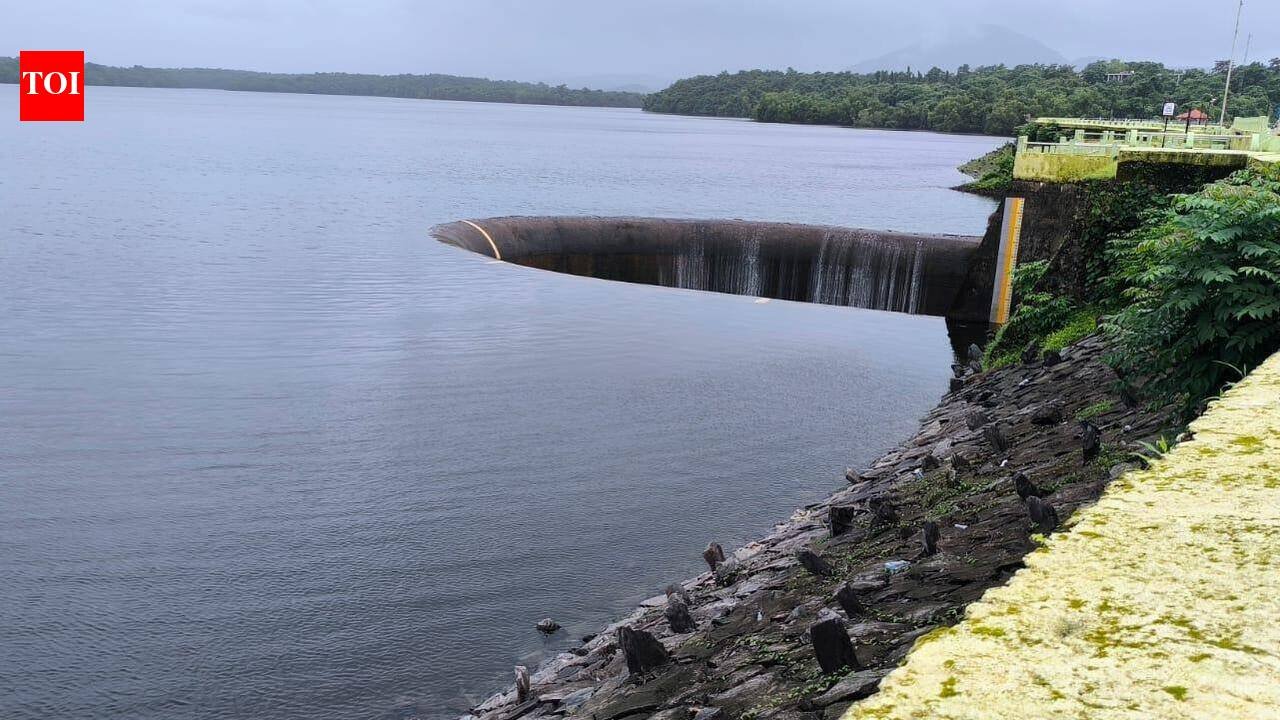
Panaji: The Selaulim reservoir, which supplies most of South Goa, began overflowing at 3.30pm on Thursday, the latest spillover recorded in 13 years. Last year, the dam – which is Goa’s largest – overflowed on June 25, while spillover typically occurs in the first or second week of July. This year, a rainfall deficit of around 30% delayed the overflow.Located in Uguem, Sanguem, the area recorded total seasonal rainfall of 1,851.7mm this year. On Thursday, when the reservoir reached overflow, 6.5mm of rainfall was recorded. As a result, when the dam first began spilling from its unique duckbill spillway, canal discharge was lower than usual.Water spilling into the duckbill spillway attracts large numbers of visitors to the Selaulim reservoir complex and its botanical gardens. With good rainfall, the spillway continues for longer; last year, the overflow stopped only around the end of Nov.The duckbill spillway is designed to pass a maximum flood discharge of 1,450 cubic metres per second. Excess water flows into the Selaulim river and is used for irrigation. The reservoir’s water spread area is 24sqkm.At full level, the Selaulim reservoir stands at 41.1m, with a gross storage of 234.3 million cubic metres.In Canacona, the Gaunem reservoir has also reached capacity. It attained full level by early July last year. The Chapoli reservoir in Canacona is 64% full.The Panchawadi reservoir at Shiroda, in the Ponda taluka, has reached 90%. Amthane reservoir stood at 81% as of Thursday and serves Bardez along with parts of Bicholim and Pernem.The Tillari reservoir, which supplements water supply to the same areas, is 84% full. The dam, located in Dodamarg, Maharashtra, has manually operated gates that are opened to release excess water once levels cross 93%.Similarly, Anjunem reservoir, which is 57% full at present, is the only dam in Goa with manual gates. It is at its lowest level in several years.


