



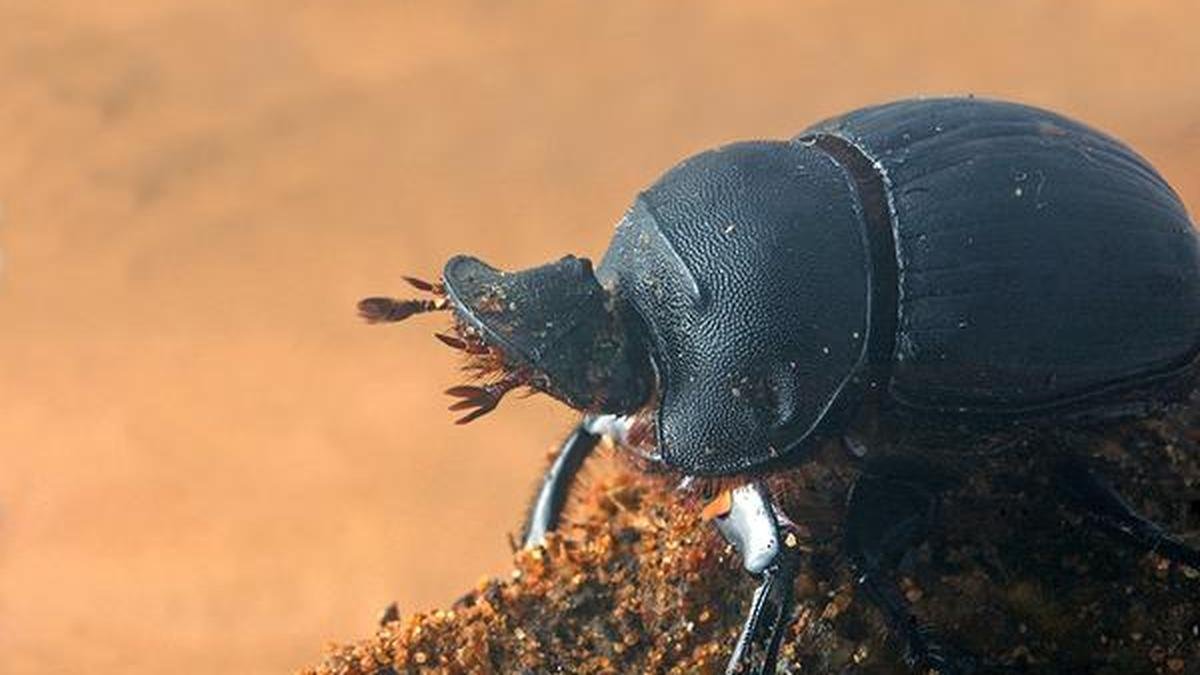
A long-term study in East Africa has reported that dung beetles depend heavily on elephant dung
| Photo Credit: Getty Images/iStockphoto
Elephants’ decline portends dung beetle co-extinction
Elephants are keystone species that sustain savannah ecosystems. A long-term study in East Africa has reported that dung beetles depend heavily on elephant dung. Following a 15-year field experiment, researchers concluded that beetle species richness dropped by 23%, and total beetle biomass fell by 51% sans elephant dung. Smaller herbivores, like cattle or zebras, could not fill the gap. The elephants’ decline thus triggers a coextinction cascade that slowed dung decomposition and reduced seed dispersal.
Rice paper can be modified to recover e-waste gold
Researchers have found a way to use rice paper to recover gold from electronic waste. They modified the starch-based food material using a chemical process called hydrazination, which created a porous structure on the paper that quickly and selectively pulled gold from complex liquids, including dissolved CPU waste. It works by attracting gold ions and reducing them into solid gold nanoparticles on the paper’s surface. Finally, the paper can be burnt to retrieve pure metallic gold.
Sea cucumber tissue lives on for years without decaying
Tissues from the sea cucumber can survive and grow independently for years. When scientists removed body parts like tube feet and tentacles and placed them in natural seawater, instead of decaying, they thrived for over three years without supplements. They also used immune cells to beat infections and absorbed nutrients from the water. This unique form of natural immortality challenges conventional views on biological decay and offers an ethical model for researchers to study healing.
Published – June 01, 2026 10:25 am IST


