



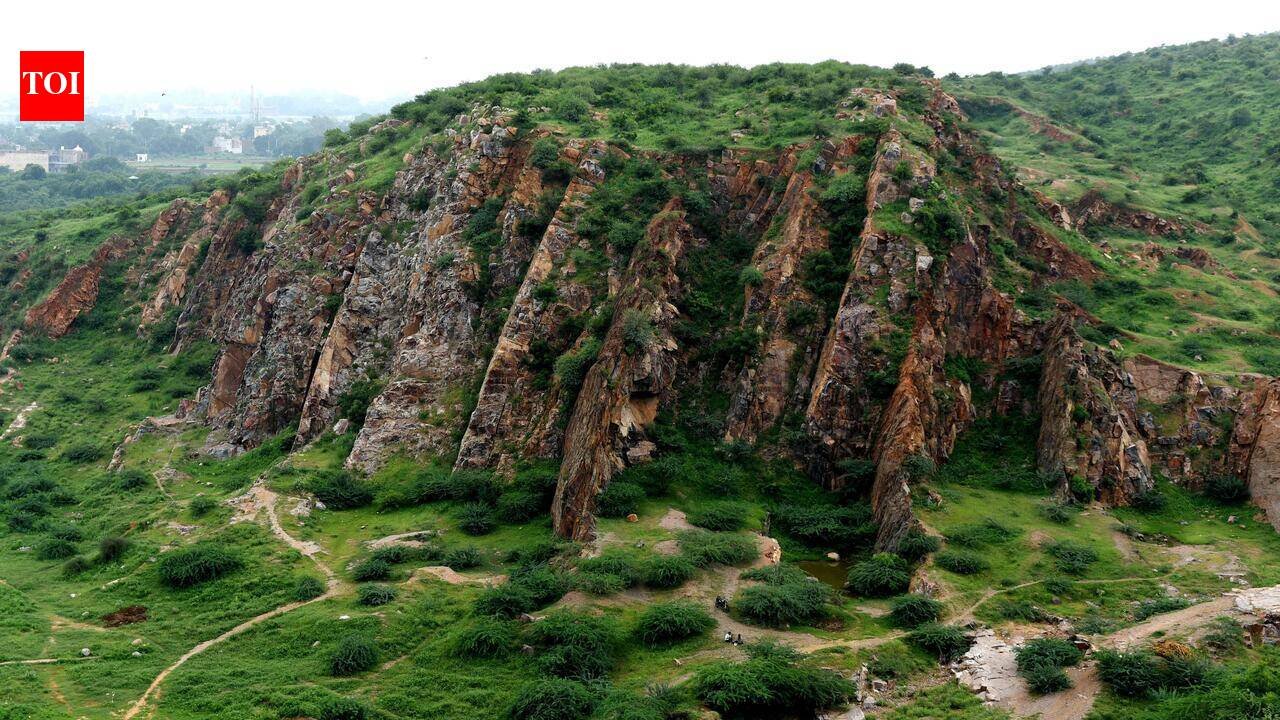
Gurgaon: Supreme Court-appointed high-powered committee (HPC), tasked with examining the definition and conservation of the Aravalis, will begin its six-day field survey on Thursday with visits to key ecological sites in Delhi-NCR before travelling across Rajasthan.The committee will inspect Asola Bhatti Wildlife Sanctuary, Mangar Bani and Aravali Biodiversity Park in the city on the first day. From Friday, the panel will travel through Rajasthan, covering Kotputli, Neem Ka Thana and Sariska Tiger Reserve, where a stakeholder interaction has also been scheduled. The itinerary includes visits to Kishangarh, Bichoon and Kaluwad near Ajmer, Rajsamand and Javar mines in Udaipur, along with consultations at Ajmer and Udaipur.The committee will return to Delhi on Aug 11. A stakeholder consultation with Haryana representatives is scheduled in Delhi from 4pm to 6pm the same day, after the completion of the field visit. The schedule was finalised after Haryana informed the panel that senior officers would not be available till Aug 10, according to an official. He said preparations for the state-level Van Mahotsav on Aug 7 were among the reasons cited for the officers’ unavailability.The field inspections are a key part of SC’s exercise to develop a scientific and legally tenable framework for identifying and conserving the Aravali hills. During the visit, the committee will assess ecological, geological, hydrological, biodiversity, mining, land-use and socio-economic characteristics of the landscape. It is expected to submit its report to the apex court by Aug 31.In July, the Union environment ministry said stakeholders from Haryana, Rajasthan, Delhi and other states linked to the Aravali ecosystem could submit suggestions and representations within 21 days via email or a dedicated portal.The committee’s recommendations are expected to influence how the apex court identifies and protects the Aravalis across states. The exercise has gained significance after the previous expert panel suggested that, for regulating mining, only hills rising more than 100 metres above the surrounding terrain should be treated as part of the Aravalis. Environmentalists have opposed the proposal, arguing that such a definition could exclude several ecologically important low-lying hill formations from protection.The Aravalis stretch nearly 700km from Gujarat through Rajasthan and Haryana to Delhi. They act as a natural barrier against the expansion of the Thar Desert, recharge groundwater aquifers, moderate the regional climate and provide habitat for a wide range of wildlife.In Haryana, the range has suffered decades of degradation due to mining, urban expansion, infrastructure projects and encroachments, leading to repeated interventions by the Supreme Court and the National Green Tribunal. The committee’s report is expected to play a key role in shaping the future legal and policy framework for conservation and development across the Aravali landscape.


