






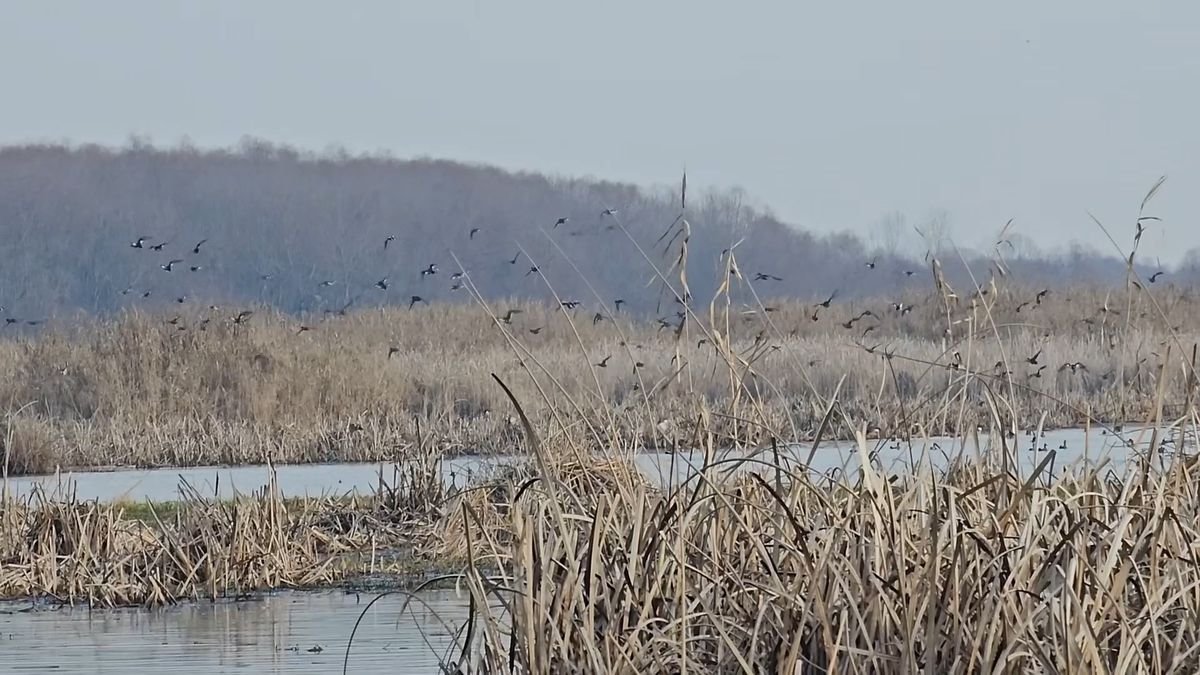
Kashmir’s wetlands are often noticed only when they become scenic backdrops, birdwatching destinations or the subject of an occasional official celebration. Yet these fragile water bodies are far more than picturesque remnants of a landscape people once knew better. They are among the Valley’s most important natural systems—quietly storing floodwater, recharging groundwater, filtering pollution, supporting agriculture and sustaining a remarkable variety of birds, fish and plant life.
Their decline should therefore concern every resident of Kashmir, not only environmentalists. When a wetland shrinks, is filled with debris or is cut off from its natural channels, the loss is not confined to birds and reeds. It weakens the Valley’s capacity to absorb heavy rainfall, increases the pressure on rivers and drainage networks, damages livelihoods and reduces the ecological resilience of communities already facing rapid urbanisation and a changing climate.
The crisis is visible across the Valley. Wetlands have been narrowed by encroachments, fragmented by roads and construction, choked by solid waste and contaminated by untreated sewage. Water channels that once connected lakes, marshes and agricultural fields have been blocked or diverted. In several places, the boundary between wetland and settlement has become a matter of dispute rather than a clearly protected ecological limit. Each unauthorised filling may appear small, but together these interventions are eroding a system that took centuries to evolve.
The consequences are particularly serious in a region vulnerable to floods. Kashmir’s wetlands function as natural sponges. During periods of intense rainfall or snowmelt, they hold excess water and release it gradually. This reduces the speed and volume of runoff entering rivers and populated areas. When these holding areas are lost, water has fewer places to go. Drains overflow more quickly, low-lying settlements face greater risk, and the burden on embankments and engineered flood-control structures increases.
This natural protection is often undervalued because it does not arrive in the form of a government project or a concrete structure. But a healthy wetland can provide a service that would otherwise require expensive engineering, regular maintenance and substantial public money. Destroying such a system and then trying to replace it with pumps, walls and drains is not development. It is an expensive admission that nature was treated as disposable.
Wetlands also help regulate the Valley’s water cycle. They absorb and store water, contribute to groundwater recharge and improve the quality of water by trapping sediments and absorbing some pollutants. This function becomes increasingly important as settlements expand and demand for water rises. A wetland that is polluted or disconnected from its catchment cannot perform these services effectively. Its deterioration eventually affects farms, households and downstream ecosystems.
The ecological value of Kashmir’s wetlands is equally significant. The Valley lies along important migratory routes and attracts birds from distant parts of Asia and beyond. Wetlands such as Hokersar, Haigam, Shallabugh and other marshes provide feeding and resting grounds for migratory waterfowl. Their seasonal arrival is not merely a spectacle. It is evidence that these ecosystems remain connected to wider natural processes.
When birds stop arriving in the same numbers, or when they find less food and shelter, the warning is ecological as well as symbolic. It indicates that water quality, vegetation, fish populations or safe resting areas may be declining. The loss of biodiversity also weakens the health of the ecosystem. Every species has a role in the food chain, nutrient cycle and regeneration of habitat.
The disappearance of wetlands would also damage the Valley’s cultural memory. Kashmir’s relationship with water has always been intimate. Rivers, springs, lakes and marshes have shaped settlement, agriculture, transport, folklore and everyday life. Wetlands formed part of the seasonal rhythm of rural communities. They supported grazing, fishing, reed collection and farming. To lose them is to lose not only habitat but also a part of the landscape through which generations understood their home.
Yet environmental protection in Kashmir often remains reactive. Authorities act after encroachment becomes visible, after a flood exposes a drainage failure or after public concern grows over pollution. By then, restoration is more difficult and far more costly. The priority must shift from occasional rescue to continuous protection.
The first requirement is an accurate and publicly accessible inventory of wetlands. Boundaries should be mapped scientifically, updated regularly and marked clearly on the ground. Satellite imagery, local surveys and community testimony can together help identify changes in wetland area, water flow and land use. Without a reliable baseline, it is difficult to determine whether a wetland is shrinking, who is responsible or whether restoration measures are working.
Legal protection must then be matched by enforcement. A wetland cannot be protected on paper while construction, dumping or land filling continues around it. Agencies responsible for revenue, planning, housing, irrigation, drainage and environment must work from the same maps and share accountability. There should be no room for contradictory permissions, delayed action or administrative ambiguity.
At the same time, enforcement must distinguish between deliberate commercial encroachment and the needs of communities that have lived around wetlands for generations. People dependent on fishing, agriculture, grazing or collection of reeds should not be treated as environmental offenders by default. Conservation will succeed only when local residents see wetlands as protected commons that support their future, not as obstacles to development or threats to their livelihoods.
This requires community participation in a meaningful form. Local committees can help monitor dumping, report encroachments, track changes in water levels and support seasonal protection of bird habitats. Schools and colleges can participate in wetland watch programmes, bird counts and water-quality monitoring. Such initiatives should not be reduced to ceremonial clean-up drives. They must be linked to scientific data and official decision-making.
Pollution control is another urgent priority. Untreated sewage, plastic waste, agricultural runoff and construction debris are steadily reducing the capacity of wetlands to sustain life. Cleaning visible waste is useful but insufficient. The sources of pollution must be identified and controlled. Sewage treatment facilities need to function reliably, drains must be monitored and waste disposal rules must be enforced. A wetland cannot be restored if pollution continues to enter it from upstream.
The wider catchment must also be considered. A wetland is not an isolated water body with a line around it. Its health depends on the streams, drains, springs, fields and slopes that feed it. If a channel is blocked or concretised upstream, the wetland may receive too little water. If soil is washed down from construction sites, it may become shallow and silted. If pesticides and sewage enter the catchment, the wetland becomes a reservoir of contamination.
Restoration plans must therefore be based on hydrology rather than beautification. Removing silt may be necessary in some areas, but indiscriminate dredging can destroy vegetation and breeding grounds. Planting ornamental species along a wetland edge may improve its appearance while harming its ecological character. Concrete walkways, lighting and commercial facilities can fragment habitat and disturb birds. A restored wetland should be judged by its ecological function, not by how attractive it looks in a photograph.
Urban planning must also change. The Valley’s towns are expanding rapidly, often into low-lying and water-sensitive areas. Master plans should identify wetlands, floodplains and natural drainage channels as no-build zones. Roads and housing projects must be assessed for their impact on water flow before construction begins. Development cannot be called sustainable if it creates flood risk for the very communities it is meant to serve.
Climate change makes this task even more urgent. Changes in rainfall patterns, warmer winters, irregular snowfall and intense precipitation events are already altering the Valley’s hydrology. Wetlands provide a buffer against such uncertainty. They cannot prevent every flood or drought, but they can reduce vulnerability. Protecting them is therefore an essential part of climate adaptation, not a luxury reserved for times when other problems have been solved.
The economic argument for conservation is strong as well. Wetlands support agriculture, fisheries, tourism, research and local employment. They reduce the cost of flood damage, water treatment and artificial drainage. Bird tourism, if managed responsibly, can create income for surrounding communities without destroying habitat. But economic use must remain within ecological limits. A wetland that is overbuilt, overvisited or polluted will eventually lose the very qualities that attract visitors and generate income.
What is needed now is not another declaration of concern but a Valley-wide wetland action plan with clear targets, timelines and responsibility. It should identify priority wetlands, publish their boundaries, measure water quality, restore natural channels, remove major pollution sources and establish a transparent system for reporting violations. Progress should be reviewed publicly, and local communities should have access to the information.
The government has an important role, but responsibility does not end there. Citizens must stop treating wetlands as dumping grounds or vacant land. Builders and businesses must recognise that short-term gains from illegal filling impose long-term costs on society. Political representatives must resist the temptation to support encroachments for immediate popularity. Courts, civil society, researchers and the media must continue to draw attention to violations and demand accountability.
Kashmir’s wetlands are not empty spaces waiting to be converted. They are living infrastructure, natural archives and shared inheritance. They protect towns, nourish fields, host migratory birds and preserve the ecological balance of the Valley. Once destroyed, they cannot be recreated simply by digging a new pond or planting a few saplings.
The choice before Kashmir is clear. It can continue to allow wetlands to disappear through gradual neglect, fragmented permissions and weak enforcement, or it can treat them as essential public assets deserving serious investment and protection. Saving them will require patience, science, law and community participation. But the cost of inaction will be far greater.
To save the wetlands is to save the Valley’s water, biodiversity, memories and future. That is not an environmental slogan. It is a public necessity.
(The author is a research scholar and freelancer)


