



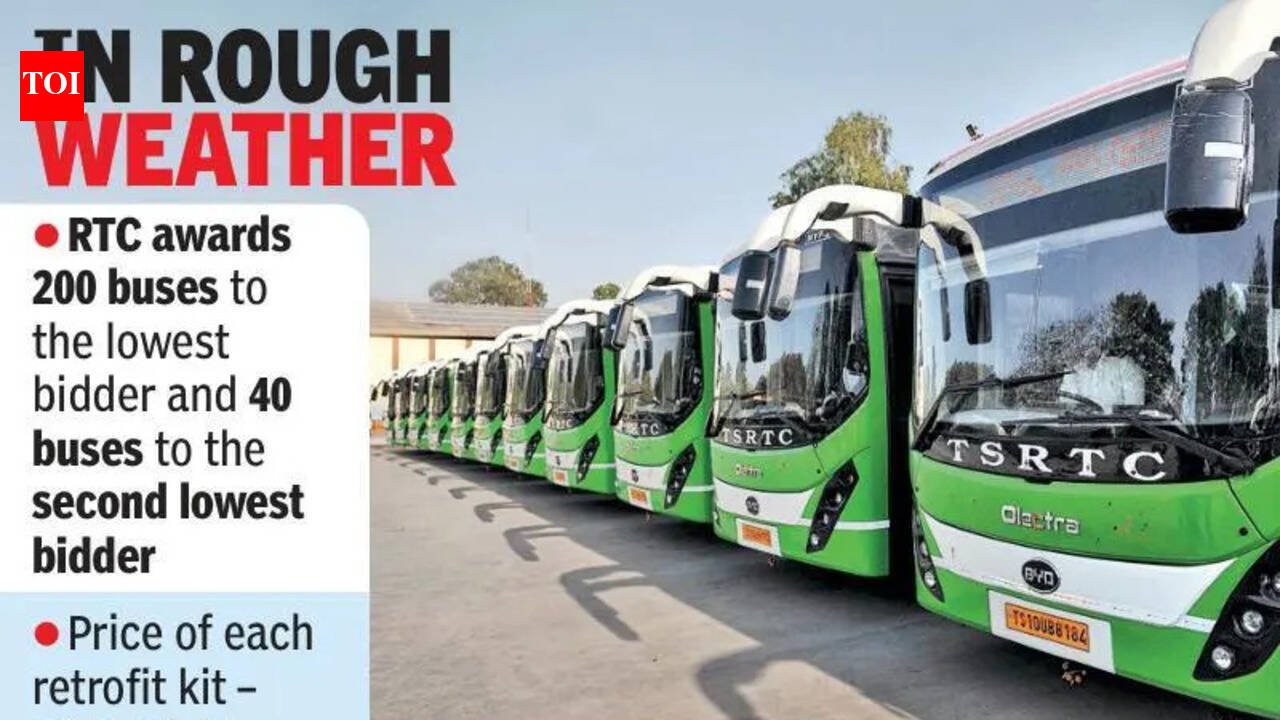
Hyderabad: The move to electrify public transport has put the Telangana State Road Transport Corporation (TGSRTC) under scrutiny, after its decision to convert 240 diesel buses into electric ones triggered sharp debate over costs, safety and long-term viability.The controversy centres around the tendering process. Only two companies qualified technically for the project, and instead of opting for a re-tender, RTC chose to proceed with them. Departing from the standard practice of awarding the full contract to the lowest bidder (L1), RTC split the order — 200 buses to L1 and 40 to the second lowest bidder (L2) — citing the need to avoid dependence on a single firm. Defending the move, RTC managing director Y Nagi Reddy said the split allocation was aimed at preventing monopoly. Officials also maintain that the per-kilometre cost stands at about Rs 24, with an estimated annual benefit of around Rs 2 lakh per bus. According to officials, the selected firms from Hyderabad and Pune will supply electric kits and take up maintenance. Each kit is priced at around Rs 65-70 lakh, with RTC planning to pay the amount over seven years in instalments. With interest, the total cost per bus is expected to touch nearly Rs 1.5 crore — a figure that has raised eyebrows. Retrofit processThe retrofit process involves removing the diesel engine and fuel tank and installing batteries and electric systems, adding over 2,000 kg of extra weight. RTC union leaders have flagged concerns over whether ageing bus chassis can withstand this load over time, warning of potential structural stress. RTC joint action committee leader M Thomas Reddy said, “Since the bus body remains old even after conversion, commuters may not find these buses as appealing as new ones. RTC’s own studies suggest that new buses can generate up to Rs 20 more per kilometre, translating to an additional daily income of Rs 5,000-6,000 per bus. Over seven years, this could amount to around Rs 1.26 crore in extra revenue.” Union leaders also argue that the same investment could fund over 400 new diesel buses, each costing Rs 34-38 lakh. A new electric bus costs around Rs 1.3 crore, which could drop to nearly Rs 1 crore with central govt support. New electric buses, they say, could deliver better annual returns.


