



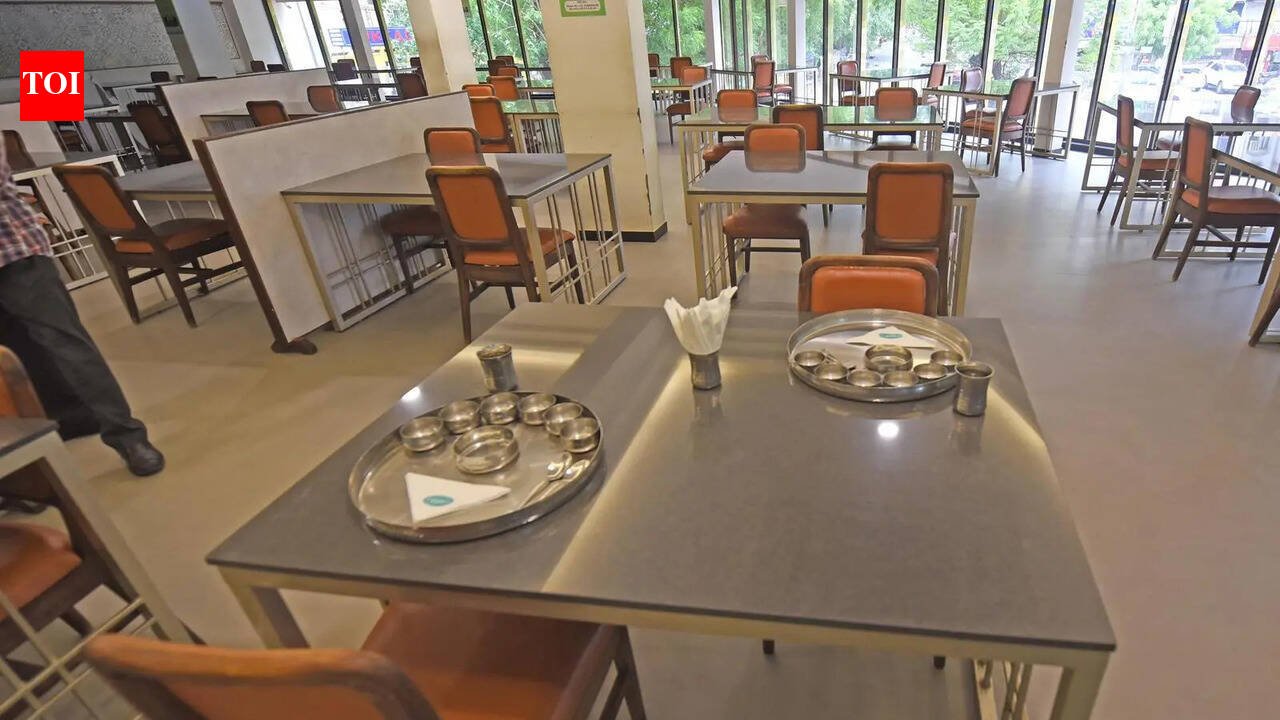
Ahmedabad: With his entire staff away from Ahmedabad, restaurateur Rushabh Purohit has been managing his Gujarati thali restaurant almost single-handedly for the past few days. Some workers returned to their hometowns due to the LPG shortage and related disruptions, while others left for weddings in their families during the Akhatrij and Vaishakh period.“We have practically no staff left at the moment. Some went back because of the cylinder issues while many others had weddings in their families and left for their hometowns,” said Purohit. “Right now, I am handling operations myself and we have temporarily stopped dine-in services. We are operating only through takeaways on limited orders because it has become impossible to manage table service without manpower.”Purohit’s situation is not an isolated case. Restaurants across Ahmedabad are grappling with a severe manpower shortage this summer as eateries struggle with seasonal migration, staffing disruptions linked to the recent LPG crisis and an increasing dependence on temporary workers.At a South Indian restaurant in the city, owner Sai Sumanth said nearly a quarter of his workforce is currently on leave. “About 50% of our staff is from Rajasthan and 10% from West Bengal. More than half of our Bengali staff went back for the elections,” he said. Sumanth added that the restaurant even booked flights for workers to return, but many were unable to make it back despite incentives and bonuses.“The kitchen has been affected significantly due to fewer chefs, helpers and waiters. We get a lot of customers at night because of the heat, and it becomes very hectic,” he said, adding that the restaurant may have to consider menu cuts if the situation does not improve soon.Restaurant owners say the shortage has been most visible among waiters, kitchen helpers and cleaning staff, with many workers preferring short-term catering assignments during the wedding season.Dilip Thakkar, co-chapter head of the National Restaurants’ Association of India (NRAI) Gujarat, said, “We had to deploy at least six casual labourers in recent weeks to cope with the shortage. The panic within the Nepali workforce following reports surrounding the deaths of six Nepali youths allegedly linked to drug consumption also led to many workers leaving overnight, though some have slowly started returning.”Restaurant operators say the shortage has been particularly severe among service and support staff, forcing many establishments to depend on temporary workers and alter day-to-day operations to keep kitchens running.Rajmohan Modi, owner of Rasna Restaurant, said many of his Rajasthani workers had returned home for weddings and festivals. “The worst affected categories were waiters and sweepers,” he said, adding that the restaurant had temporarily removed items such as dosas and rotis from the menu due to the LPG shortage and rising fuel prices before reinstating them recently.Restaurant owners also pointed to the growing attraction of app-based delivery and transport jobs offered by food delivery and quick commerce platforms, where workers can often earn more with flexible schedules compared to long restaurant shifts. Operators say unless staffing levels improve after the wedding season, the hospitality sector may continue to face manpower pressures through the summer months.(With inputs from & Shinjini Sen)


