









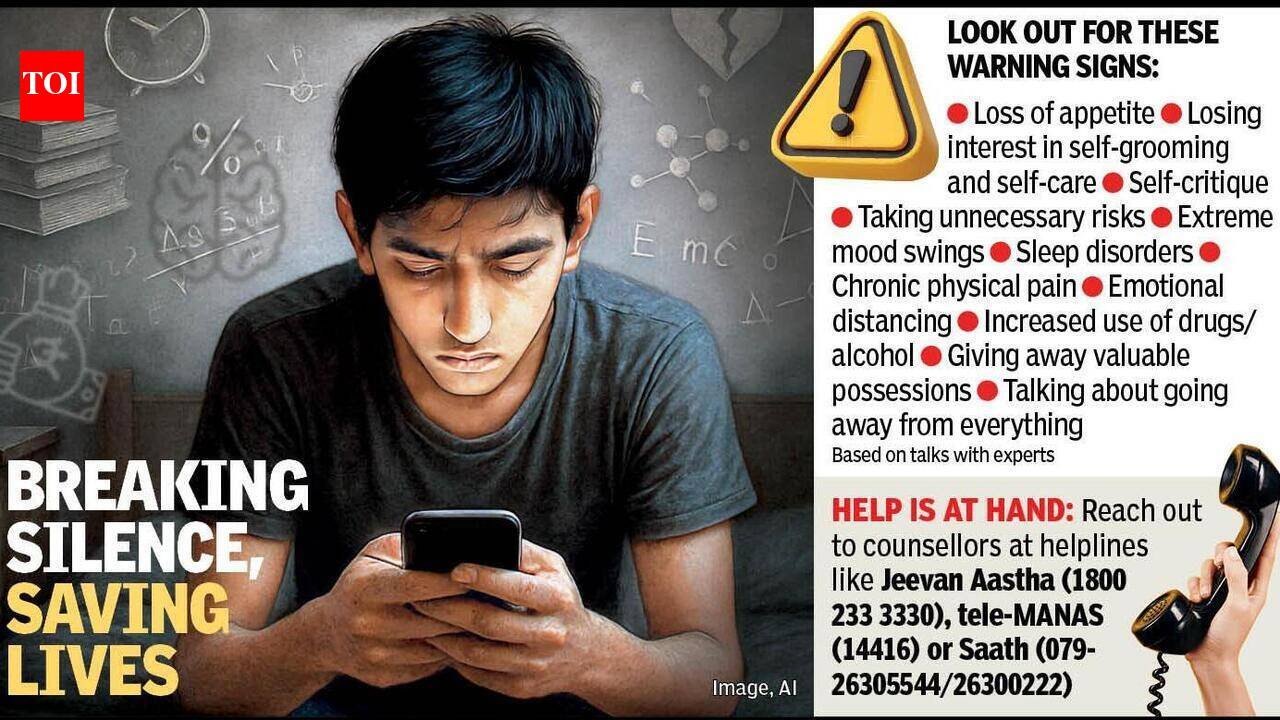
Ahmedabad: At the Jeevan Aastha helpline call centre housed at the SP office in Gandhinagar, counsellors answer distress calls round the clock. Yet, as the clock ticks past 9pm, they know the calls could come in a surge. The voices on the other end often belong to people carrying invisible burdens. Increasingly, those burdens are no longer financial.“Earlier, financial distress was the primary reason people approached us. But over the last year, we have seen a clear shift towards interpersonal issues,” says Pravin Valera, project coordinator of Jeevan Aastha, a suicide prevention and mental health support helpline. “Problems in romantic relationships, conflicts between married and unmarried couples, generation gaps, or simply an inability to express feelings are emerging as major concerns. Nearly one in four calls we have received this year fall into this category.”One such call came close to midnight from a 25-year-old professional who felt trapped in an emotionally exhausting relationship, a counsellor said. The caller believed his girlfriend had become controlling and demanding, while she felt he was withholding things from her. As misunderstandings piled up and communication broke down, the relationship began taking a toll on his mental health.“He was struggling with depression and saw no way out of the situation,” recalls the counsellor. “We spoke about healthy boundaries, understanding each other’s perspectives, and the importance of expressing emotions rather than bottling them up,” the counsellor said.Mental health experts say such cases reflect a growing crisis of connection in an increasingly connected world.Anju Sheth, founder-director of the Saath suicide prevention helpline, believes many people today are finding it harder to build and sustain meaningful emotional bonds.“Year after year, NCRB data shows that ‘cause not known’ remains one of the largest categories in suicide cases,” she said, adding, “That often means the person never communicated what they were going through, even to those closest to them. The need of the hour is to nurture human connections and initiate difficult conversations.”Psychologists and psychiatrists in Ahmedabad echo the concern. They stress that empathetic listening, emotional support, open communication and healthy coping mechanisms are not just tools for crisis intervention but essential skills for everyday life.


