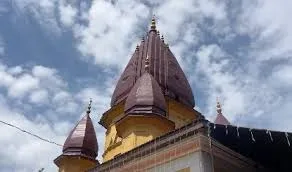
Srinagar, Mar 26: The historic Raghunath Temple in Srinagar’s old city at Fateh Kadal reopened its doors to devotees on Thursday after remaining shut for nearly 36 years, marking a significant step in the revival of Kashmir’s shared cultural and religious heritage.
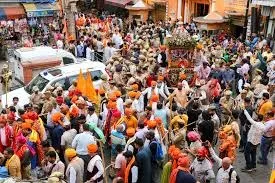
Dating back around 150 years, the temple once again resonated with the sound of bells and devotional hymns as worshippers gathered in large numbers to mark the auspicious occasion of Ram Navami. For many elderly residents of the locality, the reopening stirred deep emotions, rekindling memories of a time when the shrine was an integral part of the area’s spiritual and social fabric.
The temple had remained closed since the onset of militancy in the late 1980s. In 2018, the government undertook the restoration of the compound wall after a gap of nearly three decades, following requests from members of the majority community. A comprehensive renovation project was later initiated in September 2020 under the Smart City Scheme and executed by the J&K Tourism Department to preserve the Valley’s heritage sites that suffered damage during years of turmoil.
With the completion of restoration works, the shrine was formally reopened, drawing a steady stream of devotees who participated in special prayers. In a heartening display of communal harmony, members of the Muslim community also visited the temple premises, greeting devotees and sharing in the celebrations—an enduring reflection of Kashmir’s age-old tradition of coexistence and mutual respect.
Among the devotees, Shanta Kaul, a Kashmiri Pandit woman who had returned to the shrine after decades, struggled to hold back tears. “I never thought I would hear these bells again in my lifetime. It feels like my lost home has found its voice once more. Today is not just about reopening a temple, it is about healing,” she said.
Another devotee, Veena Raina, echoed similar sentiments. “We grew up coming here with our families, celebrating festivals and praying together. Standing here today, I can feel those moments rushing back. Seeing our Muslim neighbours here to welcome us makes it even more special. It gives hope that the bond we shared is still alive,” she said, her voice trembling with emotion.
Meanwhile, Sanjay Tickoo termed the reopening a “welcome move” but stressed that it must go beyond symbolism. “Reopening such places is important, but it cannot end there. These shrines must remain active with regular religious practices. Without a living community around them, the true purpose of such places is lost,” he said.
Tickoo further emphasised the need for concrete measures to facilitate the return or settlement of community members in the vicinity to ensure the continuity of religious life. “If the government is serious about revival, it must also look at creating residential facilities for the community so that daily rituals and traditions can be sustained,” he added.
As the temple bells rang once more through the narrow lanes of Srinagar’s old city, the reopening stood not only as a restoration of a physical structure but as a powerful reminder of Kashmir’s composite culture—where faith, memory and harmony continue to find resonance despite the passage of time.