





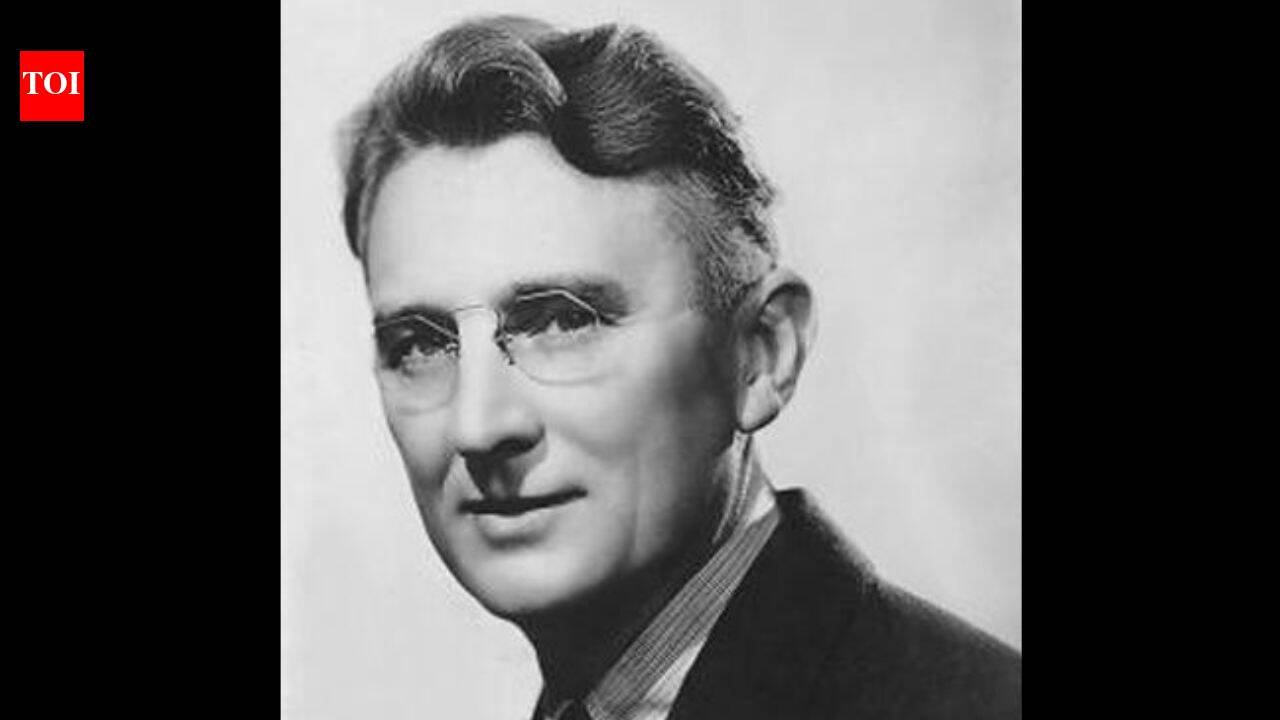
Fear often grows strongest exactly when someone imagines everything that could possibly go wrong. The possibility of failure can make an uncertain situation feel considerably worse than it actually is, sometimes stopping a person from taking any action at all. Dale Carnegie offered a genuinely different way of approaching a difficult situation in his book How to Stop Worrying and Start Living. “When we have accepted the worst, we have nothing more to lose,” he wrote. “And that automatically means, we have everything to gain!” None of this suggests people should expect the worst or simply give up hope. Instead, Carnegie is arguing that actually accepting an unfavourable possibility can reduce the fear surrounding it considerably. Once the mind finally stops fighting the possibility of failure, there tends to be far more room left over to think clearly, make a real decision and start looking for an actual way forward.
Quote of the day by Dale Carnegie
“When we have accepted the worst, we have nothing more to lose. And that automatically means, we have everything to gain!”
Where this quote actually comes from
This line appears in Carnegie’s own book, where he illustrates the exact idea through real stories of people who used it during genuine moments of crisis. One example he gives is Willis H. Carrier, an engineer who faced a serious professional setback and later described the effect of applying this approach directly. “After facing the worst,” Carrier reportedly said, “I immediately relaxed and felt a sense of peace that I hadn’t experienced in days.” Carnegie also describes Earl P. Haney, who applied the same underlying principle after confronting a serious personal diagnosis, reconciling himself to the worst outcome and then deliberately trying to get the most out of whatever time remained. Carnegie summarised the whole approach as a simple three-step process, ask what the worst realistic outcome actually is, prepare yourself mentally to accept it, then calmly try to improve on the very worst you have already agreed to accept.
What the quote by Dale Carnegie is actually saying
Carnegie’s message is really about reducing fear by directly confronting the exact outcome someone is most afraid of. When a person is uncertain about what might actually happen, they can spend a striking amount of time imagining increasingly negative scenarios, which tends to make the whole situation feel considerably more overwhelming than it really is. Carnegie suggests mentally acknowledging the worst realistic outcome directly. Once that outcome has genuinely been accepted, the fear surrounding it tends to lose a good deal of its power, and anything better than that outcome starts to look like a genuine gain.
Why accepting the worst can genuinely shift someone’s mindset
Imagine someone worried about losing their job. Before making any real decision, they might repeatedly picture the consequences, financial pressure, uncertainty and the difficulty of finding another position. If they instead acknowledge that losing the job is genuinely possible, and start actually considering what they would do afterward, the whole situation becomes far more concrete. They can update their CV, sharpen a skill, contact potential employers and take a proper look at their finances. The uncertainty itself has not disappeared. Their actual response to it has changed considerably.
Why acceptance is genuinely not the same thing as giving up
This is one of the most important distinctions running through Carnegie’s message. Accepting a possible negative outcome does not mean deliberately choosing it, or stopping any effort to prevent it from happening. It means recognising honestly that the outcome is possible, rather than letting fear of it dominate every single thought. A person can accept that a business might genuinely fail while still working extremely hard to save it. Someone can acknowledge that an application may be rejected while still preparing for it carefully. Acceptance, in this sense, coexists perfectly well with genuine effort.
Why fear so often makes a problem look bigger than it actually is
Fear tends to operate through uncertainty. When people genuinely do not know what will happen, the mind fills in the gaps with imagined possibilities, and sometimes those imagined outcomes end up feeling far more frightening than the actual situation ever was. Confronting the worst realistic possibility places real boundaries around that uncertainty. Instead of endlessly asking what if everything goes wrong, a person can start asking what they would actually do next if it did. That single question turns fear into something closer to planning.
What “everything to gain” actually means here
Carnegie’s second point follows naturally from the first. Once a person has already accepted the worst realistic outcome, every improvement beyond that point becomes a genuine potential gain. A failed attempt can still provide real experience. A rejection can reveal exactly what needs improving. A difficult change can open up an opportunity to try a genuinely different approach. The person may not get the exact result they originally wanted, but the situation can still contain real possibilities that were simply difficult to see while fear dominated their thinking entirely.
How this idea applies directly to failure
Failure can feel genuinely devastating when someone treats it as an outcome that must never happen under any circumstances. Once failure is recognised instead as one possible part of a longer process, it becomes considerably easier to prepare for properly. None of this makes failure pleasant. It simply prevents the fear of failure from growing so powerful that it stops someone experimenting or trying at all. Many worthwhile goals involve repeated attempts, and a person who can recover from an unsuccessful one tends to learn considerably more, over time, than someone who avoids taking any risk whatsoever.
Other memorable quotes by Dale Carnegie
- “Inaction breeds doubt and fear. Action breeds confidence and courage.”
- “Our thoughts make us what we are.”
- “When we stop fighting the inevitable, we release energy which enables us to create a richer life.”
- “It isn’t work that makes you tired, it’s your mental attitude.”
Why this quote still matters today
Uncertainty runs through almost every major decision anyone makes. Career changes, financial choices and personal ambitions all carry some genuine possibility of failure attached to them. The instinctive response is usually to avoid thinking about the worst outcome altogether. Carnegie suggests doing very nearly the opposite, facing it directly, understanding it properly and working out exactly how you would respond if it actually happened. Once the fear of the unknown turns into a concrete possibility that can genuinely be planned for, it tends to become considerably easier to focus on whatever can still actually be achieved. The quote’s real lesson was never about expecting failure. It is about reducing the power fear holds over someone by being willing to face genuine uncertainty head on.


