



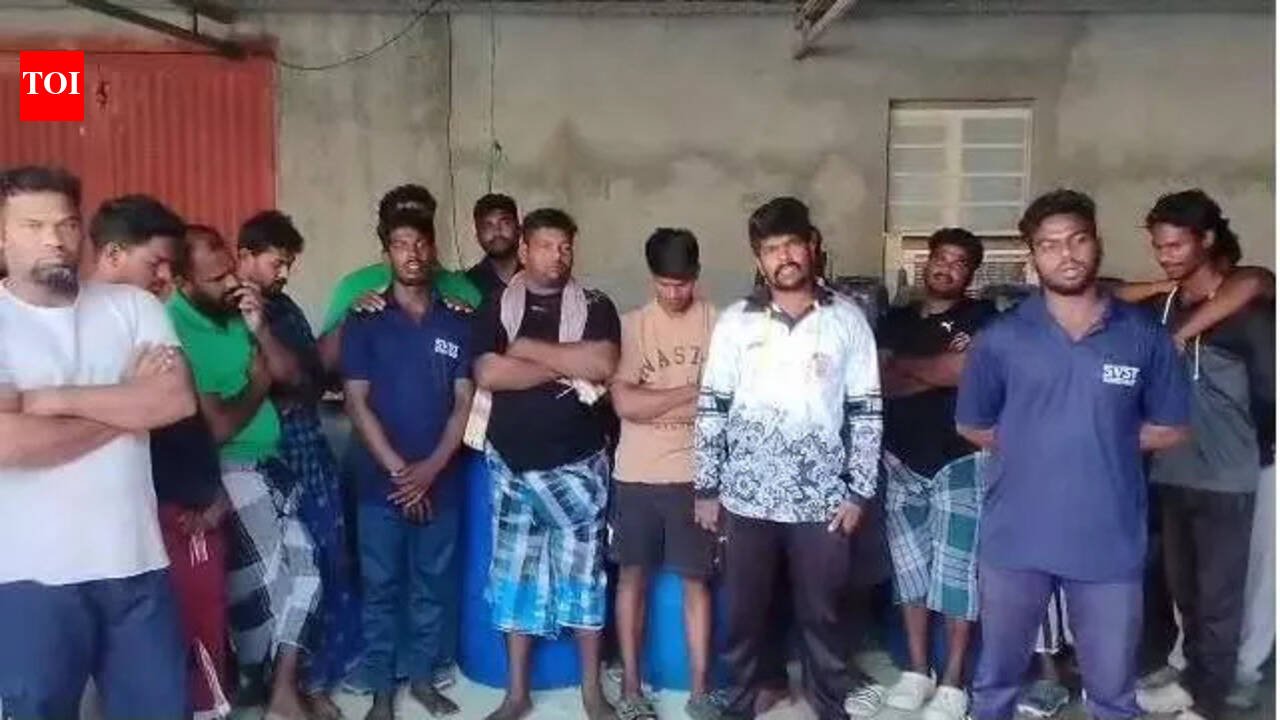
Chennai: Every night, as explosions echo along the Iranian coast, Peter alias Nirmal Raj, a fisherman from Kanyakumari district, lies awake in his house in Bandar-e Moqam in Iran, gripped by fear and uncertainty. “We hear sounds of bombs falling. We don’t know what will happen next,” he said, speaking to Times of India over a video call.With no fishing activity, no income, and barely any food left, survival has become a daily struggle for him and 600 other fishermen from Tamil Nadu — predominantly from Kanyakumari, Tirunelveli, Tuticorin and Nagapattinam — stranded in Iranian coastal regions such as Kish Island, Bandar Abbas and Asaluyeh. However, their pleas to Indian officials,seeking evacuation from Iran have fallen on deaf ears: there are no orders yet to bring them home.“Most of them travelled legally on work visas, moving through Gulf countries before reaching Iran for deep-sea fishing, where they earned a share of the catch. But as conflict intensified, fishing activities abruptly stopped, leaving them jobless and trapped in a foreign land. The govt should bring them back,” said social worker Alwin Jose.In Kadiyapattanam village, Ruth Baby Thason has written to the ministry of external affairs, ministry of fisheries and other diplomats, seeking the rescue of her husband Leo Babu, and other TN fishermen stranded in Iran. Leo Babu returned to Iran in Feb for work. The couple, with two children aged four and three, presently have no source of income. According to local estimates, nearly 130 fishermen from Kadiyapattanam alone are among those stranded.She urged the govt to ascertain the fishermen’s safety through the Indian Embassy, provide emergency food, shelter and medical assistance, and take urgent measures to ensure their protection. She also called for swift evacuation and safe repatriation of all stranded fishermen, stressing that their lives remain at risk in the prevailing war-like condition.Sr Valarmathi of the Tamil Nadu domestic workers welfare trust highlighted the serious humanitarian crisis, warning that hundreds of Indian citizens are at risk without basic necessities or protection. “Several fishermen have reported that they are confined to boats or coastal facilities with limited access to food, drinking water and medical care. With transport routes disrupted and ports functioning intermittently, evacuation has become increasingly difficult,” she said. Their distress is compounded by absence of immediate assistance. Some fishermen claim that when they approached Indian authorities in the region, they were told that no formal evacuation orders were issued. “They said there is no order from India to rescue us. So nothing can be done,” said Peter.S M Nasar, minister for minorities and non resident Tamils welfare, was not available for comment.


