



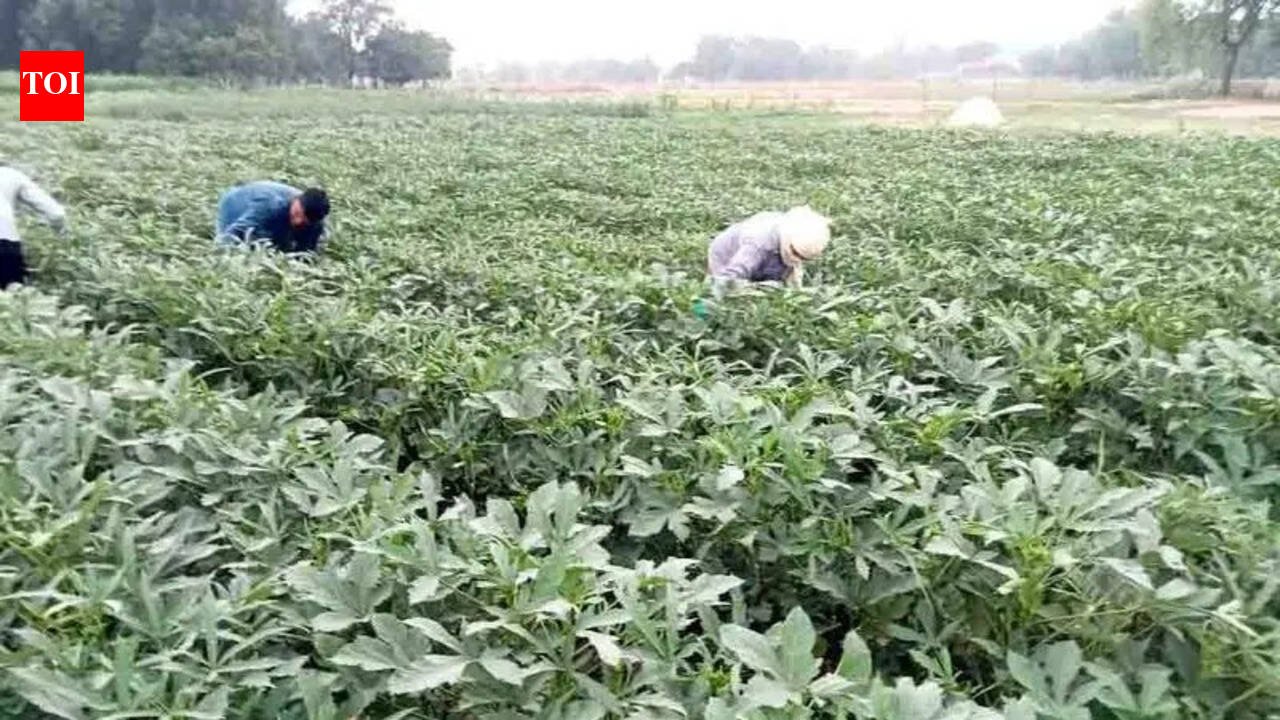
Prayagraj: As many as 11,136 farmers in Prayagraj have adopted organic farming, marking a significant shift away from chemical-intensive agriculture.The practice is currently being carried out across 411 clusters located within a five-kilometre radius of the Ganga, covering nearly 8,220 acres of farmland. Officials said the move is part of a broader effort to transition farmers towards fully chemical-free, cattle-based natural farming. Under this, 12 clusters for natural farming have also been established in the district, each comprising around 125 farmers. In the first phase, 1,500 farmers — cultivating about 600 hectares — are being trained to practice farming using only natural inputs. To support the transition, govt is providing financial assistance for three years. Farmers receive Rs 4,800 per acre in the first year and Rs 3,600 per acre annually for the following two years. Funds are also being allocated for organic seed management, officials said. The shift comes amid growing concern over the rising cost of chemical fertilisers and pesticides, which farmers say has become financially unsustainable. Officials said excessive use of chemicals has led to declining soil fertility. Assistant director at the Regional Soil Testing Laboratory in Prayagraj, Piyush Rai, said soil samples collected during the rabi and kharif seasons revealed a sharp decline in organic carbon, nitrogen and phosphorus levels. “Organic carbon content has fallen well below the prescribed minimum range of 0.5% to 0.75% in several areas,” he said. Falling soil health has been accompanied by declining crop productivity. Deputy director (agriculture) Pawan Kumar Vishwakarma said wheat yields dropped from 28.15 quintals per hectare in 2020-21 to 24.04 quintals in 2023-24. Similar declines were recorded in maize, barley, bajra and paddy, he added. Officials said over 1,500 farmers in the district have moved away from chemical farming over the past year alone, opting instead for natural farming practices. Govt, they said, is promoting a low-cost, high-return agricultural model aimed at reducing farmers’ dependence on costly chemical inputs, with organic and natural farming at its core.


