






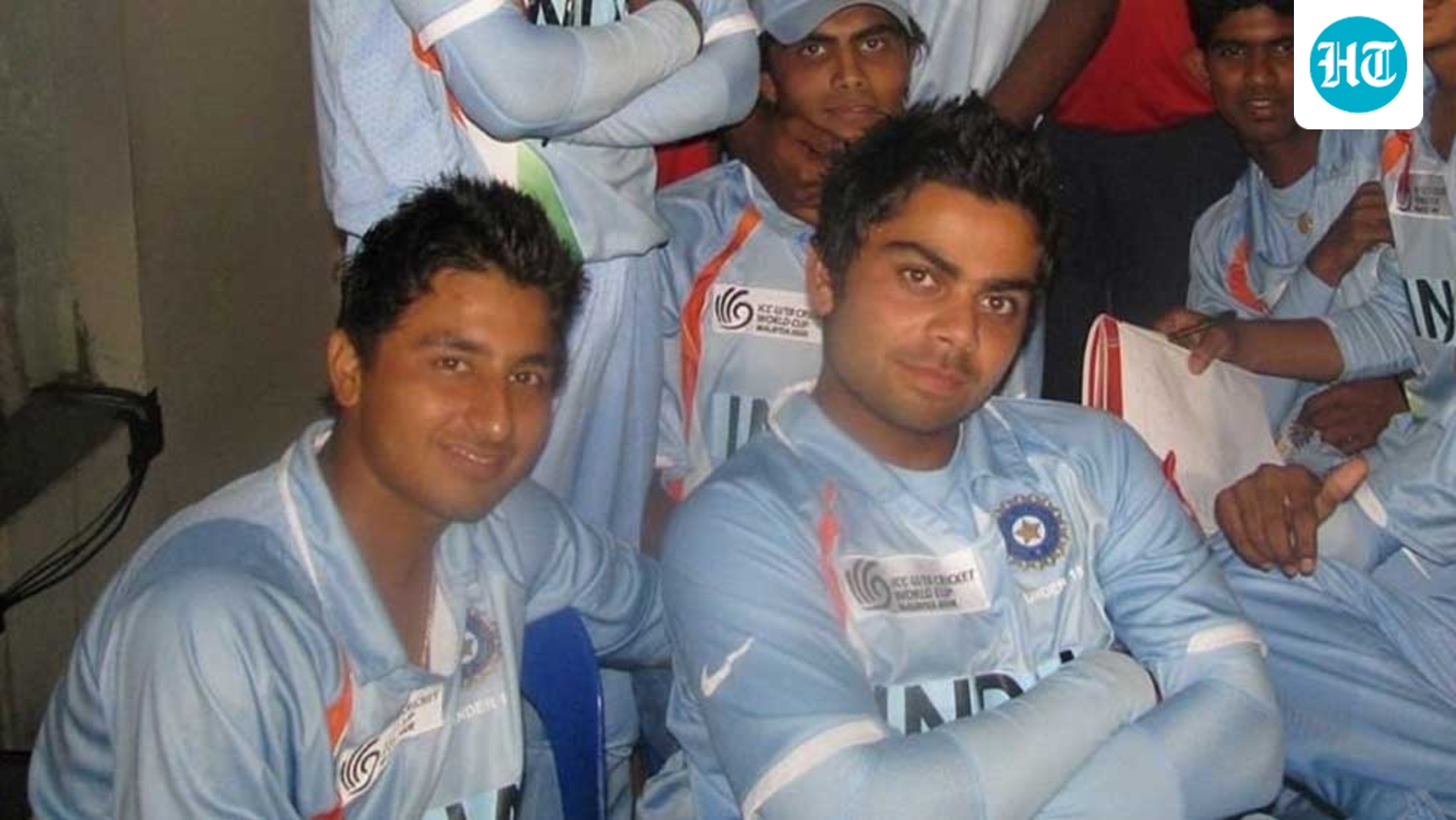
At 19 years and one day old, a left-handed wicketkeeper walked into the inaugural IPL and produced the sort of debut that should have opened every door available to a young Indian cricketer. Facing a Delhi attack featuring Glenn McGrath, he struck 52 off 42 balls for Royal Challengers Bangalore and was named Player of the Match despite his team losing.
Only a few weeks earlier, he had returned from Malaysia as an Under-19 World Cup champion. In India’s semi-final against New Zealand, a side featuring Kane Williamson, Tim Southee, Trent Boult and Corey Anderson, he had top-scored with 51. Virat Kohli, India’s captain and the youngster who would eventually define that generation, made 43. By the end of that first IPL season, another prize had followed. The teenager was named the tournament’s Best Under-19 Player, the inaugural version of the award that would later evolve into what is now known as the Emerging Player of the Season.
The player was Shreevats Goswami, and the most striking part of his career is that despite those beginnings — and several major domestic performances that followed — he never played a senior international for India.
The youngster who kept producing
Goswami’s emergence was not built around one good tournament. Before the 2008 Under-19 World Cup, he had already scored 97 against South Africa and followed it with 104 against Bangladesh on India’s youth tour. The World Cup then established him as one of the standout members of Kohli‘s side. His 51 in the semi-final against New Zealand was particularly significant, coming in a tense chase against a team containing several future international stars.
The IPL accelerated the hype. His debut fifty came immediately after his 19th birthday and, by the end of the season, Goswami had become the first winner in the lineage of what is today the IPL’s Emerging Player award. But perhaps his strongest case for a higher level came after the teenage spotlight had begun to fade.
In the 2009-10 Vijay Hazare Trophy, Goswami scored 568 runs in seven innings for Bengal, including three centuries and a fifty. He finished as the highest run-scorer in the entire competition and made 81 in the final against Tamil Nadu. At just 20, he had followed an Under-19 World Cup title and an IPL award by becoming the leading scorer in India’s premier domestic one-day competition. And still, the next step did not arrive.
Goswami later reflected on not being selected for India A or even the India Emerging squad after that season and suggested that timing may have played a part.
Dhoni for India, Saha for Bengal
For a wicketkeeper-batter trying to break into the Indian team in that period, the problem was obvious. MS Dhoni was captain, wicketkeeper and one of the most important players in world cricket. At Bengal, Goswami encountered another obstacle: Wriddhiman Saha. Saha became India’s leading Test wicketkeeper for a period and remained Bengal’s preferred option behind the stumps for long stretches.
Goswami’s own first-class batting also lacked the consistency needed to force the selectors’ hand. He finished with 3,019 runs in 61 first-class matches at an average just above 32, respectable numbers but not overwhelming ones. There were, however, major peaks. In 2016, with Bengal struggling against Madhya Pradesh, Goswami produced the biggest first-class innings of his career, an unbeaten 225.
His white-ball performances remained even stronger. In the 2014-15 Vijay Hazare Trophy, he scored 447 runs in six innings at an average of 111.75, with two centuries and two fifties. Only Manish Pandey scored more runs in the tournament. Two seasons later, Goswami struck 101 in the Vijay Hazare semi-final against a Jharkhand side captained by Dhoni, putting on 198 for the opening wicket with Abhimanyu Easwaran and helping Bengal reach the final.
India A finally came at 28
The India A opportunity that had failed to arrive after his 568-run season eventually came in 2017. By then, Goswami was 28.
The timing was difficult again. Dhoni was still around, while Rishabh Pant’s generation had already begun arriving, and Pant was part of the India A wicketkeeping set-up. Goswami’s chance did not turn into the breakthrough he needed, and a senior India cap never followed.
His IPL career followed a similar path. After the spectacular beginning in 2008, he was unable to establish himself permanently. Across spells with Royal Challengers Bangalore, Kolkata Knight Riders, Rajasthan Royals and Sunrisers Hyderabad, he played only 31 IPL matches and scored 293 runs. There was one neat full-circle moment in the 2020 IPL Eliminator. Goswami came into Sunrisers Hyderabad’s side after Saha was unavailable and took the catch that dismissed Kohli early against RCB.
More than 12 years after the two had won an Under-19 World Cup together, their careers had travelled in dramatically different directions. Goswami eventually finished his first-class career in 2023. His story was not one of a single injury or controversy destroying a career, but of timing, competition and inconsistency colliding with genuine talent. An Under-19 World Cup winner, an IPL debut half-centurion, the inaugural winner of the award now known as Emerging Player of the Season, and the highest scorer in an entire Vijay Hazare Trophy — yet the India cap never came.


