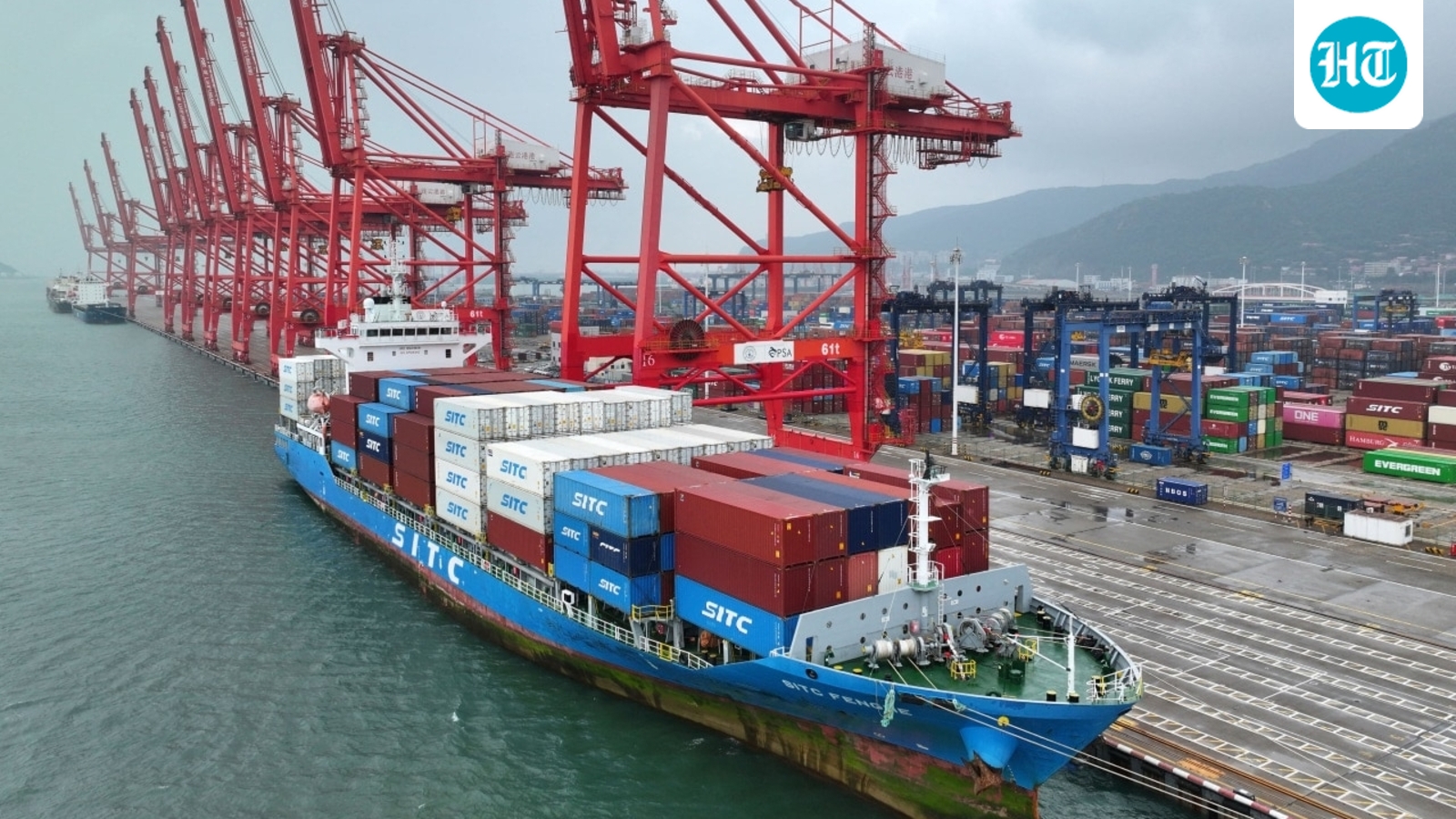
China’s exports grew more than expected in August, supported by the global AI build-out, though the surge in overseas shipments could fuel tensions over imbalances with trading partners.
China recorded a trade surplus of $805.5 billion in the first eight months of the year.
Exports rose 25.0% from a year earlier in August, up from a 23.9% increase in July, according to data released by the General Administration of Customs on Tuesday. The reading also topped the 23.8% growth expected by economists in a Wall Street Journal survey.
The country’s imports increased 28.2% in August, compared with July’s 27.5% growth and the 29.1% rise expected by surveyed economists.
That put China’s trade surplus at $119.1 billion in August, widening from $112.5 billion in July but slightly lower than the $119.4 billion anticipated by economists.
Fueled by the global artificial-intelligence infrastructure boom, the world’s second-largest economy recorded a trade surplus of $805.5 billion in the first eight months of the year, putting it on track to match last year’s record surplus of $1.2 trillion.
“Despite China’s strong import growth, exports are set to lead to a new record-high trade surplus this year. This could intensify pressure from trading partners to rebalance terms of trade,” said ING economist Lynn Song.
A Group of 20 statement issued earlier this month, and backed by every member except China, implicitly called out Beijing’s reliance on exports for growth.
Exports have become a key pillar of support for the Chinese economy, helping to sustain growth amid tepid domestic consumption, sluggish investment and a protracted property downturn. Resilience in exports could also reduce the urgency for Beijing to shore up weaker parts of the economy.
While efforts have been made to boost China’s domestic demand, the divergence between robust external demand and sluggish demand at home appears to have continued into August, said ING’s Song.
According to data released Tuesday, China’s exports to the U.S. rose 34.3% in August, accelerating from 17.1% growth in July, while export growth to the European Union slowed to 6.6% from 16.0%.
Trade imbalances may be a key issue on the agenda at the U.S.-China summit later this month and the G-20 leaders meeting toward the end of the year.
Momentum has sputtered for China’s domestic economy after a strong start to the year, with growth slowing to 4.3% in the second quarter and major indicators cooling sharply for July. Chinese policymakers have set a target range of 4.5%-5% for economic growth in 2026.
The global AI boom has been a major driver of export strength this year, but it is hard to predict how long that will be sustained.
China’s semiconductor exports, measured by value, surged 130% from a year earlier in August, accelerating from 117% growth in July. Exports of automatic data processing equipment and related parts rose 76.5% last month, also picking up from the 67.4% increase in July, according to data released Tuesday.
However, Chinese chip exports were lifted by soaring prices, with volumes actually contracting by 7.9% last month, said Nguyen Hoang Nam, an economist at Capital Economics.