






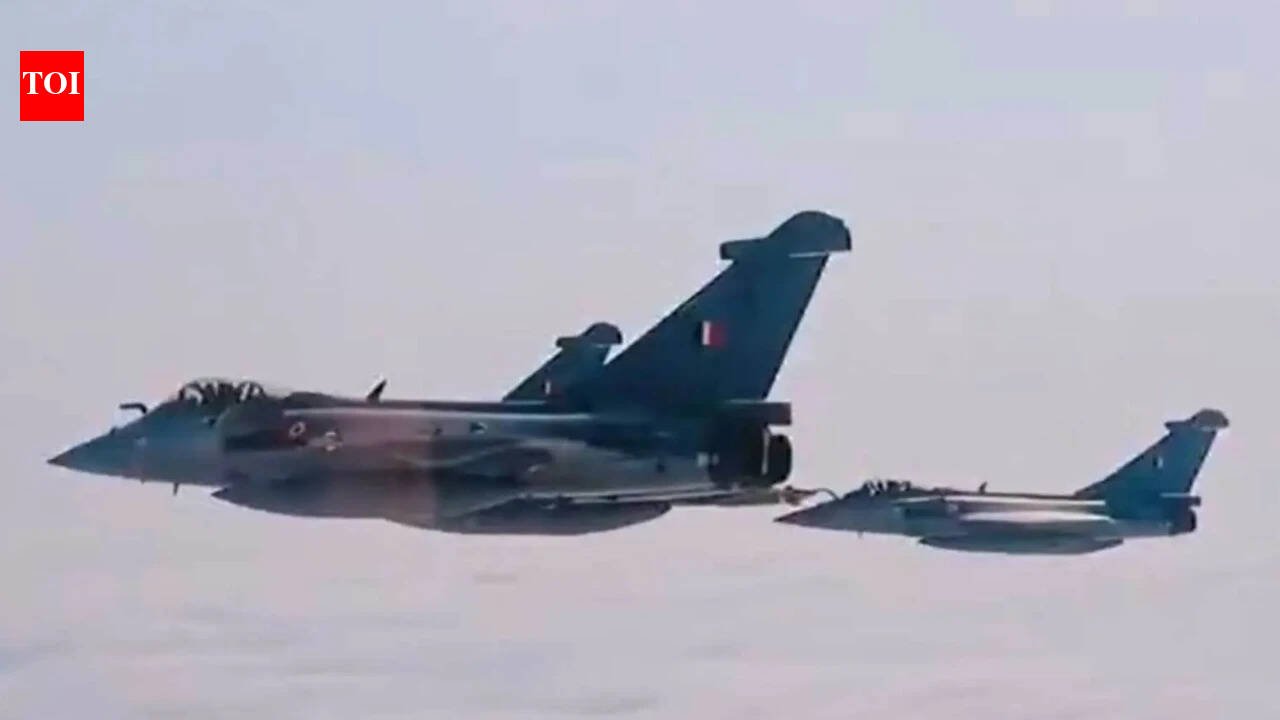
India will put the operational lessons of Operation Sindoor to test on a much bigger stage when the multi-nation air exercise Tarang Shakti kicks off at the Indian Air Force base in Jodhpur from September 26 to October 11. Around 40 countries, including the US, France and Germany, are expected to take part, making it one of the largest such drills hosted by the IAF since its strikes on Pakistani airbases last May.Addressing a press conference on the scope of the exercise, IAF Vice Chief Air Marshal Ashutosh Dixit said Operation Sindoor had given the force valuable takeaways, even as partner nations bring their own combat experience to the table. Bringing these together in a realistic training environment, he said, would help test assumptions, challenge existing procedures and improve interoperability among participating air forces. He added that the tactics that evolved during Operation Sindoor would get reflected in the exercise, though how much each participant absorbs would depend on them.Asked whether drone warfare scenarios would be simulated, the Vice Chief indicated that all possible scenarios should be part of the drill, with broad guidelines being issued to participants. IAF officials briefing on the exercise said the drills would cover large force engagements involving high value aerial assets, air mobility operations, dynamic targeting and combat search and rescue missions, offering participants exposure across multiple facets of air operations.On the hardware front, the IAF is expected to field its Rafale and Sukhoi-30MKI fleets, while the American F-35 will make its debut on Indian soil in a military exercise, having previously only been showcased at aero-shows in Bengaluru. The IAF has already flown alongside the F-35 during exercise Pitch Black in Australia in July. Apart from the US and France, Germany, the UAE, Bangladesh, Australia and Sri Lanka will send their air assets, while 32 more countries will participate as observers.The exercise comes against the backdrop of a detailed assessment of Operation Sindoor, which flagged rapid adaptation, offensive action and stronger multi-domain capabilities as key lessons for future short, high-intensity conflicts. The operation underlined the value of surprise, concentration of force and unity of command, with the IAF quickly correcting course in the initial phase before targeting Pakistan’s air defence and missile systems ahead of strikes on multiple airfields. The centralised command, distributed control and decentralised execution model was cited as a major strength, as per a report by the New Delhi based think tank the Observer Research Foundation.The importance of layered air defence system equipped with platforms such as the S-400 and Akash, managed by integrated command-and-control apparatus, proved critical against foiled Pakistani aerial offensive. The IAF is working towards integrating remotely piloted aircraft into offensive operations, expand its stock of stand-off weapons, strengthen ground-based air defence and address its shrinking fighter fleet, the same report stated.


