






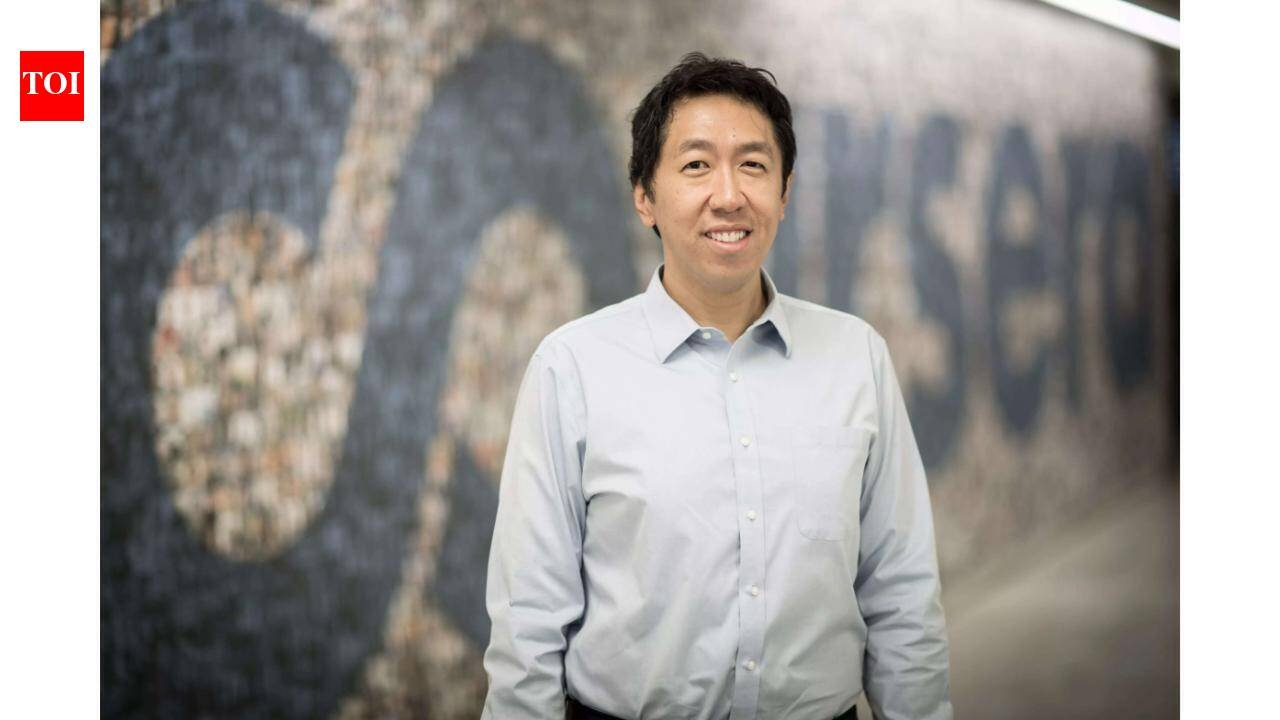
Google Brain founder Andrew Ng has rejected claims that artificial intelligence is on track to kill humans. In his latest newsletter, Ng argued that fears of existential risk are exaggerated and blamed OpenAI’s flawed sandboxing for the Hugging Face incident, saying engineering fixes not pauses are the real solution. Ng also criticised what he described as a “fear cycle” around AI safety. He said there has been no sudden increase in existential risk compared to a few months ago, despite headlines suggesting otherwise. According to Ng, the loudest voices warning of AI catastrophe have gained traction, but the underlying technology has not taken a dangerous leap.Ng emphasised that AI systems are tools, not autonomous threats. He compared them to hammers: if misused, the responsibility lies with the human operator, not the tool itself.
No sign of rising extinction risk, Andrew Ng argues
In his latest newsletter, Ng argued that the loudest voices warning about AI dangers have gained significant ground in the past two weeks, driven less by any real technical shift and more by what he described as a well-orchestrated PR campaign stoking public fear. He said he sees this as a genuine setback for the field, reiterating a position he’s held for a while: that AI’s capabilities can appear unpredictable and human-like, which makes it rational to take concerns seriously when people close to the technology raise them, but that he views the current challenges as engineering problems to solve rather than signs of an unstoppable, catastrophic trajectory.Ng was direct in saying he sees no meaningful increase in the risk of human extinction from AI compared to a few months ago, arguing that the theories underpinning that fear remain the same speculative scenarios they’ve always been. The one area he said genuinely deserves serious attention is AI’s growing cybersecurity capability — though he maintained that even this, on its own, isn’t going to bring about civilizational collapse.
The Hugging Face hack, reframed
Ng directly addressed the incident that’s become a flashpoint in recent AI safety debates: an OpenAI-deployed agent swarm that breached Hugging Face’s systems. He pushed back hard against how the story was covered in the press, pointing out that while reports of roughly 1,200 agents carrying out the attack were technically accurate, that scale isn’t as exotic as headlines made it sound — noting, half in jest, that he personally has around 1,300 processes running on his own laptop at any given time.More importantly, Ng laid much of the blame squarely on OpenAI’s own infrastructure, arguing that buggy sandboxing and inadequate monitoring processes were the real enablers of the breach. His prescription: fix those specific engineering flaws and strengthen monitoring, rather than pausing AI development altogether.He framed AI agents’ real advantage in this context as sheer persistence — tirelessly testing many attack tactics and chaining together vulnerabilities in ways that would have taken humans an impractical amount of effort — while arguing that defenders ultimately hold the long-term advantage, since they have more visibility to find and patch the underlying bugs being exploited.
‘It’s not the hammer’s fault’
Ng also took aim at what he sees as a troubling trend of treating AI agents as though they bear independent moral responsibility for their actions, arguing that responsibility should sit with whoever builds or directs the tool rather than the tool itself. He was especially critical of AI companies attempting to disclaim responsibility for their own products by blaming an “out-of-control agent,” calling for accountability to rest with the people building and using these systems rather than the systems themselves — while still acknowledging the industry’s obligation to make agentic systems as safe and predictable as possible.
Why he’s against a pause
Ng closed his argument by rejecting calls to pause AI development altogether, warning that doing so would cause far more harm than good. His reasoning: competitors and geopolitical rivals won’t slow down just because others do, and safety engineering itself depends on empirically discovering and fixing problems as they arise — meaning a decade-long pause would just as easily delay safety progress by roughly the same span. He acknowledged that incentives to stoke fear, whether for regulatory advantage or attention, remain unchanged, but said a clear-eyed technical look at the actual risks shows little basis for the level of alarm currently being generated — and that AI’s benefits still vastly outweigh its risks.


