



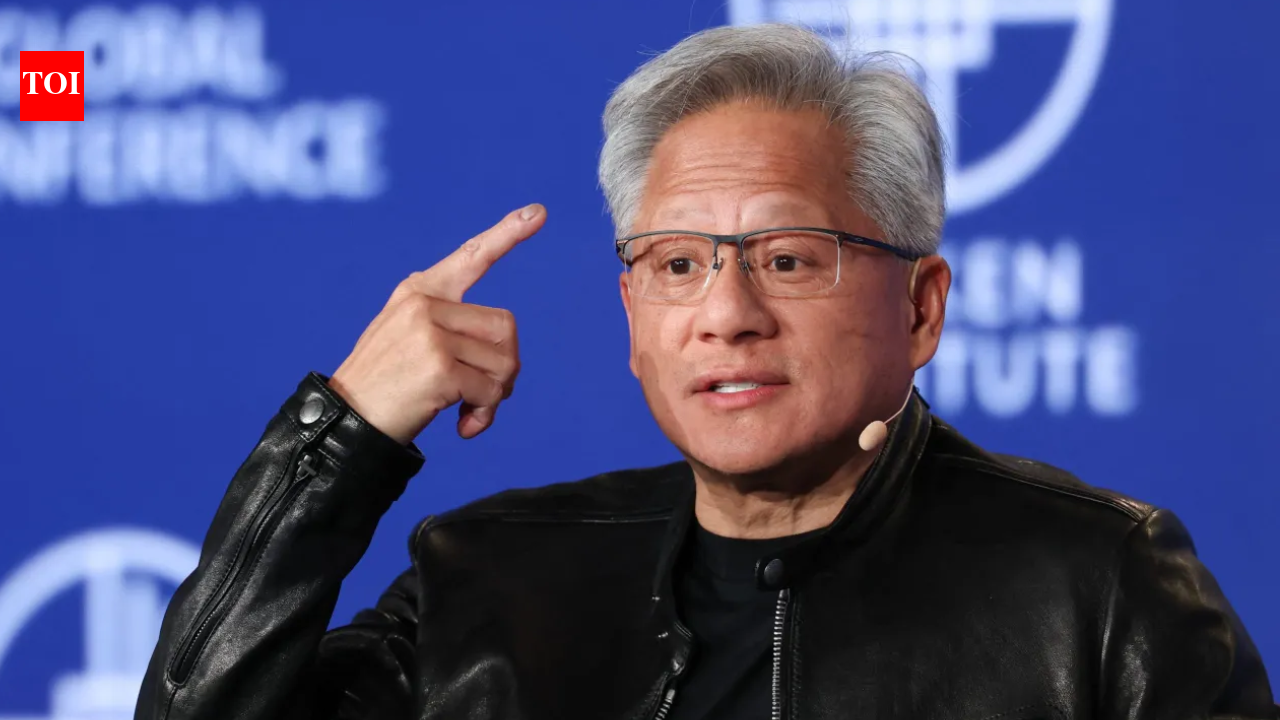
A joke and candid conversation by Nvidia CEO Jensen Huang about growing up with strict Asian parents has snowballed into a much larger public conversation about parenting styles, criticism, and how children process being pushed to their limits. During a recent conversation at a public event, Huang joked, “Once you’ve been raised by Asian parents, you need therapy for life.” He then explained that how his parents were ‘classic Asian parents’ who constantly pushed him to improve, rarely offering praise but always pointed out what could be better. Huang further added that his strict upbringing taught him humility and resilience, and also helped him to accept criticism and stay focused on improvement even as he leads one of the world’s most valuable tech companies.
Nvidia CEO Jensen Huang shared insights about parenting styles and its impact
Huang further shared that his father continues to give him suggestions event at the age of 63, underscoring how deeply ingrained this style of parenting is. He also stressed on the fact that he never saw criticism as discouragement, but rather as a form of love and belief in his potential. He added that for him, the relentless feedback became a foundation for his ability to handle pressure and thrive in competitive environments.Huang framed this upbringing generously rather than bitterly. He said his parents’ way of showing love was to criticize, and that being raised that way left him with no trouble taking criticism, no trouble learning new things, and no trouble staying humble. He extended the logic into his leadership philosophy at Nvidia, saying that if he genuinely cares about someone, he owes them thoughtful, detailed criticism rather than an easy “good job.“
How the joke by Jensen Hunag sparked debate
What initially started as a self-deprecating aside at an industry event has since been widely shared and started a heated debate online majorly across the Asian and Asian-American spaces. According to report a China Daily, Nvidia CEO made the remarks just day ahead of China’s college entrance exam, the gaokao, which offered added resonance and triggered a wider debate over Asian, and specifically Chinese, parenting norms.Supporters of Huang’s framing point to his own trajectory as evidence the approach works: a childhood shaped by relentless correction that, in his telling, forged the resilience, humility and appetite for learning that helped build one of the most valuable companies in the world. On the other hand, the critics of this point of view said that the ‘never good enough’ model of parenting, even when well-intentioned, can leave lasting emotional costs that success doesn’t erase, arguing that Huang’s own joke, that this kind of upbringing requires a lifetime of therapy, undercuts the case for holding it up as an ideal.


