



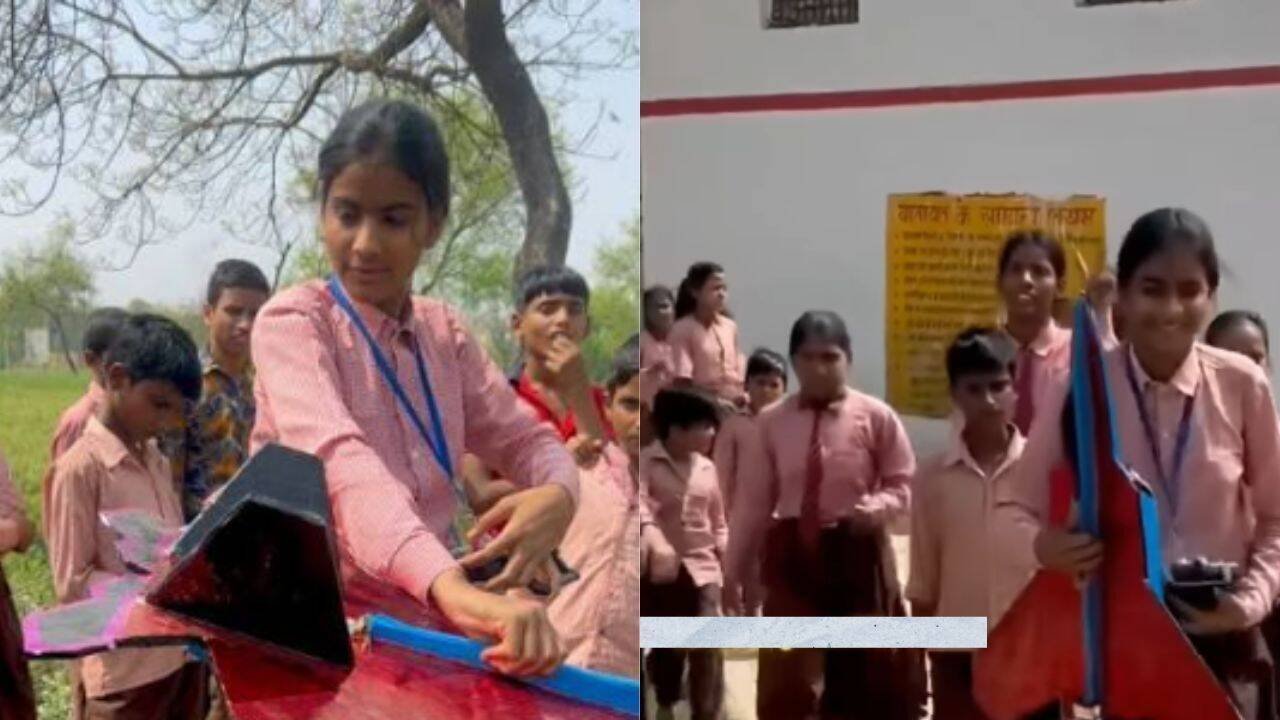
There are no shiny laboratories here. No 3D printers. No imported equipment from abroad. Just a small government school in Aligarh, Uttar Pradesh, with classrooms, benches, textbooks, and children who walk miles to get here every morning. And yet, from this classroom, came something that stunned the entire country. Students from Composite Vidyalaya Bhilawali in Aligarh’s Akrabad block, children studying in Classes 4 to 8, built a flying model of the F-22 Raptor, one of the world’s most advanced fighter jets. Not from expensive kits or high-end materials. From thermocol waste, toy motors, basic wires, and simple electronics. The model did not just sit on a shelf looking impressive. It flew. Reports say it can fly up to 1.5 kilometers. The video went viral. Millions of people watched. And India stopped for a moment to look at what its government school children are truly capable of.
What is the F-22 Raptor, and why does it matter?
3 Jul 2026 | 12:38
How do you teach children about money and financial responsibility?
The F-22 Raptor is a fifth-generation stealth fighter jet built by Lockheed Martin for the United States Air Force. It is considered one of the most technologically advanced aircraft ever built, designed for air superiority, stealth capability, and supersonic speed. Engineers spend years designing aircraft like this. Aerospace companies invest billions. And a group of children from a rural school in UP built an inspired model of it for approximately Rs 6,000. That number alone says everything about what is possible when curiosity meets guidance.
The initiative behind the idea: Robotics Ki Pathshala
This achievement did not happen by accident. Behind it is a grassroots STEM initiative called Robotics Ki Pathshala, a program that brings hands-on science and engineering education to government school students across Uttar Pradesh. The idea is simple but powerful: children learn best not by reading about science but by doing it. The Aligarh government school has been gaining attention for its robotics workshop that uses scrap materials to engage students, turning what most people would throw away into tools for learning, building, and imagining. Under the guidance of their teacher, these students were not just taught to memorise formulas. They were taught to think, experiment, and create. And the F-22 Raptor model is the most spectacular result yet.
No resources, but unlimited imagination
What makes this story so powerful is not just the aircraft model. It is what it represents. These students did not have access to elite private schools. They did not have STEM labs or robotics kits sent from abroad. They had thermocol, the kind used for packaging, toy motors from a local market, and a teacher who believed in them. No expensive laboratories. No elite private institution. No high-end technology. Just curiosity, creativity, and the courage to experiment. And from that, a flying machine. As one observer put it perfectly, talent is not limited by geography, language, or financial background. Opportunity is often the only missing piece.
What India needs to do next
Stories like this deserve more than a moment of viral fame. They deserve action. India’s government schools are filled with children like these, children who, given the right guidance and even the most basic resources, can build, innovate, and inspire. The next generation of engineers, scientists, and aerospace innovators may already be sitting in classrooms that society rarely notices. Imagine what these children could achieve if every government school had proper STEM labs, mentorship, and support. The Aligarh students did not wait for a better school or a bigger budget. They used what they had, and they made it fly. That, perhaps, is the most important lesson of all.
A dream that took flight, literally
In March 2026, a group of children from a small government school in rural Aligarh looked up at the sky and then built something that could reach it. They did not do it with money. They did not do it with expensive equipment. They did it with thermocol, imagination, and a teacher who told them that where they studied did not define what they could create. India has always had this potential. It has always been sitting in these classrooms, waiting to be seen. Now, thanks to a flying F-22 Raptor made from Styrofoam, the whole country is finally looking.


