



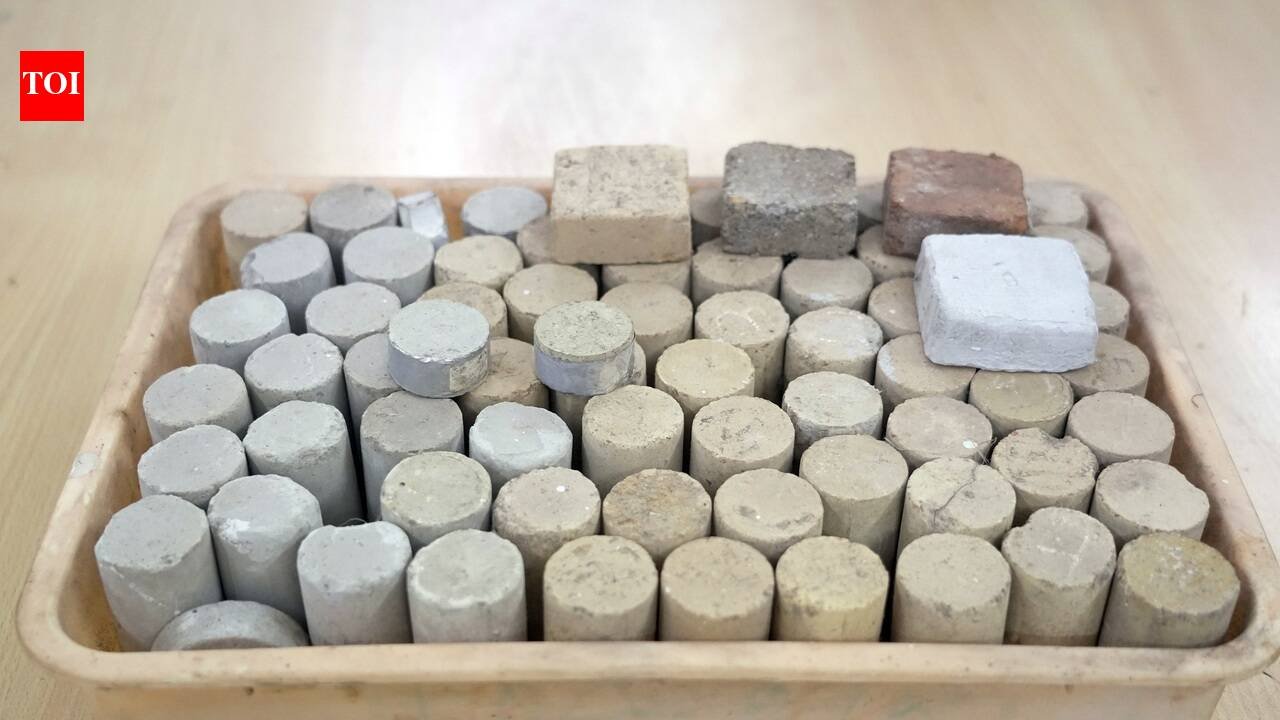
Rourkela: Researchers at the National Institute of Technology, Rourkela (NITR), led by director K Umamaheshwar Rao, have secured a patent for a high-strength composite material made from coal mining and industrial waste that could be used to build roads capable of withstanding heavy vehicular traffic.According to a statement issued by the institute on Tuesday, the technology addresses two major challenges, managing large volumes of mining and industrial waste and developing durable road infrastructure for high-load transport corridors.Prof K Umamaheshwar Rao, Prof Manoj Kumar Mishra and PhD graduate Dr Subhasrita Choudhury of the department of mining engineering developed the patented technology.India produces nearly one billion tonne of raw coal annually, with around 94% extracted through surface mining operations, generating huge quantities of waste, including coal mine parting materials containing rock and other non-coal substances. Conventional disposal methods put significant pressure on the environment.To tackle the problem, researchers focused on clay minerals rich in silica and alumina found in coal mine partings. These minerals possess properties such as strength and stiffness that make them suitable for construction when combined with industrial additives.The team developed a composite material by blending coal mine parting, fly ash and a binder, and optimised the formulation for maximum performance.“The technology is particularly relevant for coal-mining regions where roads regularly bear heavy loads from vehicles transporting mined materials. Continuous traffic and excessive loads often result in rapid road deterioration,” said Prof Rao.Calling it an example of the circular economy in action, Prof Mishra said composite converts two high-volume industrial wastes into a resource with substantial engineering and economic value. “It not only addresses waste management concerns but also offers a sustainable and indigenous solution for infrastructure development,” he said.Researchers are now planning pilot-scale field trials to assess the material’s long-term durability and performance under real-world conditions.


