



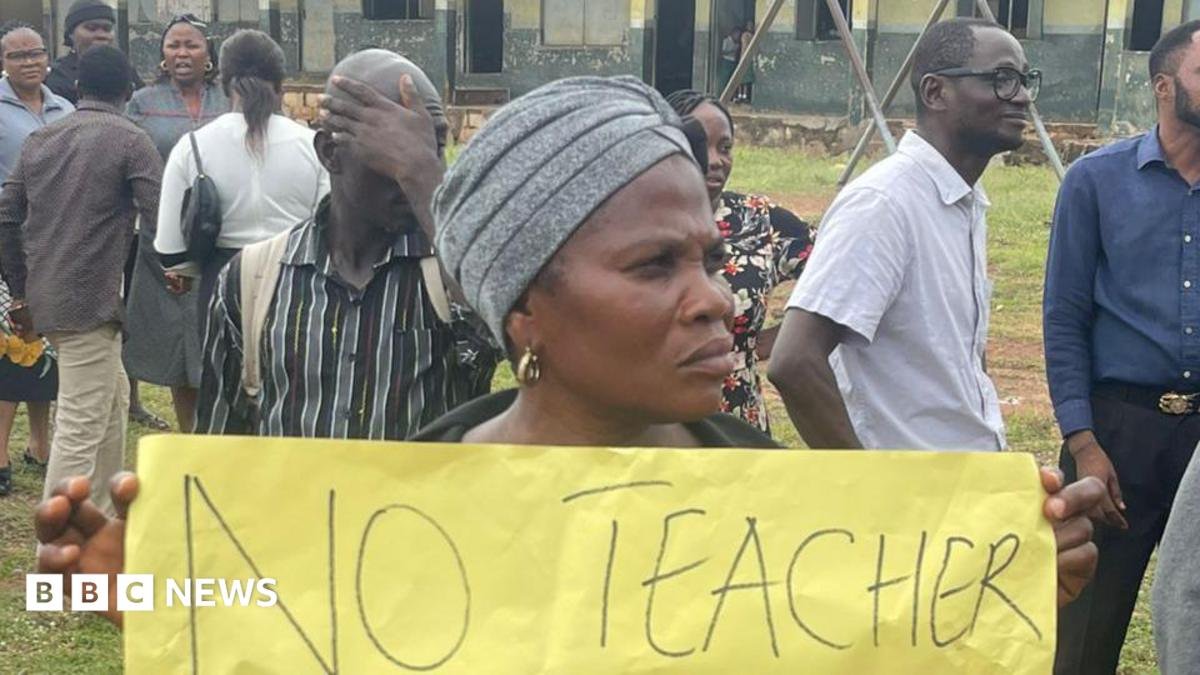
Nigeria’s military says it has freed all 44 pupils and teachers who were abducted two months ago from schools in the southern state of Oyo, and arrested some of their captors.
A local teachers’ union has told the BBC of its “relief” – but families say the ordeal has been harrowing and they are still waiting to be reunited with their loved ones.
The military said that several soldiers died in the rescue mission.
The freed captives are currently receiving medical treatment at an undisclosed hospital and will return home at a later date, army spokesman Danjuma Jonah Danjuma said in a statement issued on Friday evening.
A renewed wave of mass kidnappings have hit Nigeria in recent months, and insecurity remains a major issue ahead of next year’s general election.
The government says it is stepping up security around schools and vulnerable communities but critics say it is not enough.
In this case the victims were kidnapped by gunmen on 15 May from three schools in the district of Osiire, in Oyo state: Baptist Nursery and Primary School, LA Primary School, and Community Grammar School.
No official confirmation has been given of the victims’ ages, but children at such schools in Nigeria are typically aged between two and 18 years old.
For their families, it has been an agonising wait.
“It was a harrowing experience… but we thank God that it ended well,” Prof Wole Alamu tells the BBC. His wife Rachael Folawe Alamu is the headteacher of Community Grammar school and he said his family had found it especially difficult to see videos released of her and other teachers and pupils by their abductors.
“We are happy that they are out and we are grateful to everybody who has contributed in one way or the other for the release,” Prof Alamu added.
Speaking to the BBC, Hassan Ajibola who leads the Teachers’ Union in Oyo State said he was “happy and elated” and felt huge “joy”, but urged the authorities to fully implement stronger security measures as outlined in their Safe School Initiative, external that was launched over a decade ago following the infamous Chibok schoolgirls’ abduction.
“I am very much convinced that should that [if the] program be fully implemented and as initiated, our schools will be very, very secured,” he said.
He added measures should include deploying security personnel to schools, CCTV, regular patrols, fencing school premises and using local security groups to support areas facing shortages of personnel.
In Nigeria, continued school kidnappings have led to calls from lawmakers and rights groups for an investigation into how the Safe School Initiative funds have been used.


