


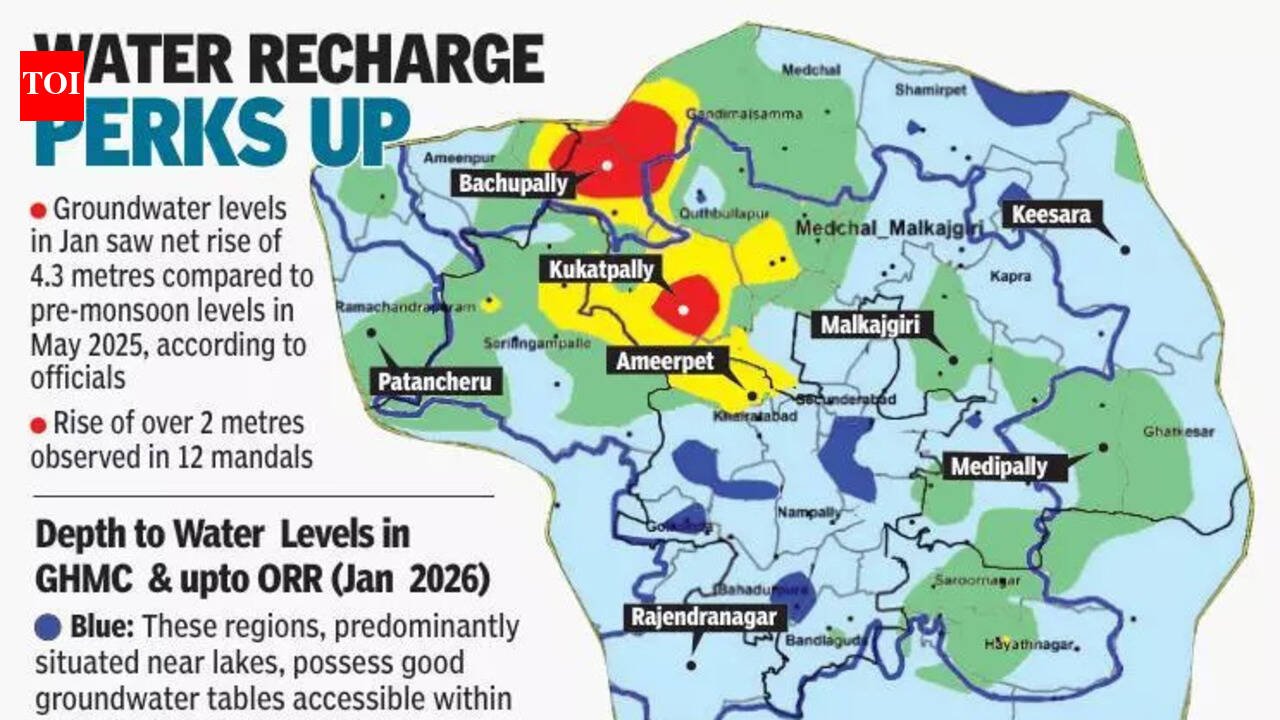
For instance, the average depth to water level (DTWL) in Malkajgiri stood at 14 metres as of Jan, while Medipally recorded 13.87 metres. In localities such as Kukatpally and Patancheru, groundwater levels were in the range of 11 to 13 metres below ground level.Over-extraction & construction surgeGroundwater department officials attributed the situation to excessive extraction of groundwater and rapid construction activity in the eastern and western corridors of the city.In Hayathnagar, for example, residents extracted over 400 hectare-metres (ha m) of groundwater against the annual extractable resource of 326 ha m, indicating significant over-exploitation.“Lakhs of borewells have come up in the western and eastern parts of the city. The sharp rise in built-up areas has reduced open land, hampering natural groundwater recharge. In fact, urban expansion far outpaced groundwater recharge capacity. Most apartment complexes do not have functional recharge pits, and stormwater is diverted into drains instead of being allowed to percolate,” said a senior official in the groundwater department.Experts also pointed out that the Water, Land and Trees Act (WALTA), 2002, which mandates rainwater harvesting structures and regulates borewell drilling, is not being implemented effectively. Most residential and commercial buildings either lack recharge pits or maintain them poorly, limiting their effectiveness. Properly designed rainwater harvesting pits and injection borewells are essential to revive depleted aquifers, they said.“While development activity has largely stabilised in the core city areas, the western and eastern corridors are witnessing an unprecedented construction boom. The western corridor, in particular, is a crucial groundwater recharge zone for the city. However, unchecked urbanisation in this belt is altering natural hydrological patterns. The western side of the city lies on the upstream side of the watershed, and groundwater naturally flows from these elevated recharge areas toward the core city,” said B Venkateswara Rao, an expert in water resources from JNTUH.Improvement compared to pre-monsoonHowever, groundwater department officials noted some seasonal improvement compared to peak summer levels. The groundwater levels in Jan recorded a net rise of 4.34 metres compared to pre-monsoon levels in May 2025. A rise of over 2 metres was observed in 12 mandals.


