






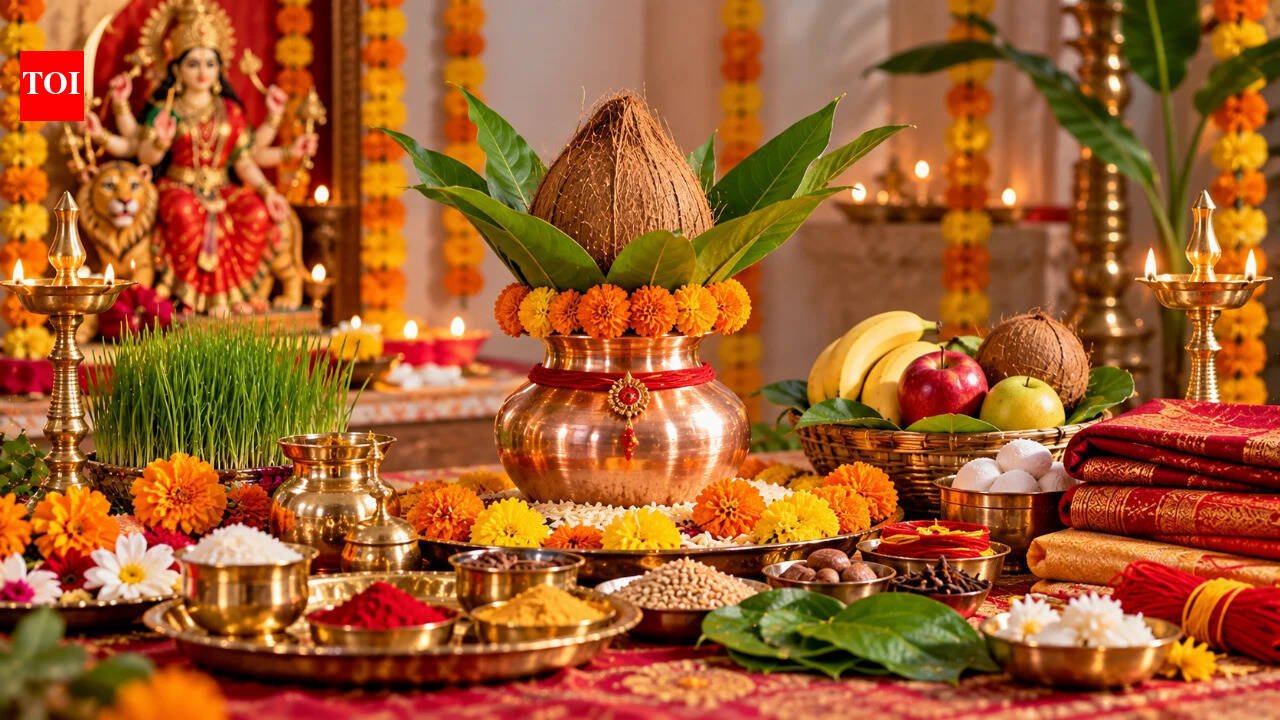
Navratri begins on Sunday, 11 October, and the Ghatasthapana muhurat runs from 6:19 AM to 10:12 AM. That’s an early start. And nobody wants to realise at 6:30 in the morning that the mango leaves are missing.So here’s everything in one place. Save it, go through it slowly, and you’ll be ready well before the Kalash goes in.
For Ghatasthapana
The Kalash itself can be copper, brass or clay. You’ll also need a wide clay pot or tray with clean soil, along with jau, or barley seeds, which are sown on the first day and sprout over the nine days.A coconut with its husk still on sits on top of the Kalash, resting on five mango or ashoka leaves. Keep some red cloth and a red chunri to wrap it. Kalawa, Ganga jal and akshat, or unbroken rice, are essential too. Don’t forget supari, a few coins and a little durva grass to place inside the Kalash. For tilak and worship, pick up roli, haldi and chandan.
For the Puja Space
Set up a wooden chowki and cover it with red cloth. Place an idol or framed picture of Maa Durga on it. Fresh flowers matter a lot, and marigold and red hibiscus are the traditional favourites.You’ll also want a bell, an aarti thali, dhoop, agarbatti and camphor. Many families read the Durga Saptashati daily, so keep a copy handy. The shorter Durga Chalisa works well if time is tight.
For the Akhand Jyoti
If your family lights an Akhand Jyoti, buy a large brass or clay diya, ideally one with a glass cover to protect the flame from drafts. Use pure cow ghee, or sesame oil if that’s your tradition, along with long cotton wicks and a few spares.Buy more ghee than seems necessary. A lamp burning day and night for nine days uses up a surprising amount, and running out on Saptami is a common worry.
Shringar for Maa Durga
Many families offer solah shringar to the Goddess. That usually means red bangles, bindi, sindoor, kajal, mehendi and alta, along with a small mirror and comb. Puja shops also sell ready-made shringar sets, which save time.
Bhog and Prasad
Keep fresh fruits and dry fruits at home through the nine days. Mishri and batashe are simple, traditional offerings. Cloves, elaichi, paan leaves, honey, milk and curd also come in handy for daily puja.
If You’re Fasting
Stock up on kuttu atta, singhara atta, sabudana, makhana and sendha namak. With potatoes, peanuts and fruits, you’ll have most vrat meals covered. Check expiry dates on the flours, since they spoil faster than wheat.
For Kanya Pujan on 19 October
You’ll need plates and bowls for the girls, red chunris and kalawa. Small gifts like stationery, hair clips or bangles make them happy. Keep some money aside for dakshina. The sooji, ghee and chana for halwa-puri can be bought closer to the day.
When to Shop
Pitru Paksha runs until 10 October, and many families avoid buying new things during it. Suppose yours follows that custom, shop on the evening of Saturday the 10th, after Pitru Visarjan. Puja shops usually stay open late before Navratri.Prefer to be extra careful? Make your list now, and buy perishables like flowers and fruits only on Sunday morning.


