






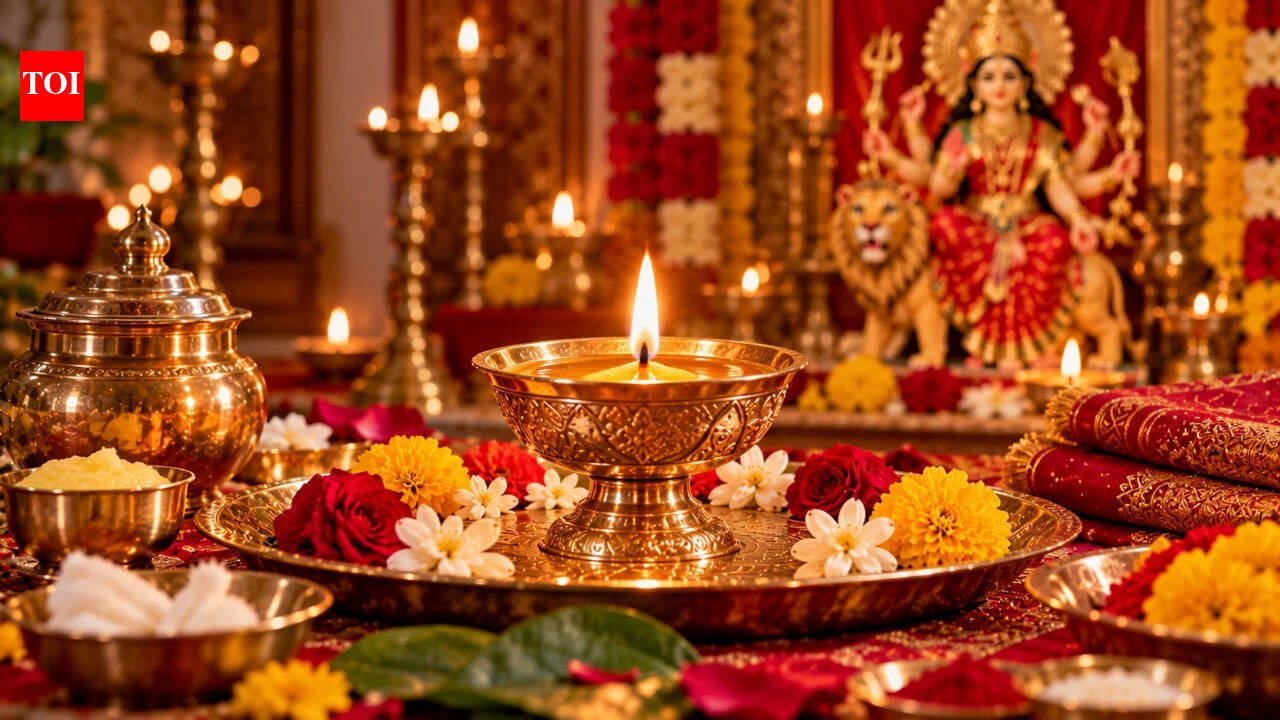
For many families, the most important part of Navratri isn’t the fasting or even the aarti. It’s a single flame. The Akhand Jyoti, an unbroken lamp lit on the first day and kept burning through all nine, is seen as a sign that Maa Durga herself is present in the home.That also makes it the part people worry about most. Which ghee? Which corner? And what if it goes out at 3 AM?
When to Light It
Light the Akhand Jyoti during Ghatasthapana on Sunday, 11 October, within the muhurat of 6:19 AM to 10:12 AM. Most families light it right after installing the Kalash, with a short prayer asking the Goddess to accept the lamp and stay with the household for the nine days.
Ghee or Oil?
Pure cow ghee is the best option. It burns cleanly and is said to bring peace and prosperity to the home.Some families use sesame oil instead, especially if that’s their tradition or if ghee isn’t available. Both are acceptable. What matters is not mixing the two in one lamp.Many pandits suggest keeping a ghee lamp on the right side of the Goddess, and an oil lamp, if used, on her left.Quantity catches people out. A large lamp burning day and night for nine days can go through more than a kilo of ghee, so buy extra and keep it close by.
Which Direction?
According to Vastu, the southeast corner of the home, or of the puja space, belongs to Agni, the fire element. That makes it a natural spot for the Akhand Jyoti.The flame itself should face east or north. Avoid pointing it south. During Pitru Paksha, diyas face south for the ancestors. Navratri is a festival of the Goddess, so the direction changes too.
Setting It Up Properly
Use a large brass or clay lamp, ideally with a glass cover. Place it on a small bed of rice or on a plate, never directly on the floor. A long cotton wick works best. Some families twist kalawa into the wick for added sanctity.Keep a small backup diya lit nearby. This is the single most useful tip. If the main flame ever goes out, you can relight it from a flame that’s already burning.
What If It Goes Out?
First, don’t panic. A gust of wind, a wick that burns too low, or simply running out of ghee happens in many homes.Relight it from the backup diya as soon as you notice. Fold your hands and ask Maa Durga to forgive the mistake, then carry on with your puja. Tradition places far more weight on devotion than on perfection.
Keeping It Safe
An open flame for nine days needs care, especially in flats. Keep the lamp away from curtains, fans and AC drafts, and out of reach of children and pets. Never leave the house completely empty while it’s burning. Families who must go out together usually ask a neighbour or relative to check in.
When Navratri Ends
Don’t blow out the Akhand Jyoti. After the final puja, let it burn out on its own. Once it cools, the leftover wick and ghee can be placed in the soil of a plant or a flowing river.


