


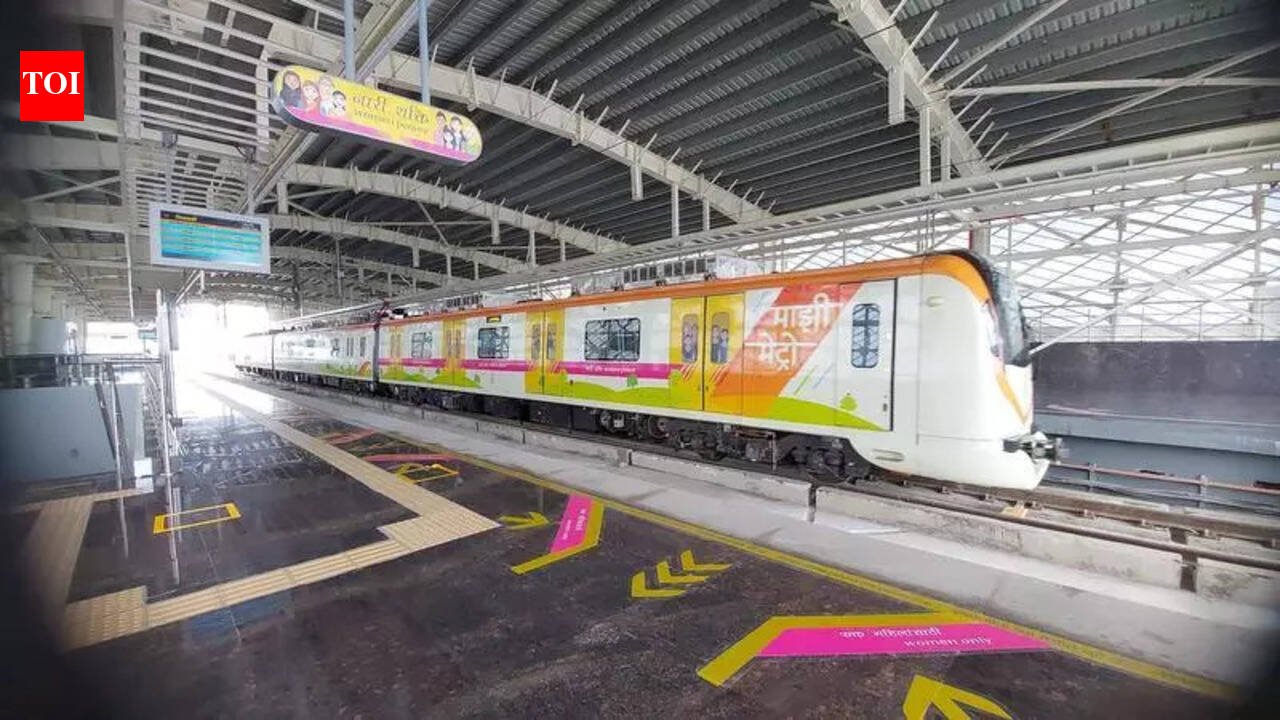
Phase I of the network is fully operational, while Phase II is advancing across corridors towards Kanhan, Butibori MIDC, Hingna and Transport Nagar, with nearly 50% of pier work already completed. Looking ahead, MahaMetro is preparing the groundwork for an ambitious Phase III, which proposes an additional 55km of corridors, taking the total planned network length to nearly 129km, positioning Nagpur among the longest Metro networks in India for a tier-II city. The proposed expansion includes an Inner Ring Road corridor, towards Koradi and New Nagpur too. Phase III is also expected to introduce Nagpur’s first underground metro stretches and driverless train operations, both technological firsts for the city.As the network expands, ridership remains a key concern. The detailed project report (DPR) for phase I, prepared in 2013, projected daily ridership of over 4 lakh commuters by 2026. But the current average daily footfall stands at approximately 1-1.2 lakh, significantly below projections.The MahaMetro MD acknowledged that ridership remains a central challenge. “Ridership will enhance as the entire network develops. Metro systems take time to stabilise. As new corridors open and urban development follows, demand will improve,” he said, drawing parallels with cities like Delhi, where ridership took years to stabilise.Apart from ridership, incomplete first and last mile connectivity remains a daily challenge for both Metro authorities and commuters. Phase I provides nearly 3,200 parking spaces for two and four wheelers, a modest number for over one lakh daily commuters. Limited feeder services further compel riders to rely on autos and cabs, often at high costs. Inadequate pedestrian and cycling infrastructure also hindered seamless multimodal integration, affecting overall convenience and accessibility.Hardikar said strengthening bus integration would be critical. “Bus is the backbone of public transport. We need strong first and last mile connectivity. With the help of NMC, integration with our bus system and building adequate public infrastructure is our priority,” he said.MahaMetro plans to introduce around 300 buses to support feeder connectivity, with the first batch expected later this year. “Residents within 500 metres of stations will use the metro, but Nagpur is not congested enough yet for people to depend solely on it. One can still travel across the city in about half an hour. As the city grows, ridership will rise.”Commercial utilisation is another area under scrutiny. While station-level retail spaces were developed to boost non-fare revenue, nearly 50% of shops and complexes remain underutilised. “Our focus remains on increasing ridership. As footfall improves, commercial occupancy will naturally increase,” Hardikar said.As Nagpur Metro enters its 12th year, the infrastructure footprint is visible across the city. Yet, translating expansion into sustained ridership growth and seamless urban mobility integration will determine whether the system evolves into the backbone of Nagpur’s transport network.


