



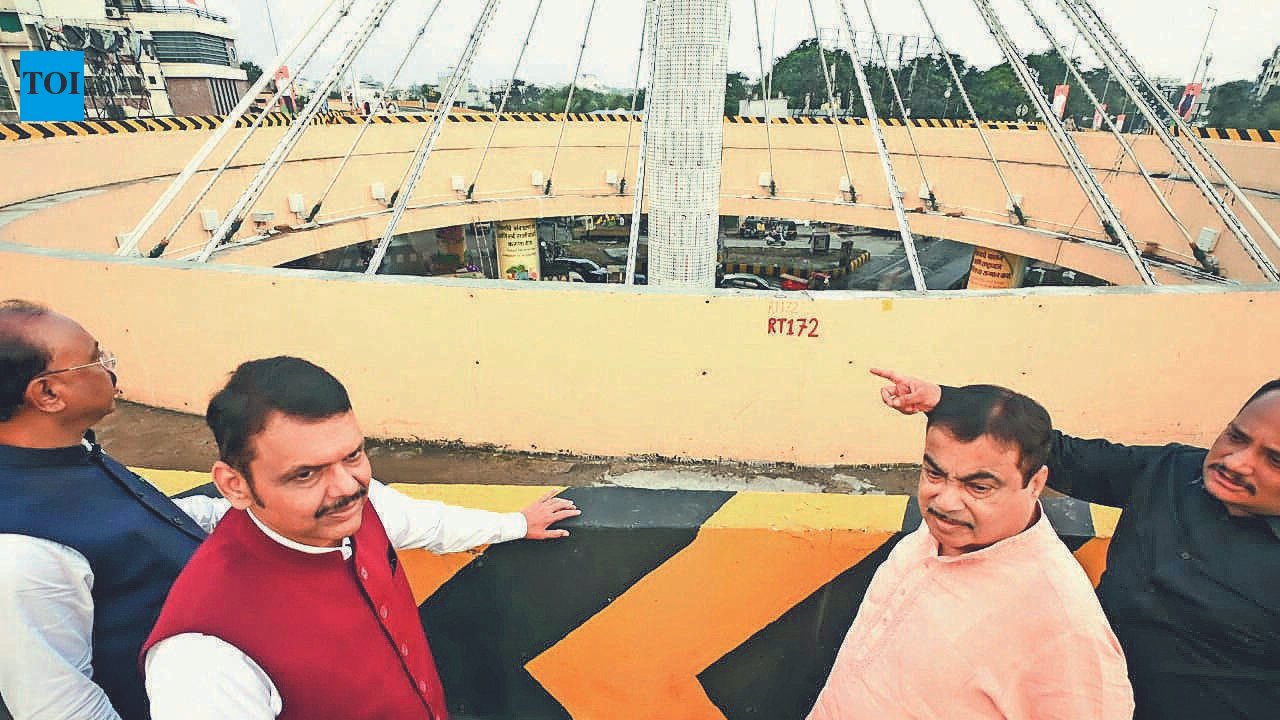
Nagpur: Nagpur currently has 35 flyovers, while another 15 are at various stages of planning and implementation, chief minister Devendra Fadnavis said on Saturday, highlighting the state govt’s focus on improving traffic movement and preparing the city’s infrastructure for future growth.He was speaking at the inauguration of the Rs998-crore Indora-Dighori Flyover project.“Commuters on the Indora-Dighori route are well aware of the hardship and hassles involved due to traffic congestion. With the new flyover’s opening, the journey that earlier took more than 50 minutes could now be completed in around 10 to 12 minutes,” Fadnavis said.“This flyover will change the lives of thousands of people, while saving fuel and time and reducing pollution caused by vehicle emissions,” he said, adding that ramps along the corridor would improve access to several areas between its two ends.Calling the project an “engineering marvel”, Fadnavis credited Union minister Nitin Gadkari with conceptualising and pursuing major elevated road projects in Nagpur.He recalled Gadkari’s vision of integrating flyovers with Metro infrastructure, citing the double-decker flyover on Wardha Road and the one proposed along Kamptee Road.Fadnavis said Nagpur’s expanding flyover network was part of a broader effort to integrate different modes of transport and improve mobility. He said the city was also being developed with an emphasis on faster connectivity and sustainable, environment-friendly infrastructure.The chief minister highlighted other projects, saying concrete roads had helped reduce pothole-related problems, while the proposed Third Outer Ring Road would facilitate expansion and development around Nagpur.He said Nagpur was emerging as an investment hub and that the New Nagpur project, envisaged as a central business district, would create employment opportunities, including high-paying jobs.Fadnavis also spoke about naming the Indora-Dighori Flyover after RSS founder Dr Keshav Baliram Hedgewar. He said naming the project after Dr Hedgewar during the centenary year of the organisation reflected Nagpur’s cultural identity.
